-1
90
30
Blog: Energy
A cathode material put forward by the Dincă Group, a layered organic solid called bis-tetraaminobenzoquinone (TAQ), outperforms traditional lithium-ion cathodes in both energy and power densities in a technology that is truly scalable.

Blog: Power
This device works to suppress flames using the power of conductive aerosols, small particles that can direct electricity.

Blog: Robotics, Automation & Control
Researchers at EPFL and the Max Planck Institute for Intelligent Systems have developed a compact and versatile robot that can maneuver through tight spaces and transport payloads much heavier than itself.

Blog: Power
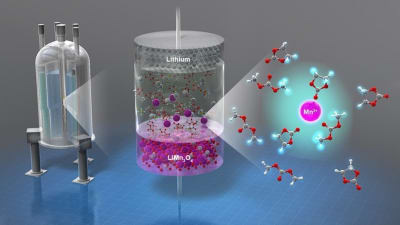
Researchers have been working on a method to detect and investigate the dissolution of the metal ion in a cathode. Using nuclear MRI, they were able to directly observe the dissolution in real time. Read on to learn more.
Blog: Data Acquisition
Researchers have developed a new AI algorithm, called Torque Clustering, that is much closer to natural intelligence than current methods. It significantly improves how AI systems learn and uncover patterns in data independently, without human guidance.

Blog: Design
Paying attention to what successful researchers have to say about their process is a good way to get ideas about what it takes to be successful in research and development.

Blog: RF & Microwave Electronics
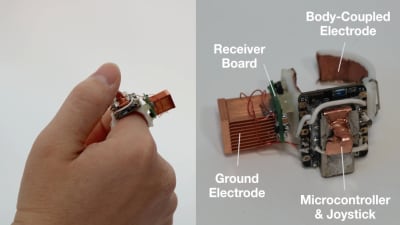
To free wearable tech from their burdens, researchers developed Power-over-Skin, which allows electricity to travel through the human body and could one day power battery-free devices from head to toe.
Blog: Power
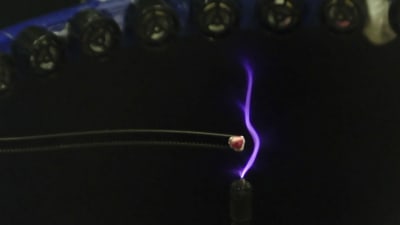
Researchers have uncovered a way of transporting electricity through air by ultrasonic waves. The level of control of electric sparks enables them to be guided around obstacles, or to hit specific spots, even into non-conductive materials.
Blog: RF & Microwave Electronics
Researchers have introduced a new approach, MiFly, that enables a drone to self-localize in indoor, dark, and low-visibility environments.

Blog: Manufacturing & Prototyping
Auxilium Biotechnologies has successfully deployed its 3D bioprinter aboard the ISS. The platform is the first of its kind, making history by printing eight implantable medical devices simultaneously in just two hours.
Blog: Mechanical & Fluid Systems
A modular worm robot built by the Organic Robotics Lab and a jellyfish that was a collaboration with the Archer Group, both in Cornell Engineering, demonstrate the benefits of “embodied energy.”

Blog: Energy
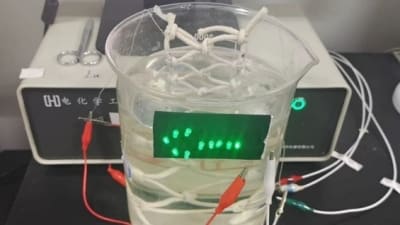
Researchers have developed a yarn-like battery prototype that works when immersed in seawater.
Blog: Physical Sciences
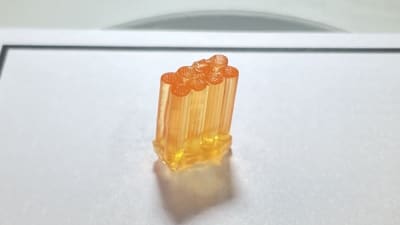
A team of scientists has created a new shape-changing polymer that could transform how future soft materials are constructed.

Blog: Robotics, Automation & Control
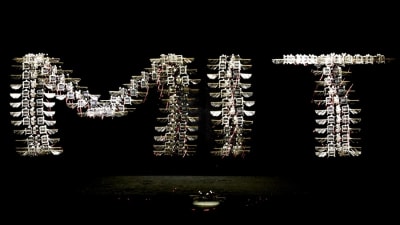
MIT researchers are developing robotic insects that could someday swarm out of mechanical hives to rapidly perform precise pollination.
Blog: Photonics/Optics
Researchers have developed a new type of infrared photodiode that is 35 percent more responsive at 1.55 µm, the key wavelength for telecommunications, compared to other germanium-based components.

Blog: Medical
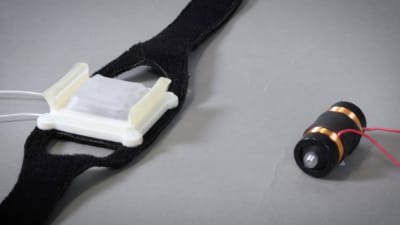
Researchers have developed cutaneous electrohydraulic (CUTE) wearable devices to greatly expand the haptic sensations that can be created by future consumer products.
Blog: Energy
A research team from DGIST has developed a lithium metal battery using a “triple-layer solid polymer electrolyte” that offers greatly enhanced fire safety and an extended lifespan.
Blog: Robotics, Automation & Control
RAVEN (Robotic Avian-inspired Vehicle for multiple ENvironments) is designed based on perching birds that frequently switch between air and land. Its multifunctional robotic legs allow it to take off autonomously in environments previously inaccessible to winged drones.

Blog: Energy
There will be a surging need for more electric power in the coming years. The problem is that we will quickly need to upgrade the grid to provide for it. Reconductoring can be a good start.

Briefs: Manned Systems
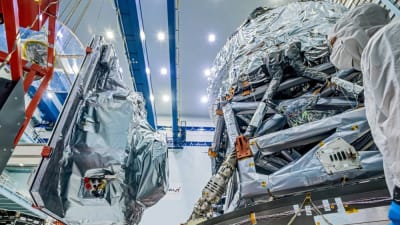
In this video, we provide an overview of the Nancy Grace Roman Space Telescope’s mission, capabilities and timeline to launch.
Blog: Design
Research reports that MXenes, a class of 2D materials originally discovered at Drexel University in 2011, demonstrate the rare combination of high electrical conductivity and low thermal conductivity.

Blog: Robotics, Automation & Control
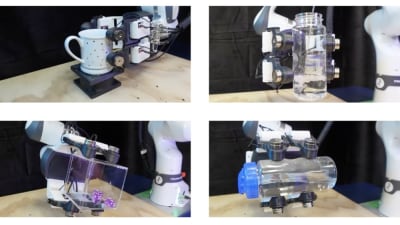
New research from Duke University details a system dubbed SonicSense that allows robots to interact with their surroundings in ways previously limited to humans.
Blog: Software
AI assistants in engineering software will both simplify and streamline engineers' ability to control their tools. By leveraging natural language models, engineers will be able to interact with applications directly through voice and text commands. Read on to learn more.

Blog: Robotics, Automation & Control
With another year of Tech Briefs almost in the books, it's time to look at our most-read articles of 2024.
Blog: Green Design & Manufacturing
Efficiency can be multiplied when companies use innovative methods to cooperate with each other.

Blog: Design
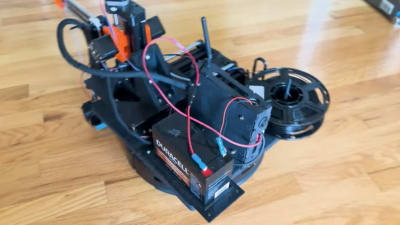
University of Washington researchers have created MobiPrint, a mobile 3D printer that can automatically measure a room and print objects onto its floor. The team’s graphic interface lets users design objects for a space that the robot has mapped out.
Blog: Design
The researchers’ groundbreaking study introduces the first toroidal, light-driven microrobot that can move autonomously in viscous liquids, such as mucus.

Videos: Energy
Watch this video to learn more about three new energy technologies. One is from Rice University; one is from Université Grenoble Alpes, Grenoble, France and University of San Diego, CA; and the last one is from Swiss Federal Laboratories for Materials Science and Technology (Empa).
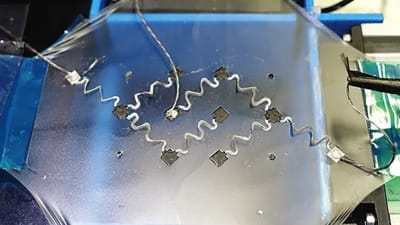
Blog: Internet of Things
My Opinion: Sustainability depends on understanding system interrelationships. Read on to learn more about SAE Media Group's Ed Brown's opinion on the matter.

Top Stories
 Blog: Lighting

A Stretchable OLED that Can Maintain Most of Its Luminescence
 INSIDER: Design

Advancing All-Solid-State Batteries
 Blog: Energy

Batteries that Can Withstand the Cold
 Blog: AR/AI

My Opinion: We Need More Power Soon — Is Nuclear the Answer?
 News: Power

 Blog: Aerospace

Webcasts
 Upcoming Webinars: Test & Measurement

From Spreadsheets to Insights: Fast Data Analysis Without Complex...
 Upcoming Webinars: Aerospace

Cooling a New Generation of Aerospace and Defense Embedded...
 Upcoming Webinars: Test & Measurement

Beyond AI-Copy-Paste Engineering: Advanced AI-Integration Success...
 Upcoming Webinars: Test & Measurement

Battery Abuse Testing: Pushing to Failure
 Upcoming Webinars: AR/AI

A FREE Two-Day Event Dedicated to Connected Mobility
 Upcoming Webinars: Test & Measurement

Choosing the Right N-Port Strategy: Multiport VNAs vs. Switch...