
-1
450
30
Blog: Motion Control
New software from the Technical University of Munich (TUM) wants to predict all traffic possibilities, so that self-driving vehicles will never get into accidents.

Blog: Manufacturing & Prototyping
As Brazil begins mass-producing a NASA-developed ventilator, a Tech Briefs reader asks why NASA didn't go open-source.

Blog: Transportation
The new approach could help pave the way for smaller battery packs and greater driving range in electric vehicles.

Blog: Imaging
A reader asks our expert: When it comes to autonomous vehicles, what’s best: Radar, LiDAR, or cameras?

Blog: AR/AI
A new modeling tool from USC engineers generates automatic indicators when data and predictions from AI algorithms are trustworthy.

Blog: Photonics/Optics
A Cornell team developed paramecium-sized robots that can be controlled with lasers.

Blog: Robotics, Automation & Control
Carnegie Mellon researcher Lerrel Pinto wants to prove that sound can be a valuable asset for robots.

Blog: Electronics & Computers
Deciding between edge computing and cloud computing? Make sure to consider these four major factors, says our industry expert.

Blog: Aerospace
Although life has not been found on Mars just year, a researcher from NYU thinks there could be life...under it.

Blog: Data Acquisition
A reader asks: How can self-driving car manufacturers guarantee safety when snow, ice, or mud impair a vision system?

Blog: Electronics & Computers
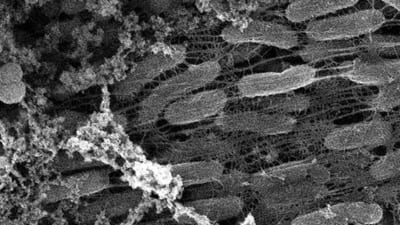
Dr. James Rees is spending the time in his lab testing sensors made from bacteria.
Blog: Sensors/Data Acquisition
“Food supply” goes beyond just crop production. See how NASA is offering a more comprehensive look at food security and agriculture.

Blog: Aerospace
Watch below as the Perseverance rover and its Ingenuity helicopter make their way to Mars.

Blog: Aerospace
Mars 2020 NASA Administrator Jim Bridenstine and other NASA experts offer a briefing on this week's launch of the Perseverance rover.
Blog: Aerospace
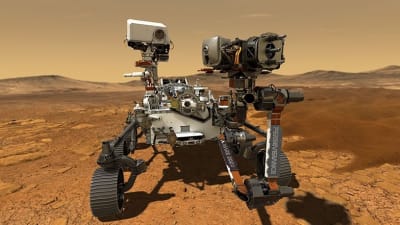
Watch NASA experts review this week's preparations, as the Perseverance rover launches and begins its journey to Mars.

Blog: Robotics, Automation & Control
Can NASA "joystick" the landing of the next Mars rover? A Tech Briefs reader asks our NASA expert.

Blog: Sensors/Data Acquisition
We plug in our headphones everyday. Now a robot can perform the task.

Blog: Mechanical & Fluid Systems
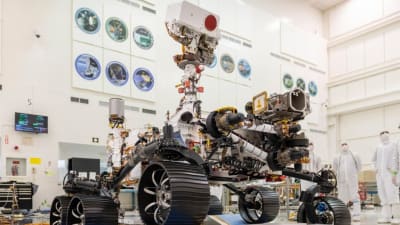
The Perseverance rover has an almost human-like way of keeping its lenses clean.
Blog: Unmanned Systems
A tiny underwater robot may someday filter out water contaminants by catching them with its tentacles.

Blog: Propulsion
The Mars rover Perseverance has a helicopter. Will the rover have to carry it around?

Blog: Manufacturing & Prototyping
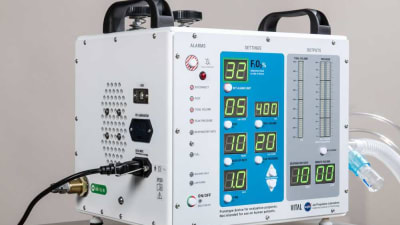
You can design the best product in the world but what if the parts, assemblies, and sub-components for your idea aren’t there?
Blog: Photonics/Optics
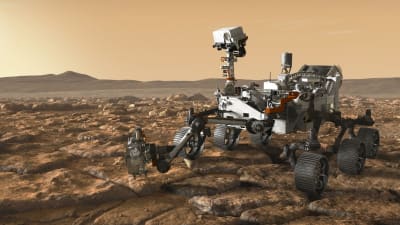
A reader asks our NASA expert: "What kind of redundancy is built into the Mars 2020 rover?"
Blog: Imaging
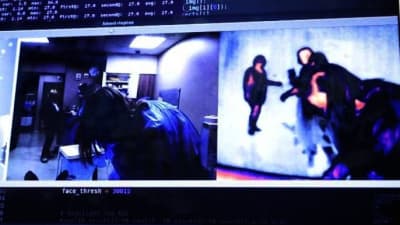
The Human Embodied Autonomous Thermostat, or “HEAT," uses cameras to identify facial temperature, and adjust the room's air accordingly.
Blog: Aerospace
A reader asks NASA experts: How much hardware from the Curiosity rover is being used on the Mars 2020 Perseverance rover?

Blog: Robotics, Automation & Control
Traditional robotic feet are made of rigid components. A team of engineers at UCSD turned to coffee grounds to make legged robots more flexible and able to walk on a variety of rough terrain.

Blog: Energy
"Who knows? Maybe one day we will have roofs covered with humidity panels together with solar panels," TAU professor Colin Price told Tech Briefs.

Blog: AR/AI
NIST engineers are working to make the cellular network standard even faster.
Blog: Robotics, Automation & Control
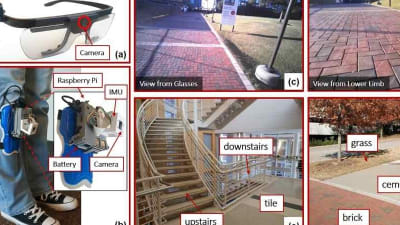
New software sets the stage for A.I.-enabled robotic prostheses that predict user terrain and initiate mechanical changes accordingly.
Blog: Transportation
The Los Angeles, CA-based company Nanotech Energy is using graphene to prevent thermal runaway and create a non-flammable battery.

Top Stories
 Blog: Design
Aerial Microrobots That Can Match a Bumblebee's Speed
 Blog: Energy

My Opinion: We Need More Power Soon — Is Nuclear the Answer?
 Blog: Electronics & Computers

Turning Edible Fungi into Organic Memristors
 Blog: Semiconductors & ICs

Revolutionizing the Production of Semiconductor Chips
 Blog: Robotics, Automation & Control

Microscopic Swimming Machines that Can Sense, Respond to Surroundings
 Quiz: Energy

Webcasts
 Upcoming Webinars: Power

Hydrogen Engines Are Heating Up for Heavy Duty
 Upcoming Webinars: Transportation

Advantages of Smart Power Distribution Unit Design for Automotive...
 Upcoming Webinars: Unmanned Systems

Quiet, Please: NVH Improvement Opportunities in the Early Design...
 Upcoming Webinars: Power

A FREE Two-Day Event Dedicated to Connected Mobility
 On-Demand Webinars: Automotive

E/E Architecture Redefined: Building Smarter, Safer, and Scalable Vehicles
 Podcasts: Unmanned Systems

How Sift's Unified Observability Platform Accelerates Drone Innovation