-1
1560
30
Blog: Aerospace
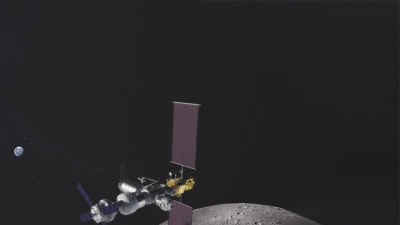
Lockheed Martin's Rob Chambers is working on a spacecraft that will bring astronauts back to the lunar surface.

Question of the Week: Electronics & Computers
Do You See Potential with Electrokinetic Power?
Scientists from Caltech and Northwestern University have found a way to generate electricity by combining saltwater with one of life's more undesirable compounds: rust.
Blog: Aerospace
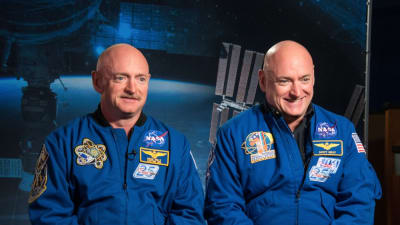
NASA is planning a return to the Moon and an exploration-mission to Mars, but how will the human body hold up in microgravity for long durations?
Blog: Imaging
A new-and-improved system from Stanford University captures light from a greater variety of surfaces, allowing a wider, farther imagery than ever before.

Question of the Week: Software
Have You Used Machine Learning in Your Design Efforts?
A team from the University of Pittsburgh recently used machine-learning to create a butterfly-inspired, self-healing glass. Models from the San Francisco-based software company SigOpt helped engineers determine ideal characteristics for the material.
Blog: Energy
Scientists from Caltech and Northwestern University have found a way to generate electricity by combining saltwater with one of life's more undesirable compounds: rust.

INSIDER: Physical Sciences
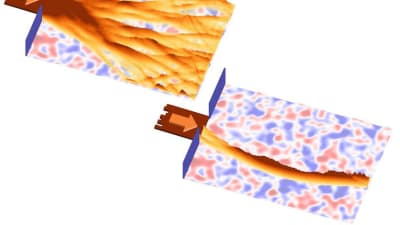
Scientists have visualized the electronic structure in a microelectronic device for the first time, opening up opportunities for finely tuned, high-performance...

INSIDER: Electronics & Computers
University of Illinois electrical engineers have used beta-gallium oxide to clear another hurdle in high-power semiconductor fabrication. Beta-gallium oxide is readily available and promises to...

INSIDER: Electronics & Computers
Black carbon, commonly known as soot, is a significant contributor to global warming and is strongly linked to adverse health outcomes. Produced by the incomplete...

INSIDER: Sensors/Data Acquisition
In a major step toward developing portable scanners that can rapidly measure molecules in pharmaceuticals or classify tissue in patients’ skin, researchers have created an imaging system...

Blog: Aerospace
Sign up now to hear how NASA plans to get back to the Moon by 2024.
INSIDER: Motion Control
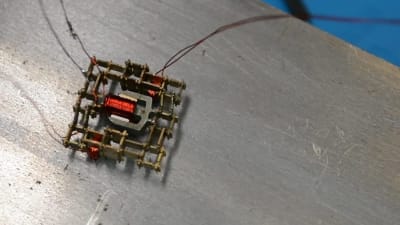
A new approach developed at MIT to building robots is based on a set of five millimeter-scale components, all of which can be attached to each other by a standard connector. Using this simple...
INSIDER: Motion Control
A high-sensitivity and low-noise MEMS accelerometer was developed using multi-layer metal structures composed of multiple metal layers. The accelerometer achieves 1 µG level...

Blog: Semiconductors & ICs
A reader asks: What role will emulation play in the verification of modern automotive solutions?

Blog: Materials
Our readers ask: How do you know that you have the right anode? How can you inspect the electrolyte or electrode material?

Blog: Imaging
A team from the University of Pittsburgh looked to the butterfly to create a glass that is self-healing, liquid-repellant, and anti-fogging.

Question of the Week: Aerospace
Did You Watch the Moon Landing?
On July 20, 1969, American astronauts Neil Armstrong and Edwin "Buzz" Aldrin became the first humans ever to land on the Moon. Fifty years later, we celebrate their achievement, and we want to hear from you.
Blog: Robotics, Automation & Control
MIT's new way of automatically creating actuators is a bit like solving a Rubik's Cube.

INSIDER: Photonics/Optics
Jigang Wang patiently explained his latest discovery in quantum control that could lead to superfast computing based on quantum mechanics. He mentioned light-induced superconductivity...

INSIDER: Imaging
In free space, the light wave of a laser beam spreads on an exactly straight line. Under certain circumstances, however, a much more complicated behavior occurs. If the movement of the wave is...
INSIDER: Lighting
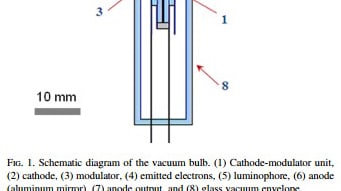
Researchers from the Moscow Institute of Physics and Technology and Lebedev Physical Institute of the Russian Academy of Sciences have designed and tested a prototype...
Question of the Week: Manufacturing & Prototyping
Will ‘4D Knitting’ Lead to Better Robots and Wearables?
Carnegie Mellon University researchers have demonstrated "4D knitting. The computationally-controlled machines are being used to make a variety of soft textile objects.
News: Aerospace
A reader asks our industry expert: Will air taxis be influenced by military UAV standards?

Blog: Aerospace
Many of the technologies we use today – space blankets, hearing aids, food packaging – began on the Apollo 11 mission.

Blog: Imaging
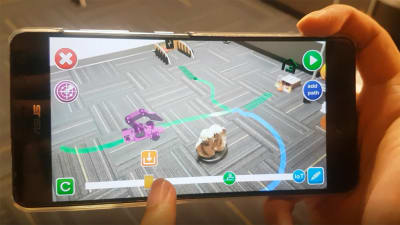
A new app opens up robotics to a large user base.
Blog: Photonics/Optics
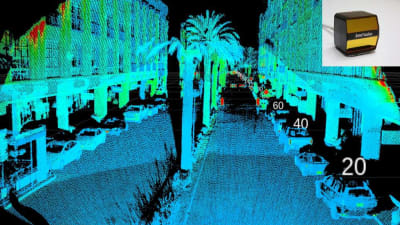
At Sensors Expo in San Jose, Innovusion (Los Altos, CA) debuted the Cheetah high-resolution, image-grade LiDAR system with long-distance capability.
Blog: Wearables
The key to IoT implementation: Democratizing big data, says SST's Christopher Chong.

Blog: Test & Measurement
Editor Bruce A. Bennett takes us through the unusual — and completely unexpected —at this year's LASER World of Photonics.
INSIDER: Motion Control
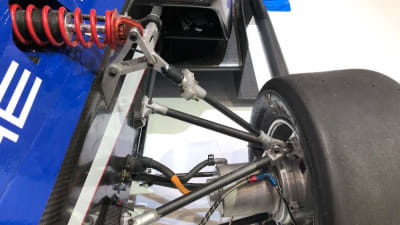
On a factory floor, robots are programmed to stop momentarily if a person passes by. The robot often freezes in place long before a person crosses its path. While robots can predict where a...

Top Stories
 Blog: Lighting

A Stretchable OLED that Can Maintain Most of Its Luminescence
 Blog: Energy

Batteries that Can Withstand the Cold
 INSIDER: Energy

Advancing All-Solid-State Batteries
 Blog: Power

My Opinion: We Need More Power Soon — Is Nuclear the Answer?
 Quiz: Power

 Blog: Data Acquisition

Webcasts
 Upcoming Webinars: Test & Measurement

From Spreadsheets to Insights: Fast Data Analysis Without Complex...
 Upcoming Webinars: Aerospace

Cooling a New Generation of Aerospace and Defense Embedded...
 Upcoming Webinars: Sensors/Data Acquisition

Beyond AI-Copy-Paste Engineering: Advanced AI-Integration Success...
 Upcoming Webinars: Energy

Battery Abuse Testing: Pushing to Failure
 Upcoming Webinars: Power

A FREE Two-Day Event Dedicated to Connected Mobility
 Upcoming Webinars: RF & Microwave Electronics

Choosing the Right N-Port Strategy: Multiport VNAs vs. Switch...