-1
1800
30
Blog: Software
Answering Your Questions: What is Virtual Prototyping (for Optics)?
Just because it's computer simulation doesn't mean it's virtual prototyping. Our expert explains.
INSIDER: Robotics, Automation & Control
An aerial robot capable of altering its profile during flight paves the way for a new generation of large robots that can move through narrow passages, making them ideal for exploration as well as search and...

News: Data Acquisition
Could touch be the new avenue for communications? Researchers from MIT and Purdue University think so and are working on a “general-purpose” tactile system that delivers information using...

Question of the Week: Medical
Do You See Applications for Seeing Through Walls?
A recent Tech Briefs TV video demonstrated an artificial-intelligence system developed by MIT researchers. The "RF-Pose" teaches wireless devices to sense people's movement, even from the other side of a wall. See the system in action.
INSIDER: Power
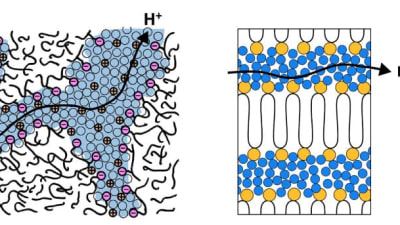
Researchers are developing a solid electrolyte that will make safer, better batteries.
INSIDER: Electronics & Computers
Electric vehicles may one day be able to recharge while driving down the highway, drawing wireless power directly from plates installed in the road.
INSIDER: Energy
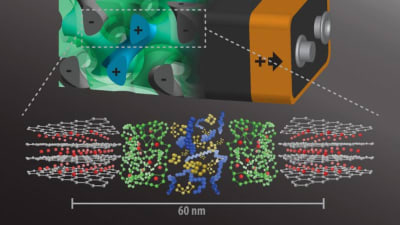
Instead of having a battery’s anode and cathode on either side of a nonconducting separator, a new battery would intertwine the two.
INSIDER: RF & Microwave Electronics
Researchers have developed a new way to power and communicate with devices implanted deep within the human body.

Blog: Energy
Following Up: What is the Future of Flexible Solar Cells?
Researcher Jaana Vapaavuori answered an additional question regarding the future of flexible solar cells.
Blog: Imaging
PhD student Jes Linnet hopes that a silver-based, transparent conductive electrode film offers a longer-lasting alternative for flexible screens and electronics.

Blog: Software
Answering Your Questions: Can CFD Software Simulate 'Wear and Tear' on an Engine?
Simulation tools offer insight into the physical processes of heavy-duty engines. But what about natural wear and tear?
Question of the Week: Energy
Will Flexible Solar Cells Catch On?
Though a flexible solar cell offers exciting, new ways of powering vehicles, clothing, and other smart technologies, manufacturing the photovoltaic component is a challenge.
Blog: Semiconductors & ICs
Professor Jaana Vapaavuori spoke with Tech Briefs about the manufacturing methods that could someday decrease the cost and increase the lifetime of flexible solar cells.

Blog: Materials
How does a spider's glue maintain its stickiness, even in high humidity? Researchers in Akron investigated the question.

Question of the Week: Software
What’s the Hold-Up with Digital Product Development?
Digital technologies are bringing big data, automation, and mobile capabilities to processes like IT, HR, sales, and marketing, but what is the hold-up with product development? Has your product development process been modernized and “digitized?”
Blog: Manufacturing & Prototyping
Researchers from Singapore University of Technology and Design have demonstrated 3D printing with one of the Earth’s most abundant organic compounds: cellulose.

News: Nanotechnology
Quasi-1D materials will play an important role in device miniaturization.

News: Test & Measurement
The just-published NIST Guide to Wireless Systems Deployments in industrial environments was developed by a group of experts on wireless communications from government, industry, and academia....
News: Electronics & Computers
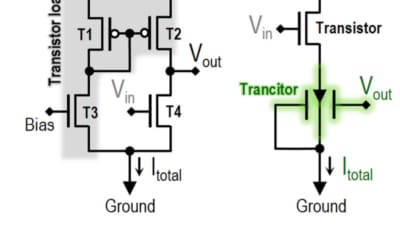
A radically new electronic building block is being proposed.
Blog: Manufacturing & Prototyping
Answering Your Questions: Who Will Integrate 3D Metal Printing — Tiers or OEMs?
A reader asks: Will it be the OEMs or the Tier-1 and Tier-2 suppliers who will be purchasing 3D metal printing machines?
Blog: Materials
How to Harness Humidity: Hydrogel Keeps Rooms Cool, Powers Small Devices
There is plenty of moisture in the air — Professor Swee Ching Tan wants to harvest the humidity and put it to good use.
Question of the Week: Transportation
Do You Trust Self-Driving Cars on Country Roads?
Most autonomous vehicles have been tested out in city environments, where tech companies like Google can build intricate 3D maps that lay out the exact position of every lane, curb, off-ramp, and street sign.
But what about areas with less definable features, like country roads or a desert?
An...
Blog: Manufacturing & Prototyping
If digital transformation is a boardroom priority, why are companies so slow to transform product development? A reader asks our experts.

INSIDER: Motion Control
A 3D-printed smart gel that grabs objects and moves them could lead to soft robots that mimic sea animals like the octopus, which can walk underwater and bump into things without damaging them. Soft...

Blog: Sensors/Data Acquisition
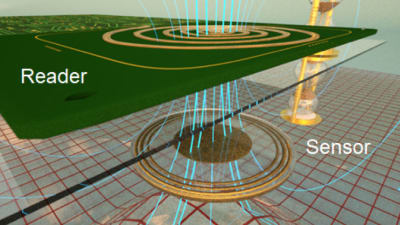
A researcher tells Tech Briefs how his team's "symmetrical" sensor approach will support the growing "Internet of Things."
Question of the Week: Manufacturing & Prototyping
How Do You Feel About Back-Flipping Robots?
Have you seen the ‘Atlas’ humanoid robot running outside yet? Watch a demo of the Boston Dynamics technology on Tech Briefs TV.
Blog: Manufacturing & Prototyping
Answering Your Questions: Beyond Prototyping, How is 3D Metal Printing Being Used in the Automotive Industry?
Can metal 3D printing help automakers with more than just prototyping? It can, and it has, says our engineering expert.
INSIDER: Electronics & Computers
The future of electronic devices lies partly within the “internet of things” – the network of devices, vehicles and appliances embedded within electronics to enable connectivity and data...

INSIDER: Electronics & Computers
The Internet of Things makes our lives more streamlined and convenient, but the cybersecurity risk posed by millions of wirelessly connected devices remains a huge concern. UC Santa Barbara...

Top Stories
 Blog: Lighting

A Stretchable OLED that Can Maintain Most of Its Luminescence
 Blog: Energy

Batteries that Can Withstand the Cold
 INSIDER: Energy

Advancing All-Solid-State Batteries
 Blog: Power

My Opinion: We Need More Power Soon — Is Nuclear the Answer?
 Quiz: Power

 Blog: Data Acquisition

Webcasts
 Upcoming Webinars: Test & Measurement

From Spreadsheets to Insights: Fast Data Analysis Without Complex...
 Upcoming Webinars: Aerospace

Cooling a New Generation of Aerospace and Defense Embedded...
 Upcoming Webinars: Sensors/Data Acquisition

Beyond AI-Copy-Paste Engineering: Advanced AI-Integration Success...
 Upcoming Webinars: Energy

Battery Abuse Testing: Pushing to Failure
 Upcoming Webinars: Power

A FREE Two-Day Event Dedicated to Connected Mobility
 Upcoming Webinars: RF & Microwave Electronics

Choosing the Right N-Port Strategy: Multiport VNAs vs. Switch...