36
-1
660
30
Briefs: Semiconductors & ICs
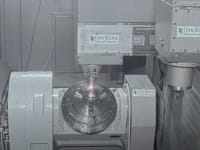
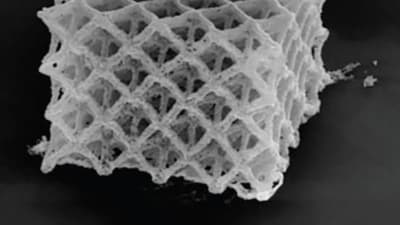
In 3D printing — also known as additive manufacturing — an object is built layer-by-layer, allowing for the creation of structures that would be impossible to manufacture by...
Briefs: Materials
Most electronic devices have glass or plastic covers that protect against dust, moisture, and other environmental contaminants, but light reflection from these surfaces can make...

Briefs: Mechanical & Fluid Systems
A new way to treat wood makes it 12 times stronger than natural wood and ten times tougher. The wood substance could be comparable to steel or titanium alloys; it is also comparable to...

Briefs: Mechanical & Fluid Systems
Every complex human tool has contained multiple materials wedged, tied, screwed, glued, or soldered together. But the next generation of tools, from autonomous squishy robots to flexible...

Briefs: Test & Measurement
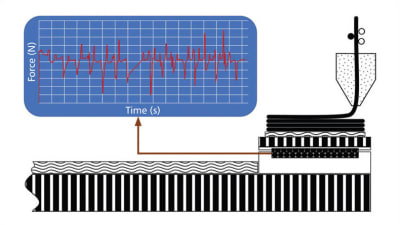
NASA Langley Research Center has developed a test station capable of in-situ testing of material deposition and layer adhesion in an extrusion additive manufacturing process. The technology addresses the problem of...
Briefs: Photonics/Optics
High-speed images of a common laser-based metal 3D printing process, coupled with newly updated computer models, have revealed the mechanisms behind material redistribution, a phenomenon that...

Briefs: RF & Microwave Electronics
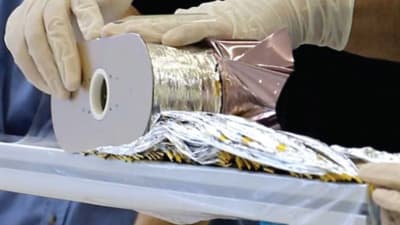
NASA’s Marshall Space Flight Center is building a small CubeSat that uses an 85-m2 solar sail deployed from a central location to capture the push of photons from the Sun as...
Briefs: Manufacturing & Prototyping
Green Approach for Toughening Thermosetting Reactive Resins
Thermosetting reactive resin systems such as epoxy, bismaleimide, and polyimide classes of material are brittle. The origin of brittleness is attributed to the high crosslinking density that exists in the fully cured forms of these materials. Traditionally, the toughness of these resins is...
Briefs: Transportation
NASA is preparing for the next generation of CubeSats that are propelled and will make directional maneuvers. The new gimbal mount provides a seat for the motor, and controls the position of the thrusters...

Briefs: Materials
Currently, most 3D-printed organ models are made using hard plastics or rubbers. This limits their application for accurate prediction and replication of the organ’s physical behavior...

Briefs: Sensors/Data Acquisition
New graphene printing technology can produce electronic circuits that are low-cost, flexible, highly conductive, and water-repellent. Low-cost, inkjet-printed graphene can...

Briefs: Manufacturing & Prototyping
Algorithm Boosts Speed of 3D Printers
A major drawback to 3D printing is the slow pace of the process, which ensures details are reproduced accurately. The pace of 3D printing is one of the factors that has prevented the technology from finding a broader audience. A new algorithm was developed that boosts the speed at which the printers operate.
Briefs: Imaging
Additive Manufacturing Unique Serialization
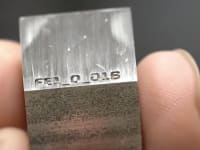
Current methods of identifying a unique part involve adding a unique serial number to the part. There are many reasons that manufactured parts receive a serial number. They enable traceability of a part throughout its lifecycle, and ensure the part is not a counterfeit; however, labels and stamped codes...
Briefs: Manufacturing & Prototyping
Supercapacitors can store and deliver energy faster than conventional batteries. But to realize advanced applications, supercapacitors need better electrodes, which connect the...

Briefs: Manufacturing & Prototyping
Method of Fabricating Ultra-Short-Gate-Length Thin-Film Transistors Using Optical Lithography
The speed of thin-film transistors (TFTs) relates directly to their gate length, which must be kept as short as possible to lower electron transport time between electrodes, and improve its high-frequency response characteristics. Since current density is...
Briefs: Materials
Corrosion of structural materials is a serious problem for industrial and civil infrastructure worldwide, costing billions of dollars, and hampering gross domestic product. Corrosion also presents a...

Briefs: Manufacturing & Prototyping
While 3D printing has found applications in many areas, its use as a way to control chemical reactions, or catalysis, is relatively new. Current production of 3D catalysts typically involves various methods of...

Briefs: Manufacturing & Prototyping
Conductive, High-Toughness Oxides Deposited by Plasma Spray-Physical Vapor Deposition (PS-PVD)
Oxide coatings deposited in Glenn Research Center's Plasma Spray-Physical Vapor Deposition (PS-PVD) facility can be processed to be mechanically tough (erosion-resistant) and electrically conductive at room temperature. The electrically conductive phase...
Briefs: Materials
Using 3D printers, researchers have created a metamaterial from cubic building blocks that responds to compression forces by a rotation. Usually, this can only be...

Briefs: Green Design & Manufacturing
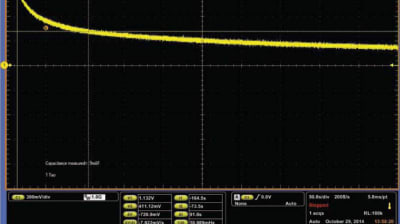
NASA's Marshall Space Flight Center has developed a solid-state ultracapacitor with a unique combination of high capacitance and battery-like discharge characteristics. The high capacitance in a...
Briefs: Manufacturing & Prototyping
CAD models have been developed that enable objects to be 3D-printed out of commercially available plastics; these objects can wirelessly communicate with other smart devices, including a...

Briefs: Manufacturing & Prototyping
Magnesium is 75 percent lighter than steel, 33 percent lighter than aluminum, and is the fourth most common element on Earth behind iron, silicon, and oxygen. But despite its light...

Briefs: Manufacturing & Prototyping
High-Resolution, 3D Cell-Printing of Living Tissues
Printing high-resolution living tissues is difficult, as the cells often move within printed structures, and can collapse on themselves. A method of 3D-printing laboratory-grown cells to form living structures was developed that produces tissues in self-contained cells that support the structures...
Briefs: Manufacturing & Prototyping
Stress-Induced Nanofabrication
Currently, the synthesis of nanomaterials relies on special inter-particle chemical and physical reactions, which restricts their development. However, stress-induced nanofabrication can effectively render arrays of nanomaterials uniform in length, diameter, and density.
Briefs: Manufacturing & Prototyping
A new method for digital design and printing of stretchable, flexible electronics, called Hybrid 3D printing, was developed to integrate soft, conductive inks with a material substrate to...

Briefs: Manufacturing & Prototyping
Additive Manufacturing Facility for Utilization Primarily in Microgravity Environments
The purpose of this innovation is to create the ability to manufacture off Earth, primarily in a microgravity environment. This additive manufacturing facility (AMF) will have the capability to build tools, parts, experimental hardware, and upgrade hardware while...
Briefs: Manufacturing & Prototyping
Joining of Ti, Mo, and Ni Terminated Thermoelectric Segments via Brazing
The joining of low- and high-temperature thermoelectric materials (with ZT optimized to specific temperature ranges) to each other in a segmented configuration can lead to enhanced device efficiency. The resulting joints between these materials must be both chemically and...
Briefs: Manufacturing & Prototyping
As 3D printing has become a mainstream technology, studies have investigated printable structures that will fold themselves into useful three-dimensional shapes when heated or...

Briefs: Mechanical & Fluid Systems
On-line Phased Array Ultrasonic Testing (PAUT) System for Friction Stir Welding (FSW)
Friction Stir Welding (FSW) is a relatively new solid-state welding process, and many industries are now relying on this technique to produce advanced structures. Industries employing this technique include, but are not limited to, aeronautical, motor vehicle, and...
Top Stories
 Blog: Power

My Opinion: We Need More Power Soon — Is Nuclear the Answer?
 Blog: AR/AI

Aerial Microrobots That Can Match a Bumblebee's Speed
 News: Energy

 Blog: Electronics & Computers

Turning Edible Fungi into Organic Memristors
 Blog: Robotics, Automation & Control

Microscopic Swimming Machines that Can Sense, Respond to Surroundings
 INSIDER: Sensors/Data Acquisition

Webcasts
 Upcoming Webinars: Energy

Hydrogen Engines Are Heating Up for Heavy Duty
 Upcoming Webinars: Transportation

Advantages of Smart Power Distribution Unit Design for Automotive...
 Upcoming Webinars: Automotive

Quiet, Please: NVH Improvement Opportunities in the Early Design...
 Upcoming Webinars: Test & Measurement

From Spreadsheets to Insights: Fast Data Analysis Without Complex...
 Upcoming Webinars: Power

Battery Abuse Testing: Pushing to Failure
 Upcoming Webinars: Internet of Things