34
-1
90
30
Briefs: Imaging
Ultrathin Holographic Display
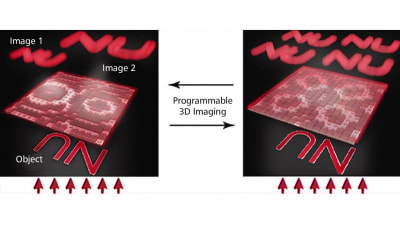
An ultrathin display for holographic images consists of a thin film of titanium filled with tiny holes that precisely correspond with each pixel in a liquid crystal display (LCD) panel.
Briefs: Communications
The new NIST instrument captures waves in action by relying on a device known as an optical interferometer.

Briefs: Photonics/Optics
Instead of surgically removing a sample of skin, sending it to a lab, and waiting several days for results, your dermatologist takes pictures of a suspicious-looking lesion and quickly produces a detailed, microscopic image of the skin. This could become routine in clinics.

Briefs: Imaging
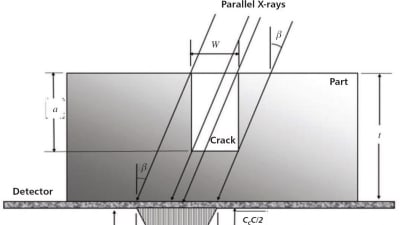
The models allow users to optimize X-ray radiography setups, for the detection of crack and crack-like flaws, to penetrate various materials to show internal structures of parts.
Briefs: AR/AI
The team compared its AI approach, known as virtual native enhancement, with contrast-enhanced CMR scans now used to monitor hypertrophic cardiomyopathy, the most common genetic heart condition.

Briefs: Sensors/Data Acquisition
The quantum gravity gradiometer was used to find a tunnel buried outdoors in real-world conditions one meter below the ground surface.

Briefs: Imaging
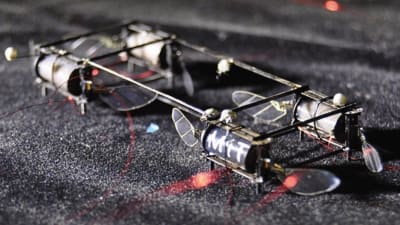
Researchers built electroluminescent soft artificial muscles for flying, insect-scale robots.
Briefs: Imaging
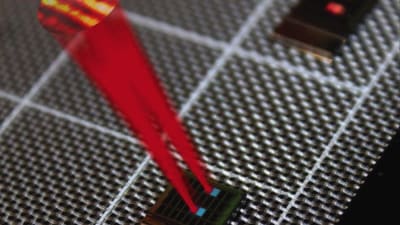
Bulky, heavy LiDAR systems in self-driving cars could be replaced with a single chip.
Briefs: Imaging
The millimeter-sized flat lens can be used in wearable displays for virtual reality, which requires compact, lightweight, and cost-effective components.

Briefs: AR/AI
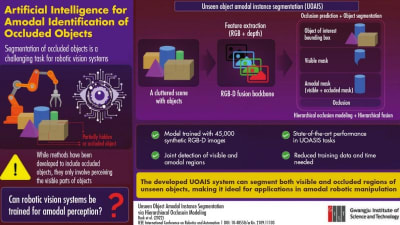
Robotic vision has come a long way, reaching a level of sophistication with applications in complex and demanding tasks, such as autonomous driving and object...
Briefs: Photonics/Optics
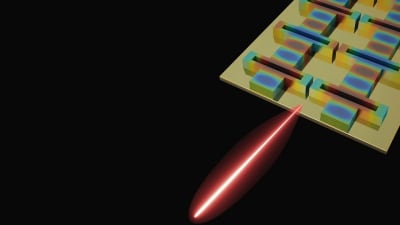
A terahertz laser was developed with high constant power, tight beam pattern, and broad electric frequency tuning for a wide range of applications in chemical sensing and imaging. The optimized...
Briefs: Photonics/Optics
Super temporal resolution microscopy allows imaging of fluorescent molecules 20 times faster than traditional lab cameras normally allow. A general method has been developed to let a...

Briefs: Photonics/Optics
The importance of optical image quality and the trend toward thinner smart-phones have pushed manufacturers to increase the number of cameras in order to provide cellphones with better zoom,...
Briefs: Imaging
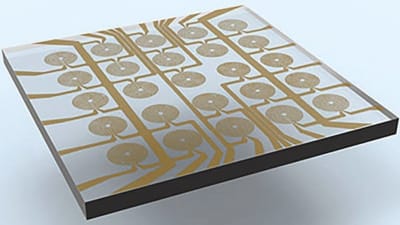
Traditional glassmaking techniques can be costly and slow, and 3D printing glass often results in rough textures, making them unsuitable for smooth lenses. Using a new...

Briefs: Imaging
Researchers have developed a robot that uses radio waves, which can pass through walls, to sense occluded objects. The robot, called RF-Grasp, combines this powerful sensing with more traditional computer vision to...

Briefs: Sensors/Data Acquisition
Robots are good at making identical repetitive movements such as a simple task on an assembly line. But they lack the ability to perceive objects as they move through an environment. A recent...

Briefs: RF & Microwave Electronics
Inside every cellphone lies a tiny mechanical heart, beating several billion times a second. These micromechanical resonators play an...
Briefs: Photonics/Optics
Researchers have created a device that enables them to electronically steer and focus a beam of terahertz electromagnetic energy with extreme precision....
Briefs: Materials
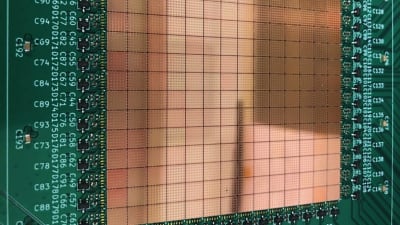
A Penn State-led team of interdisciplinary researchers developed a polymer with robust piezoelectric effectiveness, resulting in 60 percent more efficient electricity...
Briefs: Photonics/Optics
Researchers have developed tiny optical elements from metal nanoparticles and a polymer that could replace traditional refractive lenses to realize portable imaging systems and...
Briefs: RF & Microwave Electronics
The high-bandwidth, high-resolution ISAR technology can be used to study subsurface structures.

Briefs: Manufacturing & Prototyping
3D micro-printing was used to develop this small, flexible scope for looking inside blood vessels.

Briefs: Medical
An algorithm that assesses the location of a metal implant and determines the best position of the scanner to avoid distortion.

Briefs: AR/AI
A research team demonstrated a way to recover phase information.

Briefs: Photonics/Optics
With an imaging speed of 0.5 trillion frames per second, the camera is claimed to be the world's fastest.

Briefs: Sensors/Data Acquisition
A new imaging technique measures temperature in 2D.

Briefs: AR/AI
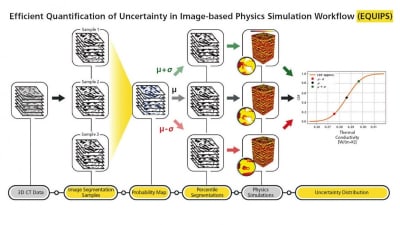
The new computer simulation method can equip engineers and doctors with better information.
Briefs: AR/AI
The advance could accelerate engineers’ design process by eliminating the need to solve complex equations.

Briefs: Photonics/Optics
For the first time, a team has measured the volume of individual droplets smaller than 100 trillionths of a liter, with an uncertainty of less than 1%.

Top Stories
 Blog: Lighting

A Stretchable OLED that Can Maintain Most of Its Luminescence
 Blog: Energy

Batteries that Can Withstand the Cold
 INSIDER: Energy

Advancing All-Solid-State Batteries
 Quiz: Energy

 Blog: Physical Sciences

 Blog: Materials

Webcasts
 Upcoming Webinars: Test & Measurement

From Spreadsheets to Insights: Fast Data Analysis Without Complex...
 Upcoming Webinars: Electronics & Computers

Cooling a New Generation of Aerospace and Defense Embedded...
 Upcoming Webinars: Test & Measurement

Beyond AI-Copy-Paste Engineering: Advanced AI-Integration Success...
 Upcoming Webinars: Automotive

Battery Abuse Testing: Pushing to Failure
 Upcoming Webinars: Internet of Things

A FREE Two-Day Event Dedicated to Connected Mobility
 Upcoming Webinars: Test & Measurement

Choosing the Right N-Port Strategy: Multiport VNAs vs. Switch...