41
-1
60
30
Briefs: Sensors/Data Acquisition
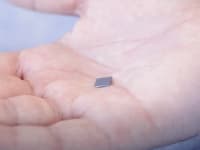
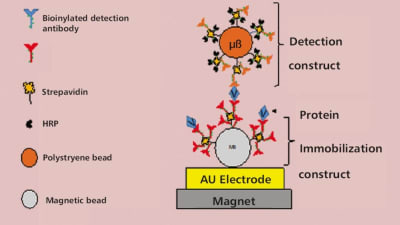
Researchers at NASA Ames Research Center developed an electrochemical, bead-based biological sensor based on Enzyme-Linked Immunosorbent Assay (ELISA) combining a magnetic concentration of signaling molecules and electrochemical amplification using wafer-scale fabrication of microelectrode arrays. Read on to learn more.
Briefs: Robotics, Automation & Control
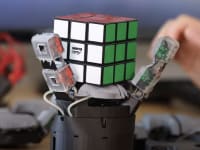
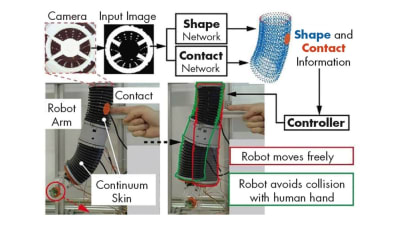
The sensing and control principles used in this framework could lead to new tactile sensors that can be attached to any existing robotics system, offering new sensing and control paradigms for safe human-robot interaction without altering the robot’s original design. Read on to learn more.
Briefs: Photonics/Optics
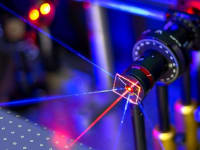
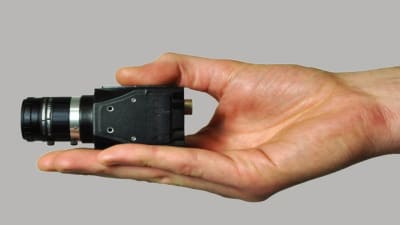
The palm-sized light field camera could improve autonomous driving, classification of recycled materials, and remote sensing. Read on to learn more about it.
Briefs: Imaging
The camera mimics the involuntary movements of the human eye to create sharper, more accurate images for robots, smartphones, and other image-capturing devices. Read on to learn more about it.

Briefs: Semiconductors & ICs
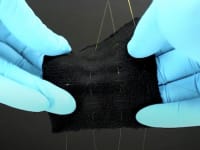
Engineers have developed a new technique for making wearable sensors that enables medical researchers to prototype and test new designs much faster and at a far lower cost than existing methods. Read on to learn more.
Briefs: Sensors/Data Acquisition
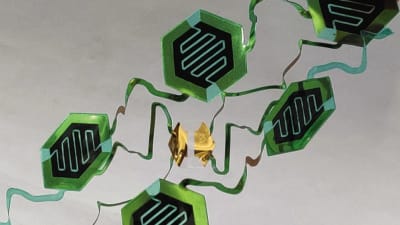
Researchers have developed a method to detect bacteria, toxins, and dangerous chemicals in the environment with a biopolymer sensor that can be printed like ink on a wide range of materials — including wearables. Read on to learn more.
Briefs: AR/AI
A research team created a noninvasive electroencephalogram (EEG) sensor that was installed in a Meta VR headset that can be worn comfortably for long periods. The EEG measures the brain’s electrical activity during the immersive VR interactions. Read on to learn more.

Briefs: Electronics & Computers
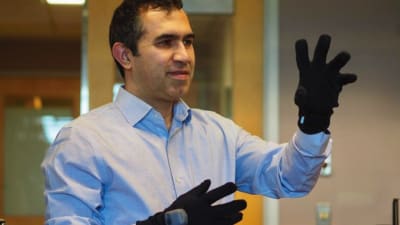
A new groundbreaking “smart glove” is capable of tracking the hand and finger movements of stroke victims during rehabilitation exercises. The glove incorporates a sophisticated network of highly sensitive sensor yarns and pressure sensors that are woven into a comfortable stretchy fabric. Read on to learn more about the smart glove.
Briefs: Photonics/Optics
Researchers at Chalmers University of Technology have developed an optical amplifier that they expect will revolutionize both space and fiber communication.

Briefs: Software
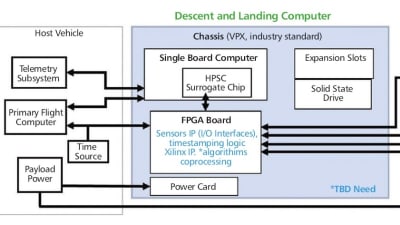
Innovators at NASA Johnson Space Center have developed and successfully flight tested a high-performance computing platform, known as the Descent and Landing Computer (DLC), to suit the demands of safe, autonomous, extraterrestrial spacecraft landings for robotic and human exploration missions.
Briefs: Electronics & Computers
Researchers from Tsinghua University worked to break through the difficulties of robotic recognition of various common, yet complex, items. Read on to learn more.

Briefs: Materials
A research team from Kyushu University, in collaboration with Japanese company Nitto Denko, has developed a tape that can be used to stick 2D materials to many different surfaces, in an easy and user-friendly way.

Briefs: RF & Microwave Electronics
Innovators have developed a method and apparatus to multiplex Radio Frequency Identification (RFID) signals efficiently. The resulting Hyper-Distributed RFID Antenna (HYDRA) system enhances distribution of the RFID reader signal, providing improved coverage for large areas as well as for small, fixed regions requiring a high density of reader antennas.

Briefs: Sensors/Data Acquisition
Because it requires no battery that must be recharged or replaced, and because it requires no special wiring, such a sensor could be embedded in a hard-to-reach place, like inside the inner workings of a ship’s engine. There, it could automatically gather data on the machine’s power consumption and operations for long periods of time.

Briefs: Energy
Researchers have found ways to develop soft OECTs for wearable pressure sensors. They first experimented with a solid type of gating substance: a charged, gelatinous substance called an ionic hydrogel. Read on to learn more.
Briefs: Software
An innovative approach to artificial intelligence (AI) enables reconstructing a broad field of data, such as overall ocean temperature, from a small number of field-deployable sensors using low-powered edge computing, with broad applications across industry, science, and medicine.

Briefs: Information Technology
To help improve the safety and security of AVs, researchers have devised a novel algorithm designed to mimic an attacking device. The algorithm lets researchers identify areas for improvement in autonomous vehicle security.

Briefs: Materials
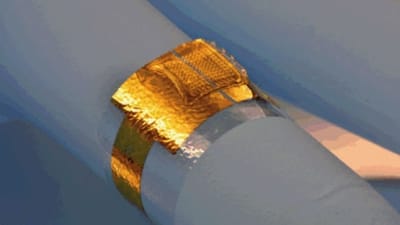
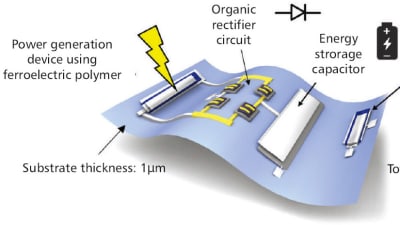
An international team of researchers from Japan and Austria has invented new ultraflexible patches with a ferroelectric polymer that can not only sense a patient’s pulse and blood pressure, but also power themselves from normal movements. The key was starting with a substrate just 1-μm thick.
Briefs: Photonics/Optics
Researchers from Japan have developed DPPFA–Net, an innovative network that overcomes challenges related to occlusion and noise introduced by adverse weather.

Briefs: Electronics & Computers
Researchers from Tokyo University of Science (TUS) led by Associate Professor Takashi Ikuno have developed a flexible paper-based sensor that operates like the human brain. The researchers fabricated a photo-electronic artificial synapse device composed of gold electrodes on top of a 10 μm transparent film consisting of zinc oxide (ZnO) nanoparticles and cellulose nanofibers (CNFs).

Briefs: Test & Measurement
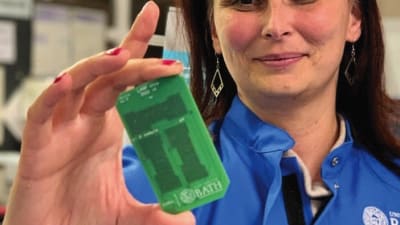
Developed by engineers at the University of Bath, the prototype LoCKAmp device uses innovative Lab-on-a-Chip technology and has been proven to provide rapid and low-cost detection of COVID-19 from nasal swabs.
Briefs: Sensors/Data Acquisition
Detector can identify radioactive isotopes with high resolution.

Briefs: Design
A pair of earbuds can be turned into a tool to record the electrical activity of the brain as well as levels of lactate in the body with the addition of two flexible sensors screen-printed onto a stamp-like flexible surface.

Briefs: Energy
Researchers have developed a sensor that, similar to human skin, can sense temperature variation that originates from the touch of a warm object as well as the heat from solar radiation. The sensor combines pyroelectric and thermoelectric effects with a nano-optical phenomenon.
Briefs: Materials
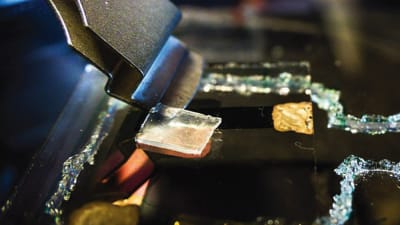
In a new study, engineers from Korea and the United States have developed a wearable, stretchy patch that could help to bridge the divide between people and machines — and with benefits for the health of humans around the world. In lab experiments, the researchers showed that humans could use these devices to operate robotic exoskeletons more efficiently.

Briefs: Energy
Ice build-up on aircraft and wind turbines can impact the safety and efficiency of their systems. Microwave sensors were developed that can identify in real time these accumulations while calculating the rate of melting. This is crucial data for aviation.

Briefs: Robotics, Automation & Control
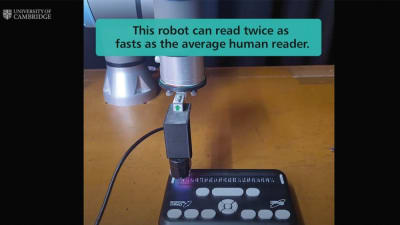
Although the robot braille reader was not developed as an assistive technology, the researchers say the high sensitivity required to read braille makes it an ideal test in the development of robot hands or prosthetics with comparable sensitivity to human fingertips.
Briefs: Manufacturing & Prototyping
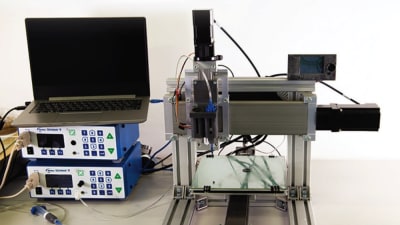
Researchers at Universidad Carlos III de Madrid (UC3M) have created software and hardware for a 4D printer with applications in the biomedical field.
Briefs: AR/AI
Engineers at the University of California San Diego have developed electronic “stickers” that measure the force exerted by one object upon another. The force stickers are wireless, run without batteries and fit in tight spaces. That makes them versatile for a wide range of applications.

Top Stories
 Blog: Lighting

A Stretchable OLED that Can Maintain Most of Its Luminescence
 Blog: Energy

Batteries that Can Withstand the Cold
 INSIDER: Energy

Advancing All-Solid-State Batteries
 Quiz: Energy

 Blog: Physical Sciences

 Blog: Materials

Webcasts
 Upcoming Webinars: Test & Measurement

From Spreadsheets to Insights: Fast Data Analysis Without Complex...
 Upcoming Webinars: Electronics & Computers

Cooling a New Generation of Aerospace and Defense Embedded...
 Upcoming Webinars: Test & Measurement

Beyond AI-Copy-Paste Engineering: Advanced AI-Integration Success...
 Upcoming Webinars: Automotive

Battery Abuse Testing: Pushing to Failure
 Upcoming Webinars: Internet of Things

A FREE Two-Day Event Dedicated to Connected Mobility
 Upcoming Webinars: Test & Measurement

Choosing the Right N-Port Strategy: Multiport VNAs vs. Switch...