41
-1
720
30
Briefs: Communications
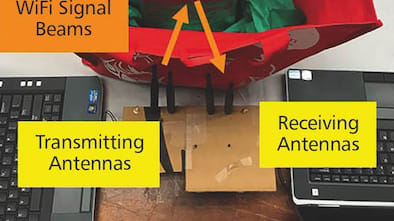
Ordinary WiFi can easily detect weapons, bombs, and explosive chemicals in bags at museums, stadiums, theme parks, schools, and other public venues using a low-cost suspicious...
Briefs: Sensors/Data Acquisition
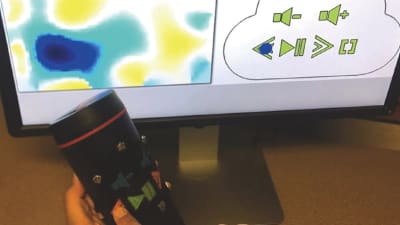
Flexible and wearable sensors measure and track body motion, a task made more complex by the human anatomy’s numerous potential contortions. For a wearable sensor to work properly, it...
Briefs: Mechanical & Fluid Systems
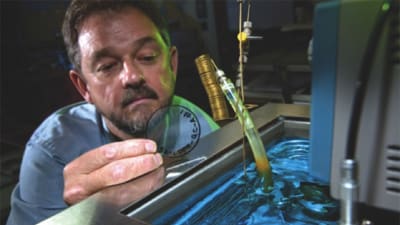
Many applications in science and industry require an apparatus that creates a controlled amount of a fluid introduced into another fluid. For instance, some material corrosion testing applications require...
Briefs: Sensors/Data Acquisition
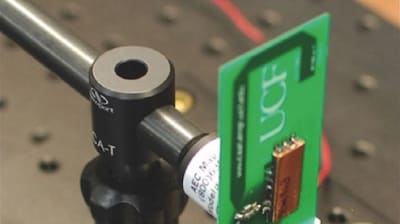
The traditional approach for wireless sensors involves interrogators that communicate with each other (i.e., the two boxes “talk” to each other). In contrast, surface acoustic wave...
Briefs: Communications
GPS signals do not penetrate very deeply or at all in water, soil, or building walls, and therefore can’t be used by submarines or in underground activities such as surveying mines. GPS also may...
Briefs: RF & Microwave Electronics
System Enables Direct Data Transmission Between Underwater and Airborne Devices
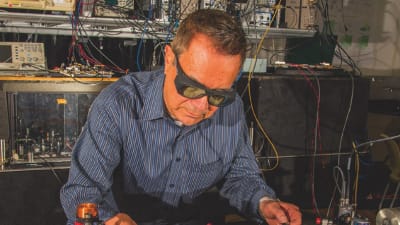
Today, underwater sensors cannot share data with those on land, as both use different wireless signals that only work in their respective mediums. Radio signals that travel through air die very rapidly in water. Acoustic signals, or sonar, sent by underwater devices...
Briefs: Manufacturing & Prototyping
Along with intensity and color, polarization is a property of light that can provide useful information for scene analysis; however, the human eye and most cameras cannot detect...

Briefs: Sensors/Data Acquisition
NASA Langley Research Center scientists have developed a microphone that detects infrasound, i.e., acoustic waves ranging from 20-Hz frequencies down to DC. Infrasound is emitted in a number of hazardous...
Briefs: Mechanical & Fluid Systems
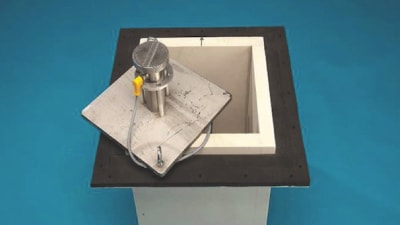
The mechanical properties of sheet metal materials are directional. Their deformation behavior and their strength differ significantly depending on the viewing direction; for example, in the direction of rolling, or...

Briefs: Aerospace
Passive RFID Tag with Long Range and Wide Coverage Capabilities
Researchers at NASA Johnson Space Center have developed the RFID Tag with Long Range and Wide Coverage Capabilities technology that allows a RFID tag to direct a RFID reader beam signal back in the direction of arrival. This technology requires no added power to provide telemetry for...
Briefs: Materials
Measurement Technique for Continuous-Wave, Modulated, and Pulsed Monochromatic Radiation
In many applications, such as remote sensing of atmospheric trace gases, monochromatic radiation with multiple discrete wavelengths is required. To date, there no instrument or technique that measures the wavelength jitters and fluctuations in real time.
Briefs: Sensors/Data Acquisition
Optical range measurements, already used in manufacturing and other fields, may help overcome practical challenges posed by structural fires, which are too hot to measure with conventional...

Briefs: Photonics/Optics
Many devices use light to probe the quantum states of atoms in a vapor confined in a small cell. Atoms can be highly sensitive to external conditions, and therefore make superb detectors. Devices...
Briefs: Mechanical & Fluid Systems
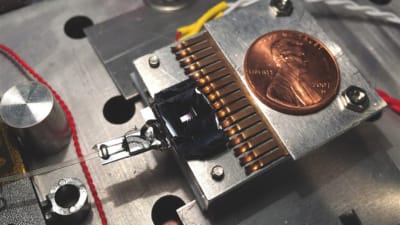
A team of researchers at the New York University Tandon School of Engineering and NYU Center for Neural Science has solved a longstanding puzzle of how to build ultra-sensitive, ultra-small, electrochemical...
Briefs: Imaging
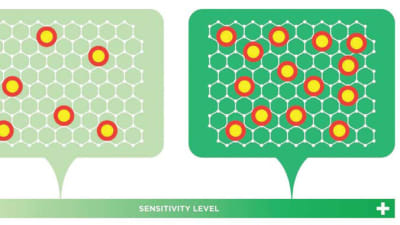
Researchers at the National Institute of Biomedical Imaging and Bioengineering (NBIB) have created a novel, low-cost biosensor to detect Human Epidermal...
Briefs: Sensors/Data Acquisition
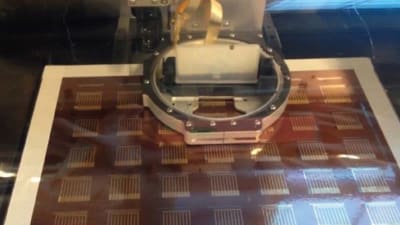
The spread of invasive cancer cells from a tumor's original site to distant parts of the body is known as metastasis. It is the leading cause of death in people with...

Briefs: Medical
A paper-based sensor, which can be worn as a wristband, features happy and sad emoticon faces drawn in an invisible UV-sensitive ink. They successively light up as you...

Briefs: Test & Measurement
Researchers at Rensselaer Poytechnic Institute (RPI) have developed a new approach to optical imaging that makes it possible to quickly and economically monitor multiple molecular interactions in a...
Briefs: Lighting
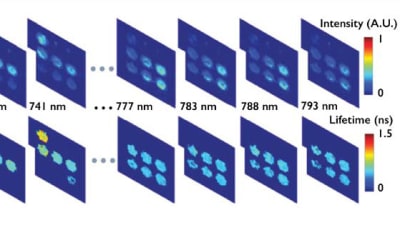
An optical setup developed by researchers at Sandia's Combustion Research Facility and the Technical University of Denmark can now quantify the formation of soot — particulate matter consisting...
Briefs: Communications
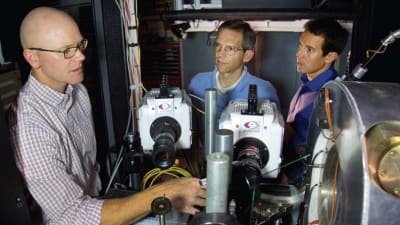
Researchers have, for the first time, integrated two technologies widely used in applications such as optical communications, bio-imaging, and Light Detection and Ranging (LIDAR) systems. In the...

Briefs: Electronics & Computers
Composable Storage Platform for High-Performance Computing
Large-scale, high-performance computing — supercomputing — is essential to solving both complex and large questions. But storage platforms essential for these advanced computer systems have been stuck in a rigid framework that required users to either choose between customization of...
Briefs: Aerospace
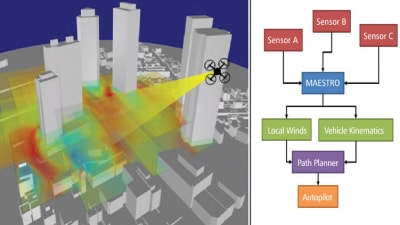
Future Unmanned Aerial Systems (UAS) and air taxis will require advanced onboard autonomy to operate safely within complex and dynamic urban environments. Urban landscapes are...
Briefs: Aerospace
Green Electric Monopropellant (GEM)-Fueled Pulsed Plasma Thruster
NASA required a rocket thruster able to produce a number of pulses at high specific impulse at a relatively low voltage (~300 to 400V). The key problem was that existing propellants for liquid-fueled pulsed plasma thrusters (LPPTs) required high voltages to ablate and accelerate the...
Briefs: Sensors/Data Acquisition
Multi-Purpose, Flexible Wing Structure for Small Unmanned Aerial Systems
Small unmanned aircraft systems (UAS), also known as micro air vehicles, are promising tools for a variety of military and commercial applications. Some small UAS have flexible wings and are lightweight, making them back-packable and easy to deploy. Most UAS that are currently...
Briefs: Photonics/Optics
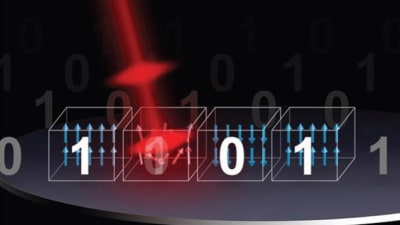
Light is the most energy-efficient way to move information; however, light shows one big limitation: it is difficult to store. Data centers, for example, rely primarily on magnetic hard drives in...
Briefs: Sensors/Data Acquisition
Objects in our daily lives, such as speakers, refrigerators, and even cars, are becoming “smarter” day by day as they connect to the Internet and exchange data, creating the Internet of Things (IoT)....

Briefs: Imaging
Outsourcing machine learning is a rising trend in industry. Major tech firms have launched cloud platforms that conduct computation-heavy tasks, such as running data through a convolutional...

Briefs: Data Acquisition
The technological ramp to fully autonomous vehicles presents significant challenges for companies developing autonomous vehicle programs. Advanced sensor technology, high-speed and...

Briefs: Propulsion
Interoperable Intelligent Controllers for Process Management and Control Networks
NASA Johnson Space Center developed reprogrammable and interchangeable electronic controllers that can attach to a system or subsystem wirelessly or through plug-and-play capability. Originally designed to work with rocket engines, this technology can control...
Top Stories
 Blog: Lighting

A Stretchable OLED that Can Maintain Most of Its Luminescence
 Blog: Energy

Batteries that Can Withstand the Cold
 INSIDER: Energy

Advancing All-Solid-State Batteries
 Quiz: Energy

 Blog: Physical Sciences

 Blog: Materials

Webcasts
 Upcoming Webinars: Test & Measurement

From Spreadsheets to Insights: Fast Data Analysis Without Complex...
 Upcoming Webinars: Electronics & Computers

Cooling a New Generation of Aerospace and Defense Embedded...
 Upcoming Webinars: Test & Measurement

Beyond AI-Copy-Paste Engineering: Advanced AI-Integration Success...
 Upcoming Webinars: Automotive

Battery Abuse Testing: Pushing to Failure
 Upcoming Webinars: Internet of Things

A FREE Two-Day Event Dedicated to Connected Mobility
 Upcoming Webinars: Test & Measurement

Choosing the Right N-Port Strategy: Multiport VNAs vs. Switch...