Stories
33
0
1170
30
Briefs: Sensors/Data Acquisition
The sensor provides accurate and real-time measurement of flow rates and temperature in next-generation microfluidic instruments.

Briefs: AR/AI
This technology enables robots, electronic devices, and prosthetic devices to feel pain through sense of touch.

Q&A: RF & Microwave Electronics
A new class of medical instruments uses flexible electronics to improve patient outcomes in minimally invasive surgeries.

Briefs: Materials
The flexible composites can be used as thermal insulation for environments of up to 1200 °C.

Briefs: Materials
The system is effective in urban environments where there are tall buildings on all sides.

Briefs: Aerospace
The material can be used in power electronics and power converters for solar energy power systems.

Briefs: Electronics & Computers
These implants can provide doctors with regular activity updates and are powered by the patient’s movement.

5 Ws: Materials
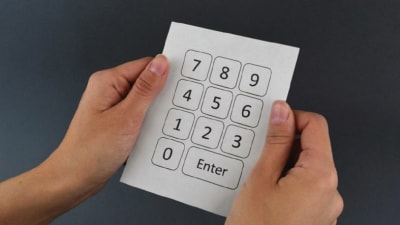
Users can take paper sheets from a notebook and turn them into a music player interface or make food packaging interactive.
Question of the Week: Electronics & Computers
Will Self-Erasing Chips Catch On?
University of Michigan engineers reported that their new self-erasing chips could help stop counterfeit electronics or provide alerts if sensitive shipments are tampered with. The chips use a new material that temporarily stores energy, changing the color of the light it emits. The self-erase period takes seven...
Blog: Mechanical & Fluid Systems
University of Central Florida researchers are developing a human-like way for large machines to cool off and keep from overheating: Letting the machines "breathe."
Technology Leaders: Electronics & Computers
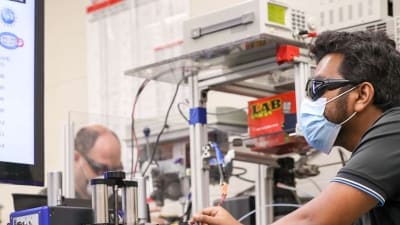
For nearly 50 years, engineers in the electronics, aerospace, defense, medical device, and transportation industries have relied on Parylene coatings.

Briefs: Green Design & Manufacturing
Open source microcontroller technologies in industrially hardened form factors address critical applications.

Briefs: Nanotechnology
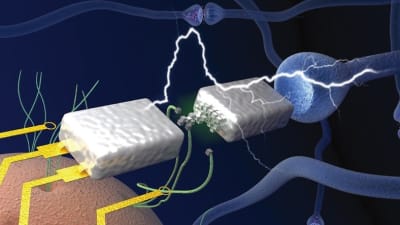
Neuromorphic computing uses memristors that could function and operate like real brain synapses.
Briefs: Semiconductors & ICs
To make electronic components smaller, semiconductor 2D materials are combined with new types of insulator materials.

Briefs: Energy
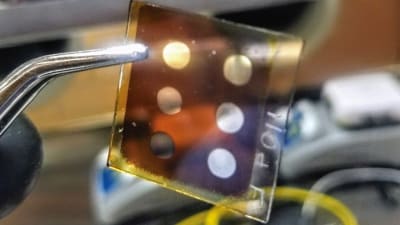
Perovskites could be the active ingredient that makes the next generation of low-cost, efficient, lightweight, and flexible solar cells.
Briefs: Manufacturing & Prototyping
“EasyPass” would enable smart warehouses, automated factories, and more to operate without delays.

Briefs: RF & Microwave Electronics
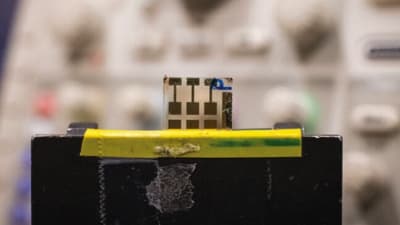
The tiny unit is significant for the miniaturization of optoelectronic systems.
Briefs: Transportation
This battery would enable a 10-minute electrical vehicle recharge.

Briefs: Electronics & Computers
The algorithm provides an extra layer of safety and security against hackers of electronic devices.

Briefs: Sensors/Data Acquisition
This approach could engineer quantum materials atom-by-atom for new electronic, magnetic, and sensing applications.

Briefs: Wearables
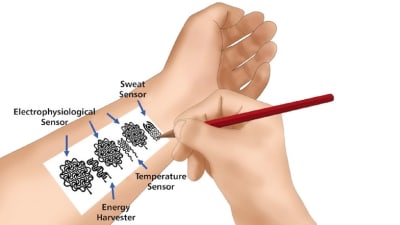
People could monitor their own health conditions by picking up a pencil and drawing a bioelectronic device on their skin.
Briefs: Wearables
Fully integrated flexible electronics made of magnetic sensors and organic circuits open the path towards the development of electronic skin.

Briefs: Electronics & Computers
These non-reciprocal devices on a compact chip pave the way for applications from two-way wireless to quantum computing.

Briefs: Aerospace
The new battery technology could improve electric vertical takeoff and landing aircraft and supercharge safe, long-range electric cars.

Briefs: Sensors/Data Acquisition
This method could benefit next-generation electronics.

Briefs: Photonics/Optics
A metal-organic framework does not contain cost-intensive raw materials and can be produced in bulk.

Briefs: Energy
A nanostructure design lends extraordinary strength to a promising storage ingredient.
Products: Software
Tubing plugs, displacement measurements, CAM software, and more.

Briefs: Test & Measurement
The response time of kinetic inductance bolometers can be greatly enhanced by electrothermal feedback for devices that are both sensitive and speedy.

Top Stories
 Blog: Sensors/Data Acquisition

Going for Gold in Winter Olympic Curling
 Blog: Energy

Batteries that Can Withstand the Cold
 INSIDER: Design

Advancing All-Solid-State Batteries
 Blog: Design

 Blog: Materials

Making Tungsten Carbide a More Viable Alternative
 INSIDER: Power

Webcasts
 Upcoming Webinars: Sensors/Data Acquisition

Beyond AI-Copy-Paste Engineering: Advanced AI-Integration Success...
 Upcoming Webinars: Energy

Battery Abuse Testing: Pushing to Failure
 Upcoming Webinars: Power

A FREE Two-Day Event Dedicated to Connected Mobility
 Upcoming Webinars: Test & Measurement

Choosing the Right N-Port Strategy: Multiport VNAs vs. Switch...
 Upcoming Webinars: Energy

2026 Battery & Electrification Summit (Online)
 Upcoming Webinars: Mechanical & Fluid Systems

The Over-Engineering Trap: Aligning Custom Equipment Specs with...