Stories
51
167
0
180
30
5 Ws: Robotics, Automation & Control
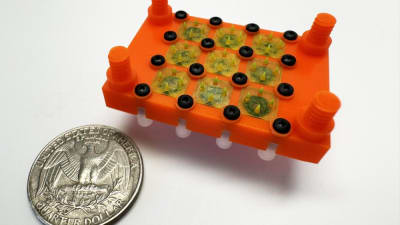
With the goal to democratize space research, MIT engineers have demonstrated the first fully 3D-printed, droplet-emitting electrospray engine which can be produced rapidly and for a fraction of the cost of traditional thruster.
INSIDER: Energy
An innovative circuit design could enable miniature devices, such as microdrones and other microrobotics, to be powered for longer periods of time while staying...

Briefs: Robotics, Automation & Control
In a recent study published in the journal eLife, an international research group has studied the relationship between electrical stimulation in stick insects’ leg muscles and the resultant torque (the twisting force that makes the leg move). Read on to learn what they found.

Briefs: Wearables
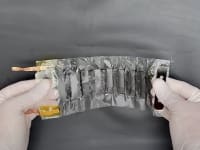
Jamie Paik and colleagues in the Reconfigurable Robotics Lab in EPFL’s School of Engineering have developed a sensor that can perceive combinations of bending, stretching, compression, and temperature changes, all using a robust system that boils down to a simple concept: color. Read on to learn more about it.

Briefs: Mechanical & Fluid Systems
In creating a pair of new robots, Cornell researchers cultivated an unlikely component: fungal mycelia. By harnessing mycelia’s innate electrical signals, the researchers discovered a new way of controlling “biohybrid” robots that can potentially react to their environment better than their purely synthetic counterparts. Read on to learn more.
Briefs: Robotics, Automation & Control
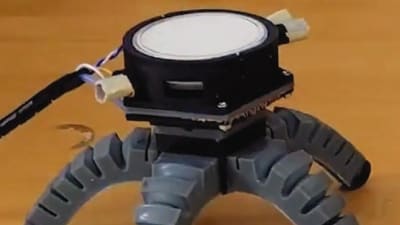
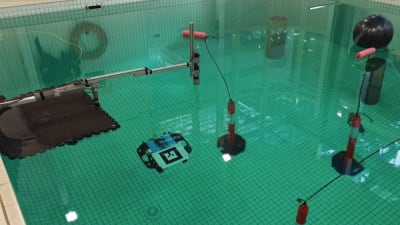
A new study led by Flinders University and French researchers has used a novel bio-inspired computing artificial intelligence solution to improve the potential of UUVs and other adaptive control systems to operate more reliability in rough seas and other unpredictable conditions. Read on to learn more.
INSIDER: Unmanned Systems
New NASA technology works within satellite swarms. This technology, called Distributed Spacecraft Autonomy (DSA), allows individual spacecraft to make independent...

Q&A: Manufacturing & Prototyping
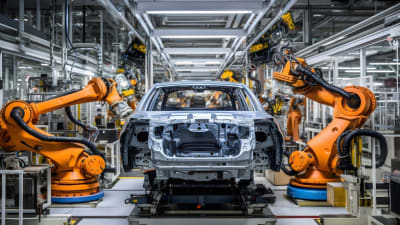
Qing “Cindy” Chang and her team at the University of Virginia have made a significant advancement in manufacturing technology by developing an AI-driven system that could transform how factories operate. Using Multi-Agent Reinforcement Learning (MARL), the team has created a more efficient way to optimize manufacturing systems, improving both speed and quality while reducing waste.
Blog: Robotics, Automation & Control
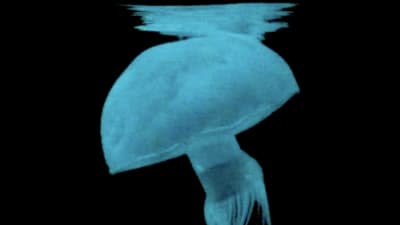
A modular worm robot built by the Organic Robotics Lab and a jellyfish that was a collaboration with the Archer Group, both in Cornell Engineering, demonstrate the benefits of “embodied energy.”
5 Ws: Robotics, Automation & Control
MIT researchers are developing robotic insects that could someday swarm out of mechanical hives to rapidly perform precise pollination.

Special Reports: Automotive
Award–Winning Inventions - February 2025
The Create the Future Design Contest recognizes and rewards engineering innovations that promise a better tomorrow. In this special report, learn about the amazing winners chosen in 2024 from hundreds...Briefs: Electronics & Computers
A recent study demonstrates that soft skin pads doubling as sensors made from thermoplastic urethane can be efficiently manufactured using 3D printers. Read on to learn more.

Briefs: Robotics, Automation & Control
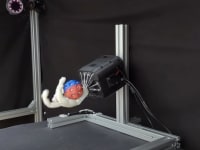
A team has programmed a robotic spacecraft simulator with what it calls s-FEAST: Safe Fault Estimation via Active Sensing Tree Search. Read on to learn more.
Articles: Materials
See the products of tomorrow, including a nanorobotic hand made of DNA that can grab viruses for detection or inhibition developed at the University of Illinois Urbana-Champaign; a new and improved wearable ultrasound patch for continuous and noninvasive blood pressure monitoring developed at the University of California San Diego; and soft and intelligent sensor materials based on ceramic particles developed at Empa’s Laboratory for High-Performance Ceramics.

Articles: Imaging
Watch this video to learn more about three new robotic technologies: A soft robot developed at NC State University; a pair of wearable robotic limbs developed by MIT engineers; and a camera inspired by the human eye developed at the University of Maryland.

Blog: Unmanned Systems
MIT researchers are developing robotic insects that could someday swarm out of mechanical hives to rapidly perform precise pollination.
Blog: Robotics, Automation & Control
RAVEN (Robotic Avian-inspired Vehicle for multiple ENvironments) is designed based on perching birds that frequently switch between air and land. Its multifunctional robotic legs allow it to take off autonomously in environments previously inaccessible to winged drones.

Application Briefs: Sensors/Data Acquisition
On the JAXA Martian Moons mission, gyro sensors from Silicon Sensing on the rover vehicle will explore the larger moon, Phobos, collecting vital surface samples.

INSIDER: Data Acquisition
Led by postdoctoral research fellow Somayeh Hussaini, alongside Professor Michael Milford and Dr Tobias Fischer of the Queensland University of Technology...
INSIDER: Sensors/Data Acquisition
Cornell researchers in physics and engineering have created the smallest walking robot yet. Its mission: to be tiny enough to interact with waves of visible light and still move...
INSIDER: Sensors/Data Acquisition
The world is currently facing significant environmental challenges and complex demands related to infrastructure and natural ecosystems. To address these issues, viable solutions that are both...

Blog: Design
New research from Duke University details a system dubbed SonicSense that allows robots to interact with their surroundings in ways previously limited to humans.
Quiz: Robotics, Automation & Control
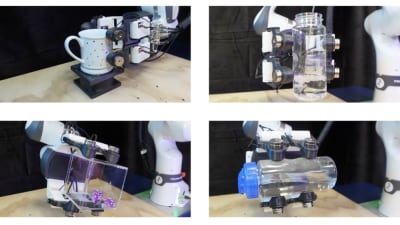
Industrial robots are playing a continually increasing role in manufacturing worldwide. It’s therefore important that we in the tech industries have a good understanding of what they are, what they do, and what they can do. How much do you know about industrial robotics? Test your knowledge with this quiz.

5 Ws: Robotics, Automation & Control
EPFL researchers have built RAVEN, a drone that can walk, hop, and jump into flight with the aid of birdlike legs.

Briefs: Materials
Inspired by a small and slow snail, scientists have developed a robot prototype that may one day scoop up microplastics from the surfaces of oceans, seas, and lakes.
Videos of the Month: Power
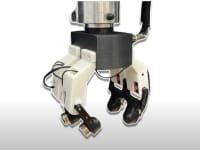
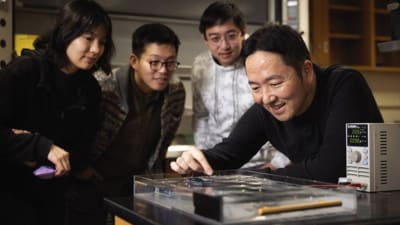
See the videos of month, including one on UW researchers developing a flexible, durable electronic prototype that can harvest energy from body heat and turn it into electricity that can be used to power small electronics; one on Purdue University researchers using both ultrasonic waves and X-ray CT to “see inside” manufactured objects nondestructively; one on Rotograb, a robotic hand that merges the dexterity of human hands with the strength and efficiency of industrial grippers; and more.

Articles: AR/AI
Accelerating progress in AI is redefining what is possible with industrial robotics, enhancing everything from robots’ ability to grip, pick and place as well as their ability to map and navigate through dynamic environments. Read on to learn more about what this means.
Briefs: Imaging
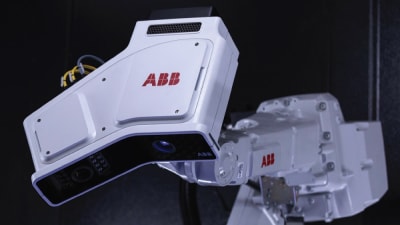
A team led by University of Maryland computer scientists invented a camera mechanism that improves how robots see and react to the world around them. Inspired by how the human eye works, their innovative camera system mimics the tiny involuntary movements used by the eye to maintain clear and stable vision over time. Read on to learn more.

Briefs: Aerospace
MIT engineers are designing a pair of wearable robotic limbs that can physically support an astronaut and lift them back on their feet after a fall. The system, which the researchers have dubbed Supernumerary Robotic Limbs or “SuperLimbs,” is designed to extend from a backpack. Read on to learn more.

Top Stories
 Blog: Lighting

A Stretchable OLED that Can Maintain Most of Its Luminescence
 News: Energy

 INSIDER: Energy

Advancing All-Solid-State Batteries
 Blog: Energy

My Opinion: We Need More Power Soon — Is Nuclear the Answer?
 Blog: Robotics, Automation & Control

Aerial Microrobots That Can Match a Bumblebee's Speed
 Blog: Communications

Microscopic Swimming Machines that Can Sense, Respond to Surroundings
Webcasts
 Upcoming Webinars: Transportation

Advantages of Smart Power Distribution Unit Design for Automotive...
 Upcoming Webinars: Automotive

Quiet, Please: NVH Improvement Opportunities in the Early Design...
 Upcoming Webinars: Sensors/Data Acquisition

From Spreadsheets to Insights: Fast Data Analysis Without Complex...
 Upcoming Webinars: Electronics & Computers

Cooling a New Generation of Aerospace and Defense Embedded...
 Upcoming Webinars: Sensors/Data Acquisition

Beyond AI-Copy-Paste Engineering: Advanced AI-Integration Success...
 Upcoming Webinars: Power