Stories
51
167
0
210
30
Articles: Semiconductors & ICs
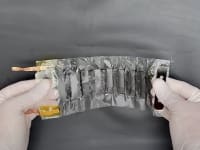
See the products of tomorrow, including the world’s first soft touchpad that can sense the force, area, and location of contact without electricity; a hydrogel that retains the semiconductive ability needed to transmit information between living tissue and machine; and a thin film sensor that measures temperatures up to 1200 °F.

Special Reports: Aerospace
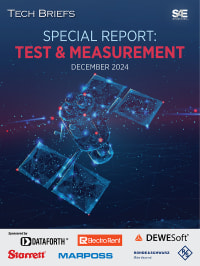
Test & Measurement - December 2024
From space satellites to the factory floor to medical labs, innovative test technologies are enabling major performance, quality, and cost improvements. Read about these and other applications in a new report...Blog: Energy
With another year of Tech Briefs almost in the books, it's time to look at our most-read articles of 2024.
Blog: Design
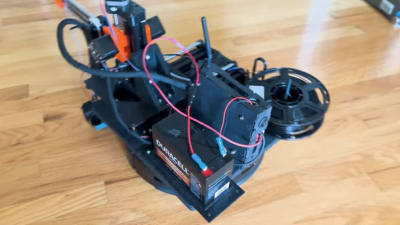
University of Washington researchers have created MobiPrint, a mobile 3D printer that can automatically measure a room and print objects onto its floor. The team’s graphic interface lets users design objects for a space that the robot has mapped out.
Blog: Design
The researchers’ groundbreaking study introduces the first toroidal, light-driven microrobot that can move autonomously in viscous liquids, such as mucus.

INSIDER: Unmanned Systems
In 2018, Google DeepMind's AlphaZero program taught itself the games of chess, shogi, and go, using machine learning and a special algorithm to determine the best moves to win a game within a...

INSIDER: Motion Control
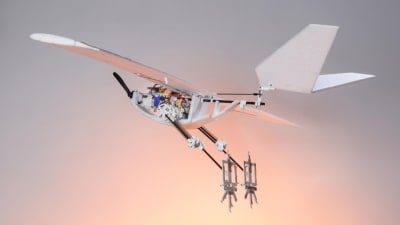
EPFL researchers have built a drone that can walk, hop, and jump into flight with the aid of birdlike legs, greatly expanding the range of potential environments accessible to unmanned aerial...
Application Briefs: Manufacturing & Prototyping
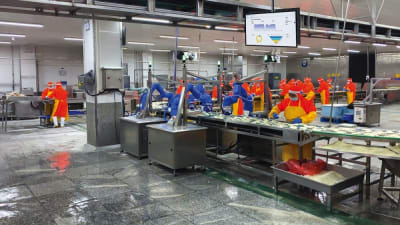
Robotic automation technology is reshaping food manufacturing, packaging, and handling by driving significant improvements in efficiency, quality, and flexibility. By integrating advanced artificial intelligence, computer vision, and proprietary force-sensing technology, Flexiv has introduced cutting-edge automation to the food processing sector. Read on to learn more.
Products: Software
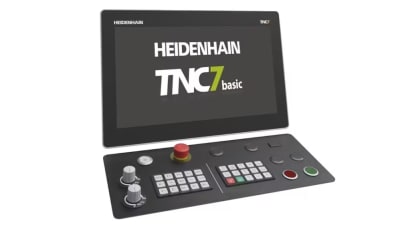
See the new products, including the TNC7 control system from HEIDENHAIN; ATI Industrial Automation's GBX 10 Gigabit Tool Changer Ethernet Module; Emerson's Rosemount™ 802 Wireless Multi-Discrete Input or Output Transmitter; Moticont's two 15.9 mm (0.625 in.) diameter Linear Voice Coil Motors, the LVCM-016-019-01M (Metric) and the LVCM-016-019-01 (Imperial); and much more.
Podcasts: Propulsion
Kevin Kirkpatrick, Vice President of Aftermarket Global Operations, Pratt & Whitney, is the guest on this episode of the Aerospace & Defense Technology podcast.

Briefs: Sensors/Data Acquisition
Researchers led by Professor Young Min Song from the Gwangju Institute of Science and Technology have unveiled a vision system inspired by feline eyes to enhance object detection in various lighting conditions. Featuring a unique shape and reflective surface, the system reduces glare in bright environments and boosts sensitivity in low-light scenarios. Read on to learn more.

Briefs: Robotics, Automation & Control
Penn Engineers have developed a new algorithm that allows robots to react to complex physical contact in real time, making it possible for autonomous robots to succeed at previously impossible tasks, like controlling the motion of a sliding object. Read on to learn more.

Briefs: Robotics, Automation & Control
MIT engineers have developed a method that enables robots to make similarly intuitive, task-relevant decisions. The team’s new approach, named Clio, enables a robot to identify the parts of a scene that matter, given the tasks at hand. Read on to learn more about Clio.
Briefs: Robotics, Automation & Control
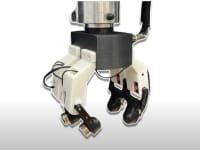
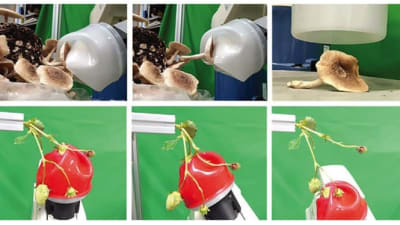
A team of researchers has developed an innovative soft robotic gripper named ROtation-based Squeezing grippEr or ROSE. Read on to learn more about it.
Application Briefs: Manufacturing & Prototyping
Since the COVID-19 pandemic that advanced contactless service, robots are increasingly being seen conducting routine deliveries around hospitals and hotels. Developed by Robotise Technologies, JEEVES is one such autonomous service robot used in hotels, healthcare facilities, offices, airports, and other settings. Its main duty is to transport materials and products. Read on to learn more about JEEVES.

Special Reports: AR/AI
Robotics - November 2024
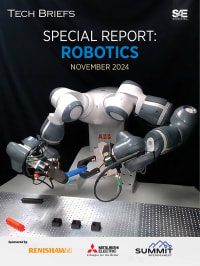
Read about the latest breakthroughs in robots for space exploration, healthcare, factory automation, hazardous waste cleanup, and more in this collection of articles from the editors of Tech Briefs, Medical Design...Blog: Sensors/Data Acquisition
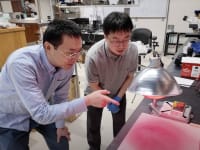
Researchers at Tampere University have developed the world’s first soft touchpad that can sense the force, area, and location of contact without electricity. The device utilizes pneumatic channels, enabling its use in environments such as MRI machines and other conditions that are unsuitable for electronic devices.

INSIDER: Motion Control
A peek through an optical microscope reveals a hidden universe teeming with life. Nature has devised ingenious methods for micro-organisms to navigate their viscous...

Blog: Transportation
The Create the Future Design Contest has helped bring out the best technologies for the future throughout its 22-year run. The annual contest had the finalists in each of the seven categories pitch their ideas to a team of judges, who would then choose the Grand Prize winner. Read on to learn who won.

Blog: Manufacturing & Prototyping
The robot’s versatility is due to a novel design based on kirigami, a cousin of origami in which slices in the material enable it to fold, expand, and locomote.

INSIDER: AR/AI
As children learn to ride a bike, adults can only guide them to a certain point. A large portion of developing this new skill depends on independent trial and error from...

INSIDER: Electronics & Computers
Mimicking how some parts of the human body work, researchers from King’s College London have transmitted a series of commands to devices with a new kind of compact circuit,...

INSIDER: Information Technology
In the classic cartoon “The Jetsons,” Rosie the robotic maid seamlessly switches from vacuuming the house to cooking dinner to taking out the trash. But in real life, training a...

Articles: AR/AI
Event-based sensing enables new approaches to machine learning. An object recognition or detection algorithm that, until now, could only use the spatial information from a frame can now access another dimension: time. Read on to learn more.

Videos of the Month: AR/AI
See the videos of the month, including one on a humanoid robot that can effortlessly learn and perform a variety of expressive movements all while maintaining a steady gait on diverse terrains; one on Picotaur, the first legged robot of its size to run, turn, push loads, and climb miniature stairs; one on the DoD’s All Domain Test Range; and one on using generative AI and cutting-edge scene-mapping technology to elevate robots from simple tools to being capable of providing aid in disaster and battlefield scenarios.

Briefs: Robotics, Automation & Control
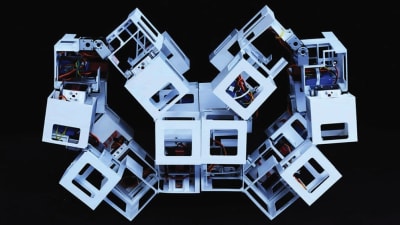
Inspired by the paper-folding art of origami, North Carolina State University engineers have discovered a way to make a single plastic cubed structure transform into more than 1,000 configurations using only three active motors. The findings could pave the way for shape-shifting artificial systems that can take on multiple functions and even carry a load. Read on to learn more.
Articles: Manned Systems
“AstroAnts” are small robots for inspection and diagnostic tasks on external spacecraft surfaces, both in orbit and on planetary surfaces. They're also the Robotics & Automation Finalist. Read on to learn more.

Briefs: Electronics & Computers
Yen-Ling Kuo at the University of Virginia School of Engineering and Applied Science is collaborating with a team at the Toyota Research Institute to build language representations of driving behavior that enable a robot to associate the meaning of words with what it sees by watching how humans interact with the environment or by its own interactions with the environment. Read on to learn more.

Briefs: Medical
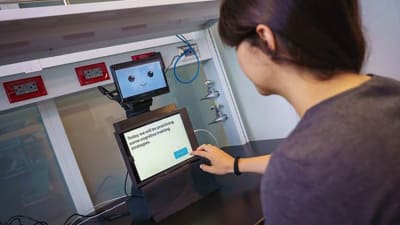
Read on to learn about CARMEN — Cognitively Assistive Robot for Motivation and Neurorehabilitation — a small, tabletop robot designed to help people with mild cognitive impairment learn skills to improve memory, attention, and executive functioning at home.
Top Stories
 Blog: Lighting

A Stretchable OLED that Can Maintain Most of Its Luminescence
 News: Energy

 INSIDER: Energy

Advancing All-Solid-State Batteries
 Blog: Energy

My Opinion: We Need More Power Soon — Is Nuclear the Answer?
 Blog: Robotics, Automation & Control

Aerial Microrobots That Can Match a Bumblebee's Speed
 Blog: Communications

Microscopic Swimming Machines that Can Sense, Respond to Surroundings
Webcasts
 Upcoming Webinars: Transportation

Advantages of Smart Power Distribution Unit Design for Automotive...
 Upcoming Webinars: Automotive

Quiet, Please: NVH Improvement Opportunities in the Early Design...
 Upcoming Webinars: Sensors/Data Acquisition

From Spreadsheets to Insights: Fast Data Analysis Without Complex...
 Upcoming Webinars: Electronics & Computers

Cooling a New Generation of Aerospace and Defense Embedded...
 Upcoming Webinars: Sensors/Data Acquisition

Beyond AI-Copy-Paste Engineering: Advanced AI-Integration Success...
 Upcoming Webinars: Power