Stories
34
68
0
30
30
Blog: AR/AI
An AI system developed by NYU Tandon School of Engineering researchers promises a new tool for the millions of people who want to manage their weight, diabetes, and other diet-related health conditions.

Products: Mechanical & Fluid Systems
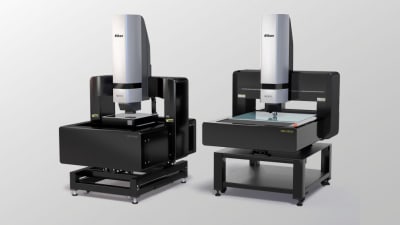
See what's new on the market, including Nikon Corporation's NEXIV VMF-K Series, a next-generation video measuring system; the surfaceCONTROL 3D snapshot sensors from Micro-Epsilon; InfraTec's INDU-SCAN base, a flexible and cost-effective thermography solution for use in industrial applications 24/7; Curtiss-Wright Actuation Division's Exlar® electric actuator product offerings; and more.
News: Medical
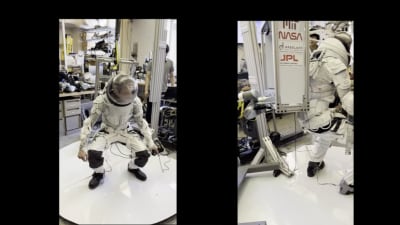
Watch this video to learn more about three new robotic technologies: A soft robot developed at NC State University; a pair of wearable robotic limbs developed by MIT engineers; and a camera inspired by the human eye developed at the University of Maryland.
INSIDER: Photonics/Optics
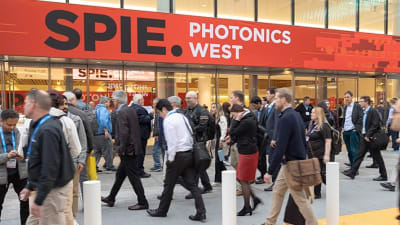
Seven early-stage startup companies have been selected to compete for a top prize of $10,000 at the 15th annual SPIE Startup Challenge at Photonics West Tuesday, January 28.

INSIDER: Photonics/Optics
The SPIE Photonics West 2025 technical conference and exhibition returns to San Francisco's Moscone Center, January 25 to 30, providing attendees the opportunity to learn...
INSIDER: Imaging
Cornell researchers in physics and engineering have created the smallest walking robot yet. Its mission: to be tiny enough to interact with waves of visible light and still move...

Application Briefs: Semiconductors & ICs
Today, companies are building small satellite constellations with tens to hundreds of units, far exceeding the scale of traditional space operations. Read on to learn more.

Briefs: AR/AI
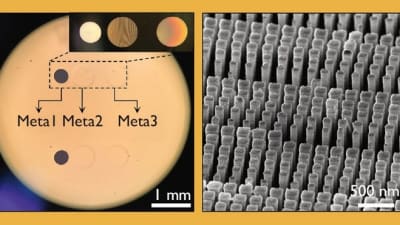
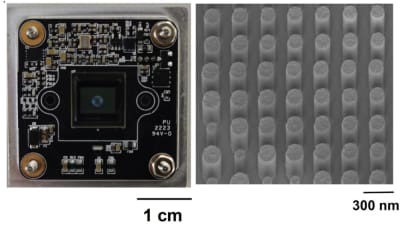
Researchers have developed an optical design technology that dramatically reduces the volume of cameras with a folded lens system utilizing “metasurfaces,” a next-generation nano-optical device. Read on to learn more.
Briefs: Photonics/Optics
A team from the University of Barcelona and the Universitat Oberta de Catalunya has designed a methodology that facilitates the recognition of QR codes in these physical environments, where reading is more complicated. Read on to learn more.

Products: Photonics/Optics
See the new products, including TRIOPTICS' compact and retrofittable solution for processing laser diodes on the ATS 100 alignment turning station; TRUMPF's VCSELs and photodiodes; Edmund Optics’ TECHSPEC® UV Fused Silica Plano-Convex (PCX) Lenses MgF2 Coated feature precision specifications; Imperx' two new Cheetah cameras: the CXP-C1941 and the SFP-C1941; and more.

Briefs: Photonics/Optics
A team led by University of Maryland computer scientists invented a camera mechanism that improves how robots see and react to the world around them. Inspired by how the human eye works, their innovative camera system mimics the tiny involuntary movements used by the eye to maintain clear and stable vision over time. Read on to learn more.

Articles: Imaging
Event-based sensing enables new approaches to machine learning. An object recognition or detection algorithm that, until now, could only use the spatial information from a frame can now access another dimension: time. Read on to learn more.

Briefs: Imaging
If the outside of clothing or a vehicle were covered with the coating, an infrared camera would have a harder time distinguishing what is underneath. Read on to learn what this means.

Briefs: Imaging
Butterflies can see more of the world than humans, including more colors and the field oscillation direction, or polarization, of light. Other species, like the mantis shrimp, can sense an even wider spectrum of light, as well as the circular polarization, or spinning states, of light waves. Inspired by these abilities in the animal kingdom, researchers have developed an ultrathin optical element known as a metasurface, which can attach to a conventional camera and encode the spectral and polarization data of images captured in a snapshot or video through tiny, antenna-like nano-structures that tailor light properties.

Products: Photonics/Optics
See what's in the product showcase, including VSD’s innovative SV-2000 Flex; Keysight Technologies' N7718C Optical Reference Transmitter; MKS Instruments' Newport™ TLS260B Tunable Light Sources; Analog Modules' Picosecond Pulsed Seed Laser Diode Driver, Model 766A; and more.

Videos: Imaging
Watch this video to learn more about three new imaging technologies, including one on a new scientific technique that could significantly improve the reference frames for GPS navigation services. One on off-road autonomous driving tools with a focus on stealth for the military and agility for space and agriculture clients, and one on a novel approach for creating high-performance, ultrafast lasers on nanophotonic chips.

Blog: Design
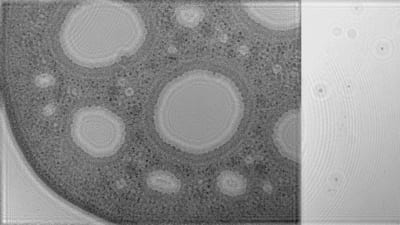
Researchers have demonstrated that their smartphone-based digital holographic microscope can capture, reconstruct, and display holograms in almost real time.
Blog: Imaging
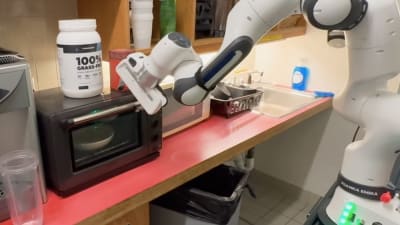
URDFormer takes images of real environments from the internet and quickly creates physically realistic simulation environments where robots can train.
Articles: Imaging
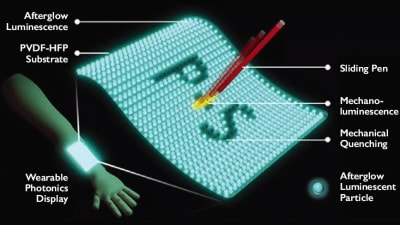
Optics are used in a vast range of applications in virtually every sector of human endeavor, from scientific microscopes to medical diagnostic imaging, from automobile headlights to telescopes pointed at the stars. Read on to learn about their advances.
Products: Software
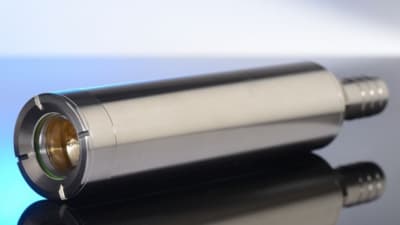
See the new products, including TRIOPTICS' expansion of its OptiCentric® 101 centration measurement system, a new type of laser-based immersion probe, LightSolver's breakthrough in quantum-inspired high-performance computing, Teledyne FLIR's next-generation embedded software for the ITAR-free Boson+ thermal camera module, IDS Imaging Development Systems' all essential camera components for the uEye ACP series, and much more.
Briefs: Sensors/Data Acquisition
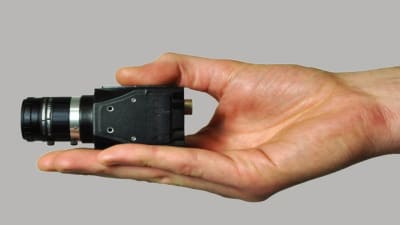
The palm-sized light field camera could improve autonomous driving, classification of recycled materials, and remote sensing. Read on to learn more about it.
Briefs: AR/AI
The camera mimics the involuntary movements of the human eye to create sharper, more accurate images for robots, smartphones, and other image-capturing devices. Read on to learn more about it.

Briefs: Imaging
This innovative camera technology represents a significant advance in object detection, offering numerous potential applications across various industries. Read on to learn more.
Articles: Imaging
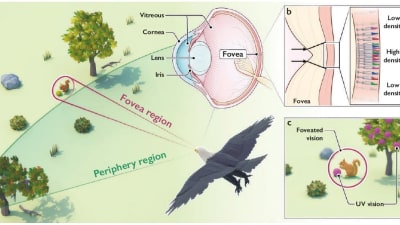
Event-based vision is well on its way to establishing itself as a paradigm that will create a new standard in many markets requiring efficiency in how machines can see. Over the past several years, it has successfully evolved to meet a wider range of uses. And by continuing to adapt and address the requirements of many applications, we will see more event-based cameras all around us.

Briefs: Electronics & Computers
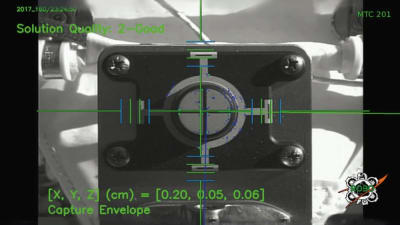
Innovators at NASA’s Johnson Space Center (JSC) have developed computer vision software that derives target posture determinations quickly and then instructs an operator how to properly align a robotic end-effector with a target that they are trying to grapple.
Blog: Imaging
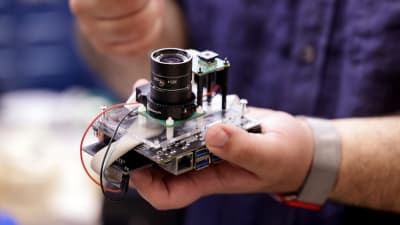
A new camera could prevent companies from collecting embarrassing and identifiable photos and videos from devices like smart home cameras and robotic vacuums.
Blog: Photonics/Optics
Researchers have developed a technique that allows artificial intelligence (AI) programs to better map three-dimensional (3D) spaces using two-dimensional (2D) images captured by multiple cameras.

Blog: Photonics/Optics
Researchers have leveraged deep learning techniques to enhance the image quality of a metalens camera. The new approach uses AI to turn low-quality images into high-quality ones.
Special Reports: Defense

Space Technology - May 2024
NASA's plan for building landing pads on the moon...the first 3D-printed rocket to reach orbit...MAPLE mission demonstrates wireless power transfer in space. Read about these and other exciting advances in this...Top Stories
 Blog: Lighting

A Stretchable OLED that Can Maintain Most of Its Luminescence
 Blog: Energy

Batteries that Can Withstand the Cold
 INSIDER: Energy

Advancing All-Solid-State Batteries
 Quiz: Energy

 Blog: Physical Sciences

 Blog: Materials

Webcasts
 Upcoming Webinars: Test & Measurement

From Spreadsheets to Insights: Fast Data Analysis Without Complex...
 Upcoming Webinars: Electronics & Computers

Cooling a New Generation of Aerospace and Defense Embedded...
 Upcoming Webinars: Test & Measurement

Beyond AI-Copy-Paste Engineering: Advanced AI-Integration Success...
 Upcoming Webinars: Automotive

Battery Abuse Testing: Pushing to Failure
 Upcoming Webinars: Internet of Things

A FREE Two-Day Event Dedicated to Connected Mobility
 Upcoming Webinars: Test & Measurement

Choosing the Right N-Port Strategy: Multiport VNAs vs. Switch...