

Stories
37
-1
270
30
Briefs: Materials
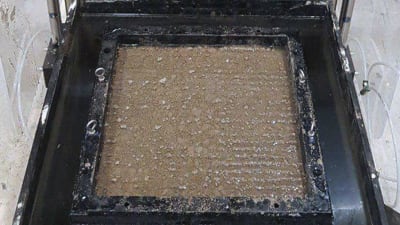
The sustainable material offers a zero-waste solution to boost recycling and support the circular economy.
Briefs: Green Design & Manufacturing
Carbon nanotubes are used to create solar cells with unprecedented flexibility and resistance.

Briefs: Green Design & Manufacturing
A method converts cotton into sugar, which can be turned into spandex, nylon, or ethanol.

Podcasts: Green Design & Manufacturing
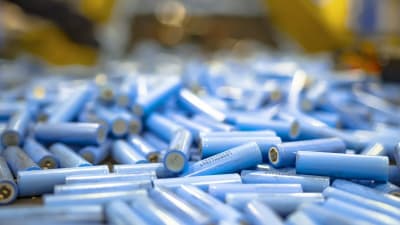
Canadian battery recycling company Li-Cycle is leveraging its sustainable process to provide an end-of-life solution for lithium-ion batteries.
Briefs: Green Design & Manufacturing
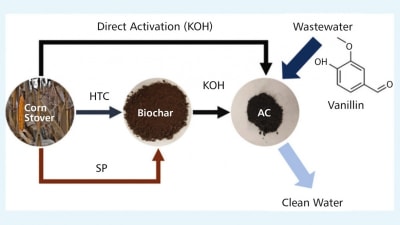
Activated carbon made from corn stover filters 98 percent of a pollutant from water.
Briefs: Imaging
This approach could result in developing chemical sensors that are sensitive at a very low level to a specific chemical in the environment.

Briefs: Materials
An optimized flash process could reduce carbon emissions.

Briefs: Energy
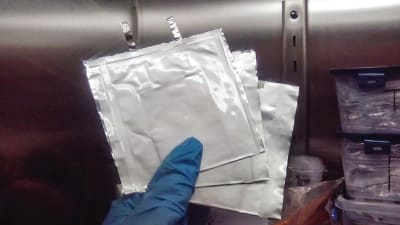
The method replenishes lithium in electrodes while keeping the existing structure intact.
INSIDER: Energy
The aging energy grid is being pushed to the breaking point. Power outages from extreme weather alone cost anywhere from $2 billion to $77 billion per year. And some isolated communities still rely on...

Briefs: Green Design & Manufacturing
The eco-friendly process removes heavy metals, dyes, and other pollutants.
Briefs: Aerospace
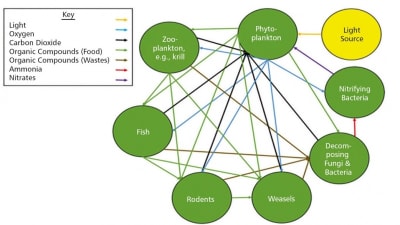
The Controlled Closed-Ecosystem Development System (CCEDS) can be used to develop designs for sustainable, small-scale reproductions of subsets of the Earth’s biosphere and the Orbiting Modular...
Articles: Energy
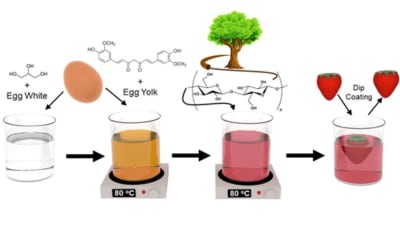
The invention could capture the potential of the edible packaging market.
Articles: Electronics & Computers
See this year's product designs from engineers, students, and entrepreneurs worldwide.

Articles: Manufacturing & Prototyping
Once triggered, the enzyme-embedded plastics self-destruct, completely degrading and eliminating microplastics in days.

Question of the Week: Green Design & Manufacturing
Will Coatings Reduce Food Waste?
Today’s lead story highlighted an egg-based coating that extends the shelf life of fruits and vegetables.
Blog: Materials
A micron-thick coating, made largely from leftover eggs, can extend the shelf life of the fruits and vegetables in your refrigerator.

Question of the Week: Green Design & Manufacturing
Will Technology Help to Reduce Plastic Pollution?
Our October Q&A in Tech Briefs highlighted an achievement from Professor Aaron Sadow of Ames Laboratory in Iowa. Sadow’s chemical process produces valuable biodegradable chemicals from discarded plastics, which are then used as surfactants and detergents in a range of applications.
Blog: Green Design & Manufacturing
The 2021 Create the Future Design Contest winner wants to build a truly recyclable bioplastic.
Articles: Test & Measurement
A tiny investment in system capital expenditures can lead to huge rewards in reduced capital and operating expenses.

Q&A: Materials
A chemical process produces valuable biodegradable chemicals from discarded plastics.
Briefs: Sensors/Data Acquisition
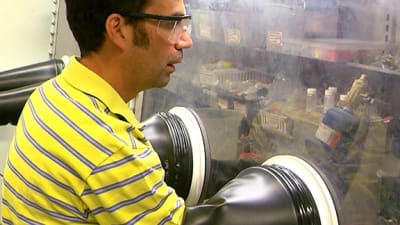
The method could be applied to carbon waste streams.

Briefs: Sensors/Data Acquisition
The process produces rapid, cost-effective, and environmentally friendly material.

UpFront: Aerospace
NASA reveals winners of a CO2 conversion challenge.

INSIDER: Energy
Molten sodium batteries have been used for many years to store energy from renewable sources, such as solar panels and wind turbines. However, commercially available molten sodium-sulfur...

Briefs: Materials
The reaction converts 90% of plastic to jet fuel and other valuable hydrocarbon products within an hour at moderate temperatures.

Briefs: Energy
The new battery is degradable, recyclable, non-toxic, and safer than lithium-ion batteries.
Briefs: Energy
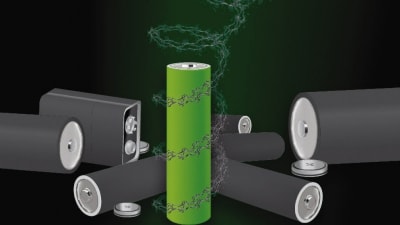
The rechargeable batteries could be a safer and more environmentally friendly alternative to lithium-ion batteries.

Blog: Mechanical & Fluid Systems
Researchers at North Carolina State University demonstrated a low-cost technique for retrieving — and then reusing — nanowires from electronic devices.

Q&A: Electronics & Computers
Kristin Sampayan from the Lawrence Livermore National Laboratory found a fast way to switch high voltages.

Top Stories
 Blog: Lighting

A Stretchable OLED that Can Maintain Most of Its Luminescence
 News: Energy

 INSIDER: Design

Advancing All-Solid-State Batteries
 Blog: Power

My Opinion: We Need More Power Soon — Is Nuclear the Answer?
 Blog: AR/AI

Aerial Microrobots That Can Match a Bumblebee's Speed
 Blog: Lighting Technology

Microscopic Swimming Machines that Can Sense, Respond to Surroundings
Webcasts
 Upcoming Webinars: Transportation

Advantages of Smart Power Distribution Unit Design for Automotive...
 Upcoming Webinars: Automotive

Quiet, Please: NVH Improvement Opportunities in the Early Design...
 Upcoming Webinars: Test & Measurement

From Spreadsheets to Insights: Fast Data Analysis Without Complex...
 Upcoming Webinars: Defense

Cooling a New Generation of Aerospace and Defense Embedded...
 Upcoming Webinars: Energy

Battery Abuse Testing: Pushing to Failure
 Upcoming Webinars: AR/AI



