

Stories
37
-1
300
30
Briefs: Green Design & Manufacturing
The solution increases water recovery, prevents mineral scaling, and cuts the volume of brines in half.

Briefs: Materials
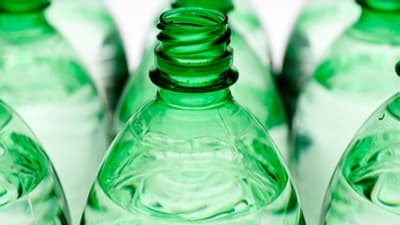
The high-quality bioplastics can be molded into a film that can be used in plastic bags and packaging.
Briefs: Materials
The desalination method produces clean water while, at the same time, potentially capturing valuable metals such as gold.

Briefs: Mechanical & Fluid Systems
Prototypes show promise as a low-cost, natural filtration option.

Briefs: Green Design & Manufacturing
By reclaiming polymers in plastics, the process could cut down on millions of tons of plastic waste.

Briefs: Green Design & Manufacturing
The technology recovers pure and precious metals from alloys in cellphones and other electrical waste.

Briefs: Transportation
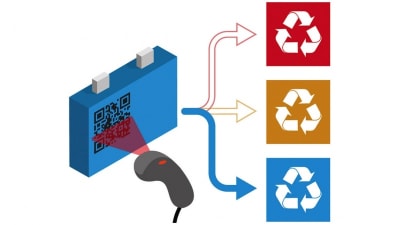
The Battery Identity Global Passport could be accessible as a scannable QR code or a computer chip.
Articles: Manufacturing & Prototyping
Learn how to reuse more material without recycling.

Briefs: Manufacturing & Prototyping
This portable method could enable hospitals to make their own supply of the disinfectant on demand and at lower cost.
Briefs: Materials
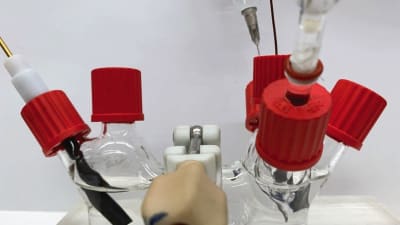
Potential applications include lightweight building materials and growing cells for biomedical purposes.

5 Ws: Materials
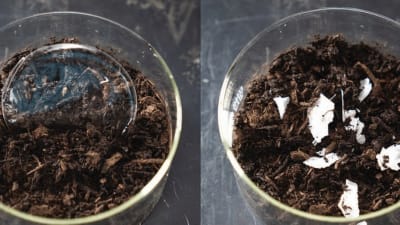
A new enzyme-activated compostable material could diminish microplastics pollution.
Articles: Sensors/Data Acquisition
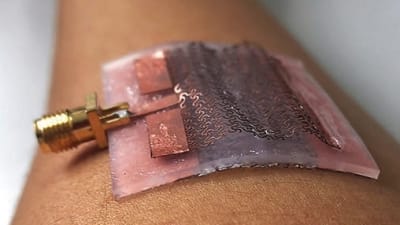
Battery recycling, NASA's water treatment, and a wireless wearable transmitter.
Blog: Energy
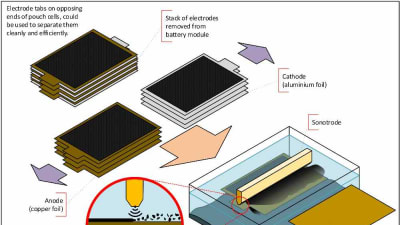
Could a tool from the dentist's office lead to better recycling of lithium-ion batteries?
Question of the Week: Electronics & Computers
Will Recyclable Electronics Catch On?
Our June issue of Tech Briefs features a completely recyclable transistor from Duke University. The fully functional semiconductor is made out of three carbon-based inks that can be easily printed onto paper or other flexible, environmentally friendly surfaces.
Briefs: Materials
Due to the chemical stability and durability of industrial polymers, plastic waste does not easily degrade in landfills and is often burned, which produces carbon dioxide and other hazardous gases. In order...

Articles: Materials
Head-up displays, health-monitoring sensors from NASA, and a pollen sponge.

Briefs: Green Design & Manufacturing
This invention achieves sustainable freshwater production in a variety of climates at minimal energy cost.

Briefs: Materials
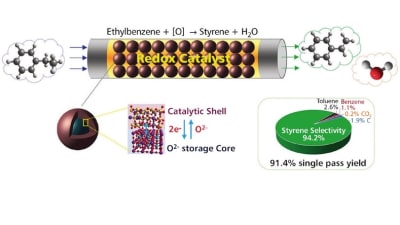
This could reduce the environmental impact of styrene manufacturing.
Briefs: Energy
A new electrocatalyst efficiently converts carbon dioxide into ethanol.

INSIDER: Materials
Rice University engineers have suggested a colorful solution to next-generation energy collection: Luminescent solar concentrators (LSCs) in your windows. The team designed and built...

INSIDER: Wearables
Researchers at CU Boulder have developed a new, low-cost, wearable device that transforms the human body into a biological battery. The device is stretchy enough that you can wear it like a...

INSIDER: Electronics & Computers
Range anxiety, the fear of running out of power before being able to recharge an electric vehicle, may be a thing of the past, according to a team of Penn State engineers who are...

Briefs: Mechanical & Fluid Systems
This technology has potential across many industries including water reclamation and treatment, and waste destruction in liquid waste streams.

Briefs: Green Design & Manufacturing
By converting CO2 into complex hydrocarbon products, a new catalyst could aid in large-scale efforts to recycle excess carbon dioxide.

Briefs: Green Design & Manufacturing
Researchers have demonstrated that they can attract, capture, and destroy perfluoroalkyl and polyfluoroalkyl substances (PFAS), a group of federally regulated substances nicknamed “the forever chemicals”...

Briefs: Materials
A chemical process converts polyethylene plastic into a strong, valuable adhesive.

Briefs: Manufacturing & Prototyping
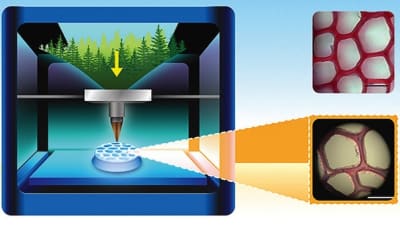
By emulating the natural cellular architecture of wood, green products such as clothes, packaging, and furniture can be manufactured with unique properties.
Briefs: Automotive
A new machine learning algorithm could make smartphones charge faster and increase the time between charges for electric vehicles.

Blog: Materials
The "polymer of squares” could one day enable the use of plastic products many times over.

Top Stories
 Blog: Lighting

A Stretchable OLED that Can Maintain Most of Its Luminescence
 News: Energy

 INSIDER: Design

Advancing All-Solid-State Batteries
 Blog: Power

My Opinion: We Need More Power Soon — Is Nuclear the Answer?
 Blog: AR/AI

Aerial Microrobots That Can Match a Bumblebee's Speed
 Blog: Lighting Technology

Microscopic Swimming Machines that Can Sense, Respond to Surroundings
Webcasts
 Upcoming Webinars: Semiconductors & ICs

Advantages of Smart Power Distribution Unit Design for Automotive...
 Upcoming Webinars: Transportation

Quiet, Please: NVH Improvement Opportunities in the Early Design...
 Upcoming Webinars: AR/AI

From Spreadsheets to Insights: Fast Data Analysis Without Complex...
 Upcoming Webinars: Electronics & Computers

Cooling a New Generation of Aerospace and Defense Embedded...
 Upcoming Webinars: Power

Battery Abuse Testing: Pushing to Failure
 Upcoming Webinars: Internet of Things



