

Stories
37
-1
420
30
Briefs: Test & Measurement
Recent findings indicate that frequent, short-term crew exposure to elevated CO2 levels, combined with other physiological impacts of microgravity, may lead to a number of...

Briefs: Green Design & Manufacturing
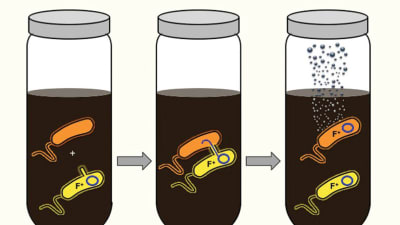
Gas biosensors have been developed that “see” into soil and follow the behavior of the microbial communities in the soil. Genetically engineered bacteria was used that...
Briefs: Green Design & Manufacturing
A method to capture carbon dioxide directly from ambient air offers a new option for carbon capture and storage strategies to combat global warming.

Briefs: Green Design & Manufacturing
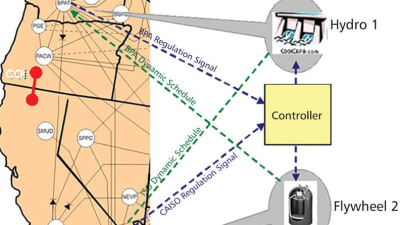
A new hybrid energy storage controller is designed for a centralized control system that operates multiple energy storage devices (ESDs) and distributed generators to provide energy and...
Briefs: Materials
Reducing Moisture in Natural Fibers
Biological transformation focuses on the sustainable use of biological resources such as plants or microorganisms. In the future, it is expected to reduce reliance on fossil fuels such as oil, coal, or gas, and help tackle major challenges such as climate change and global population growth. It offers options and...
Briefs: Energy
Bi-Directional Energy Cascades and the Origin of Kinetic Turbulence in the Solar Wind
The kinetic turbulence of solar wind originates in the solar corona. The solar wind carries the fluctuations and escapes from the corona along the open magnetic field lines, and enters into the interplanetary space. The energy exchange among waves and particles...
Briefs: Green Design & Manufacturing
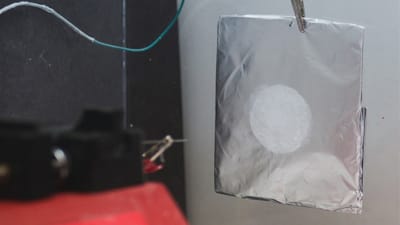
Despite years of effort to stabilize proteins outside of their native environments, scientists have made limited progress in combining proteins with synthetic components like fibers without compromising...
Briefs: Materials
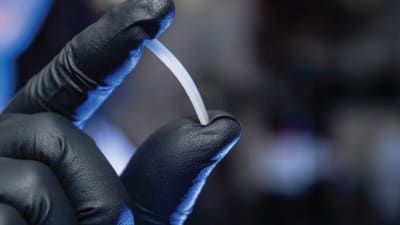
A polymer was discovered that possesses many of the same characteristics as plastics, such as light weight, heat resistance, strength, and durability. But the new polymer, unlike...
Blog: Materials
Researchers from Rice University are finding ways to use greater amounts of fly ash in an effort to build a “greener” kind of concrete.
Briefs: Aerospace
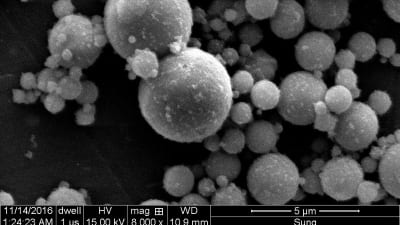
The Federal Aviation Administration (FAA) averages more than 100 reports a month of interactions between unmanned aircraft systems (UAS) and commercial or private planes. For UAS to fly in...

Briefs: Materials
Demands for improved computer processing power have led researchers to explore both new processes and other materials beyond silicon to produce electronic components....

Briefs: Energy
Power electronics used for routing, control, and conversion of electrical power traditionally utilize silicon semiconductors. These systems tend to be bulky, require active cooling, and are inadequate for...

Question of the Week: Green Design & Manufacturing
Can a 'Cool' Strategy Improve Water-Purification Efforts?
Researchers from the University of Buffalo found a counter-intuitive way of improving the water-purification process: keeping things cool.
Blog: Mechanical & Fluid Systems
Researchers at the University of Buffalo have found a counter-intuitive way of improving the water-purification process: keeping things cool.
Briefs: Mechanical & Fluid Systems
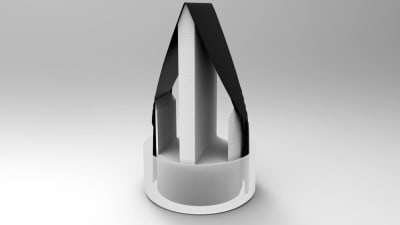
Correlation spectroscopy is an attractive technique for sensing and analysis applications because it combines the attributes of mechanical and optical simplicity, high selectivity, and good sensitivity. In correlation...
Briefs: Energy
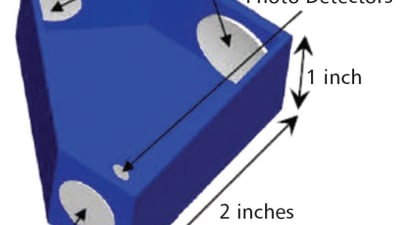
Electric vehicles are growing in popularity, and while they represent a cleaner alternative to fossil-fueled vehicles, their increased use may stress the grid if this growing load is left unmanaged. A need...

Briefs: Materials
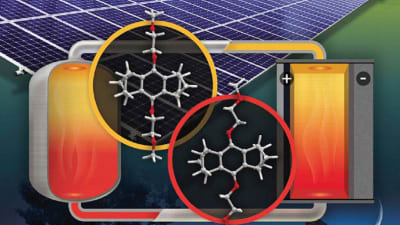
Researchers have created a material that consists of carefully structured molecules designed to be particularly electrochemically stable in order to prevent the battery from losing energy to unwanted reactions. In...
Articles: Transportation
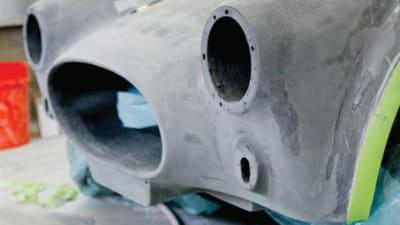
Next-generation manufacturing takes on a 50-year-old icon as ORNL researchers transform the classic Shelby Cobra sports car into a 3D-printed laboratory on wheels. Additive manufacturing enables the seamless integration...
Blog: Green Design & Manufacturing
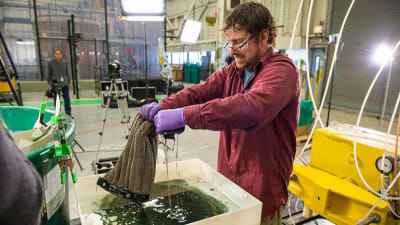
A reusable sponge from the U.S. Department of Energy’s Argonne National Laboratory cleans up spills – not in the kitchen, but on the coast.
Blog: Green Design & Manufacturing
How to Control Vehicle Emissions: Selective Catalytic Reduction (SCR) or Exhaust Gas Recirculation (EGR)?
What's the best platform for controlling vehicle emissions? "It depends!" says one engine expert.
Briefs: Motion Control
A small robot with the ability to hoist large loads could have countless applications, not only as a small, inexpensive, disposable, mobile sensor in the realms of search and rescue,...

Briefs: Energy
Cobalt Oxygen-Evolving Catalysts for Clean Solar Fuel
By splitting a water molecule into two atoms of hydrogen and one of oxygen, scientists can use the Sun’s energy to make a clean fuel. Splitting a water molecule requires a metal catalyst to get the reaction started. Recently, much scientific attention has focused on cobalt, a relatively...
Briefs: Energy
Innovators at NASA’s Glenn Research Center have developed a variable-frequency, alternating current (AC) power system to enable turbo-electric and hybrid electric propulsion....

Blog: Energy
A switchable window – one that transforms from a clear to tinted state – is not a new invention. What is new, however, is a “smart glass” that is low-cost.

Briefs: Medical
Researchers at Pacific Northwest National Laboratory (PNNL) have developed an inexpensive electrochemical sensing system that significantly improves the ability to rapidly and accurately detect heavy...

Articles: Imaging
How much gold remains to be mined on Earth? How about the lesser-known element, indium, necessary for computer and smartphone displays? With known sources of some essential metals facing...

Facility Focus: Energy
Located in Argonne, IL, Argonne National Laboratory (ARL) is a multidisciplinary science and engineering research center. Born out of the University of Chicago’s work on the Manhattan Project in the...
Briefs: Materials
Green Approach for Toughening Thermosetting Reactive Resins
Thermosetting reactive resin systems such as epoxy, bismaleimide, and polyimide classes of material are brittle. The origin of brittleness is attributed to the high crosslinking density that exists in the fully cured forms of these materials. Traditionally, the toughness of these resins is...
Blog: Green Design & Manufacturing
An energy at the National Renewable Energy Laboratory used computer simulation to project the impact of in-home charging on the grid.

Top Stories
 Blog: Lighting

A Stretchable OLED that Can Maintain Most of Its Luminescence
 News: Energy

 INSIDER: Design

Advancing All-Solid-State Batteries
 Blog: Power

My Opinion: We Need More Power Soon — Is Nuclear the Answer?
 Blog: AR/AI

Aerial Microrobots That Can Match a Bumblebee's Speed
 Blog: Lighting Technology

Microscopic Swimming Machines that Can Sense, Respond to Surroundings
Webcasts
 Upcoming Webinars: Transportation

Advantages of Smart Power Distribution Unit Design for Automotive...
 Upcoming Webinars: Unmanned Systems

Quiet, Please: NVH Improvement Opportunities in the Early Design...
 Upcoming Webinars: Sensors/Data Acquisition

From Spreadsheets to Insights: Fast Data Analysis Without Complex...
 Upcoming Webinars: Electronics & Computers

Cooling a New Generation of Aerospace and Defense Embedded...
 Upcoming Webinars: Power

Battery Abuse Testing: Pushing to Failure
 Upcoming Webinars: Transportation



