
Stories
43
-1
150
30
Briefs: Medical
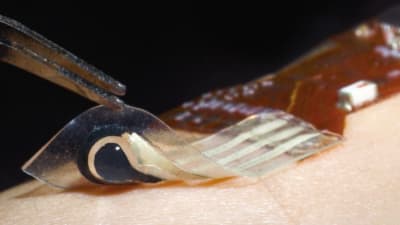
Detecting diseases early requires the rapid, continuous, and convenient monitoring of vital biomarkers. Researchers have developed a novel sensor that enables the continuous, real-time detection of solid-state epidermal biomarkers. Read on to learn more.
Articles: Manufacturing & Prototyping
The Rising Star Awards program was launched in March 2024 as an initiative by SAE Media Group to recognize women engineers who are pushing boundaries, demonstrating outstanding innovation and leadership, as well as paving the way for countless others. In its inaugural year, the Rising Star Awards program received 205 nominations from organizations across the globe. Read on to learn about the winners.

Articles: Medical
Oonagh Hassett, Program Manager, Symphysis Medical from Galway, Ireland, is the 2024 Rising Star Award Winner for Medical.

Articles: Medical
Dr. Asha Parekh, CEO and Co-Founder, Front Line Medical Technologies from Ontario, Canada, is the 2024 Rising Star Award Winner for Medical.

Briefs: Medical
In a newly published paper in the journal Science, researcher Qiushi Guo demonstrated a novel approach for creating high-performance, ultrafast lasers on nanophotonic chips. His work centers on miniaturizing mode-lock lasers. Read on to learn more.

Briefs: Sensors/Data Acquisition
McGill University researchers have made a breakthrough in diagnostic technology, inventing a ‘lab on a chip’ that can be 3D-printed in just 30 minutes. The chip has the potential to make on-the-spot testing widely accessible. Read on to learn more.

Briefs: Medical
A new coronavirus test can get accurate results from a saliva sample in less than 30 minutes. Many of the components of the handheld device used in this technology can be 3D printed, and the test can detect as little as one viral particle per 1-μL drop of fluid. Read on to learn more.

Briefs: Materials
University of Waterloo Chemical Engineering Researcher Dr. Elisabeth Prince teamed up with researchers from the University of Toronto and Duke University to design the synthetic material made using cellulose nanocrystals, which are derived from wood pulp. The material is engineered to replicate the fibrous nanostructures and properties of human tissues. Read on to learn more.

Briefs: Sensors/Data Acquisition
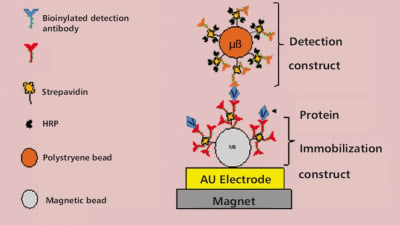
Researchers at NASA Ames Research Center developed an electrochemical, bead-based biological sensor based on Enzyme-Linked Immunosorbent Assay (ELISA) combining a magnetic concentration of signaling molecules and electrochemical amplification using wafer-scale fabrication of microelectrode arrays. Read on to learn more.
Briefs: Medical
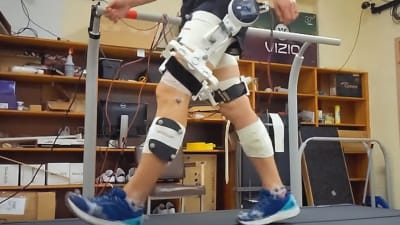
New research from the University of Massachusetts Amherst pushes forward the bounds of stroke recovery with a unique robotic hip exoskeleton, designed as a training tool to improve walking function. This invites the possibility of new therapies that are more accessible and easier to translate from practice to daily life. Read on to learn more.
INSIDER: Robotics, Automation & Control
Researchers have developed an artificial motor at the supramolecular level that can develop impressive power. The wind-up motor is a tiny ribbon made of special molecules. When energy is applied, the...

Special Reports: Medical
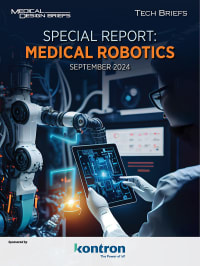
Medical Robotics - September 2024
This free report from the editors of Medical Design Briefs explores how advances in robotics and AI are improving surgery, patient care, treatment, and device manufacturing.Q&A: AR/AI
Professor Saptarshi Das and his team at Penn State University learned that when it comes to mating, two things matter for Heliconius butterflies: the look and the smell of their potential partner. This led them to think about how multiple sensory inputs could enable more efficient use of AI.

INSIDER: Robotics, Automation & Control
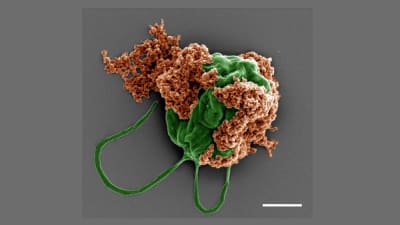
Engineers at the University of California San Diego have developed microscopic robots, known as microrobots, capable of swimming through the lungs to deliver...
Podcasts: Medical
AI is optimizing manufacturing efficiency, quality control, and supply chain management.

NASA Spinoff: Medical
The Eyegaze Edge system developed in collaboration with NASA is an eye-tracking technology that makes 'talking' possible for people who can’t.

Briefs: Sensors/Data Acquisition
Researchers have developed a method to detect bacteria, toxins, and dangerous chemicals in the environment with a biopolymer sensor that can be printed like ink on a wide range of materials — including wearables. Read on to learn more.

Briefs: Sensors/Data Acquisition
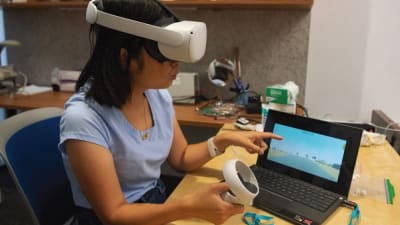
A research team created a noninvasive electroencephalogram (EEG) sensor that was installed in a Meta VR headset that can be worn comfortably for long periods. The EEG measures the brain’s electrical activity during the immersive VR interactions. Read on to learn more.
Briefs: Medical
Eva Baur, a Ph.D. student, used 3D-printed double network granular elastomers (DNGEs) to print a prototype ‘finger,’ complete with rigid ‘bones’ surrounded by flexible ‘flesh.’ The finger was printed to deform in a pre-defined way, demonstrating the technology’s potential to manufacture devices that are sufficiently supple to bend and stretch, while remaining firm enough to manipulate objects. Read on to learn more.

Podcasts: Design
How robotics and cobots are providing increased efficiency and quality in the medical device production process.

Podcasts: Design
In this season, we are taking an in-depth look at Printed Health: Transforming Medicine with Advanced Manufacturing, and this episode will focus specifically on...

Podcasts: Manufacturing & Prototyping
The ethical implications of integrating robots into healthcare, discussing topics such as patient trust, privacy concerns, and the balance between human and robotic interaction in caregiving.

NASA Spinoff: Aerospace
A technology developed for NASA to identify pathogens inside spacecraft turned out to be beneficial for wastewater surveillance on Earth.
Podcasts: Design
The ethical implications of integrating robots into healthcare, discussing topics such as patient trust, privacy concerns, and the balance between human and robotic interaction in caregiving.

Podcasts: AR/AI
How robots are being utilized for tasks in clinics and hospitals, from delivering medications to managing inventory and performing tasks such as taking blood pressure.

Briefs: Medical
A team has developed a new cable system for heart pumps that doesn’t cause infections. This is particularly important given that wireless methods of transmitting power remain unavailable to patients in the foreseeable future.

Briefs: AR/AI
An artificial intelligence (AI) tool developed by researchers at the University of Rochester can help people with Parkinson’s disease remotely assess the severity of their symptoms within minutes. A study in npj Digital Medicine describes the new tool, which has users tap their fingers 10 times in front of a webcam to assess motor performance on a scale of 0-4.

Briefs: Medical
Researchers at NASA Johnson Space Center have developed the Portable Knee Dynamometer, a device that enables quadricep and hamstring strength assessment, rehabilitation, and exercise capabilities for a user outside of a traditional clinical setting.

Briefs: Medical
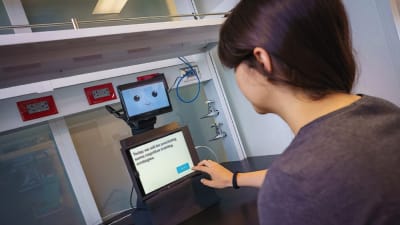
Engineers at the University of California San Diego in collaboration with clinicians, people with MCI, and their care partners have developed CARMEN, short for Cognitively Assistive Robot for Motivation and Neurorehabilitation — a small, tabletop robot designed to help people with mild cognitive impairment (MCI) learn skills to improve memory, attention, and executive functioning at home.
Top Stories
 Blog: Design

Aerial Microrobots That Can Match a Bumblebee's Speed
 Blog: Energy

My Opinion: We Need More Power Soon — Is Nuclear the Answer?
 Blog: Electronics & Computers

Turning Edible Fungi into Organic Memristors
 Blog: Semiconductors & ICs

Revolutionizing the Production of Semiconductor Chips
 Blog: Robotics, Automation & Control

Microscopic Swimming Machines that Can Sense, Respond to Surroundings
 Quiz: Energy

Webcasts
 Upcoming Webinars: Power

Hydrogen Engines Are Heating Up for Heavy Duty
 Upcoming Webinars: Transportation

Advantages of Smart Power Distribution Unit Design for Automotive...
 Upcoming Webinars: Unmanned Systems

Quiet, Please: NVH Improvement Opportunities in the Early Design...
 Upcoming Webinars: Power

A FREE Two-Day Event Dedicated to Connected Mobility
 On-Demand Webinars: Automotive

E/E Architecture Redefined: Building Smarter, Safer, and Scalable Vehicles
 Podcasts: Unmanned Systems

How Sift's Unified Observability Platform Accelerates Drone Innovation