Stories
6,36,37,43,46,48,50,56,58,59,60
7,8,36,110,131,134,135,138,139,141,142,144,145,151,152,201,202
-1
4380
30
Who's Who: Aerospace
Chuck Jorgensen, Chief Scientist for the Neuro Engineering Lab at NASA Ames Research Center, in Moffett Field, CA, currently studies biolelectrical...

Briefs: Physical Sciences
Single-Photon-Sensitive HgCdTe Avalanche Photodiode Detector
The purpose of this program was to develop single-photon-sensitive shortwavelength infrared (SWIR) and midwavelength infrared (MWIR) avalanche photodiode (APD) receivers based on linear-mode HgCdTe APDs, for application by NASA in light detection and ranging (lidar) sensors. Linear-mode...
Briefs: Physical Sciences
Surface-Enhanced Raman Scattering Using Silica Whispering- Gallery Mode Resonators
The motivation of this work was to have robust spectroscopic sensors for sensitive detection and chemical analysis of organic and molecular compounds. The solution is to use silica sphere optical resonators to provide surface-enhanced spectroscopic signal.
Briefs: Physical Sciences
Color-Changing Sensors for Detecting the Presence of Hypergolic Fuels
Hypergolic fuel sensors were designed to incorporate novel chemo chromic pigments into substrates for use in various methods of leak detection. There are several embodiments to this invention that would provide specific visual indication of hypergols used during and after...
Briefs: Physical Sciences
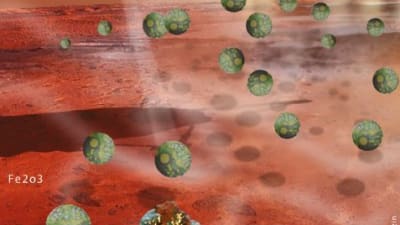
A revolutionary way is proposed of studying the surface of Mars using a wind-driven network of mobile sensors: GOWON. GOWON would be a scalable, self-powered and...
Briefs: Physical Sciences
Analysis of the Effects of Streamwise Lift Distribution on Sonic Boom Signature
Investigation of sonic boom has been one of the major areas of study in aeronautics due to the benefits a low-boom aircraft has in both civilian and military applications. Current Federal Aviation Administration regulations prohibit supersonic flight over land due to...
Briefs: Physical Sciences
Particle seeding is a key diagnostic component of filter testing and flow imaging techniques. Typical particle generators rely on pressurized air or gas sources to propel the particles into the flow field. Other...
Briefs: Physical Sciences
Ultra-Compact, Superconducting Spectrometer-on-a-Chip at Submillimeter Wavelengths
Small size, wide spectral bandwidth, and highly multiplexed detector readout are required to develop powerful multi-beam spectrometers for high-redshift observations. Currently available spectrometers at these frequencies are large and bulky. The grating sizes for...
Briefs: Physical Sciences
Rad-Tolerant, Thermally Stable, High-Speed Fiber-Optic Network for Harsh Environments
Future NASA destinations will be challenging to get to, have extreme environmental conditions, and may present difficulty in retrieving a spacecraft or its data. Space Photonics is developing a radiationtolerant (rad-tolerant), high-speed, multichannel fiber-optic...
Briefs: Physical Sciences
High-Collection-Efficiency Fluorescence Detection Cell
A new fluorescence cell has been developed for the laser induced fluorescence (LIF) detection of formaldehyde. The cell is used to sample a flow of air that contains trace concentrations of formaldehyde. The cell provides a hermetically sealed volume in which a flow of air containing...
Application Briefs: Green Design & Manufacturing
The Propellants North Administrative and Maintenance Facility at Kennedy Space Center, located in Cape Canaveral, FL, achieves net-zero energy use. To offset the costs of electricity provided by...

NASA Spinoff: Aerospace
NASA Technology
“Alpha, Golf, November, Echo, Zulu.” “Sierra, Alpha, Golf, Echo, Sierra.” “Lima, Hotel, Yankee.”
It looks like some strange word game, but the combinations of words...

News: Aerospace
Blended Wing Body Research Aircraft Makes 100th Test Flight
The Boeing X-48 Blended Wing Body subscale research aircraft made its 100th flight at NASA's Dryden Flight Research Center at Edwards Air Force Base, CA. The unmanned X-48C aircraft was flown on two separate 25-minute flights -- the seventh and eighth flights for the X-48C since it began...
News: Aerospace
Tape-Wrapped "Aeroshells" Cut Cost of Hypersonic Glide Vehicles
The Air Force Research Laboratory (AFRL) has developed and demonstrated a new process by tape-wrapping large, unique-shaped carbon-carbon aircraft shells, or aeroshells. Aeroshells are formed into a lifting body shape called Hypersonic Glide Vehicles, which are used as the primary...
Blog: Manufacturing & Prototyping
U.S. Manufacturing Needs A Brand Makeover
Today we're pleased to have a guest blog from Eileen Markowitz, president of Thomas Industrial Network.
To engage this new generation of manufacturers, we must restore — and elevate — the perception of manufacturing in America.
Articles: Materials
Greek mythology tells of the inventor Daedalus using wings of his own fashioning to escape from imprisonment on the island of Crete. In 1988, a similar adventure was launched, though in this case, carbon-fiber...

Who's Who: Aerospace
Dr. Carlos Calle, lead scientist in Kennedy Space Center’s Electrostatics and Surface Physics Lab, is developing instrumentation that addresses...

Briefs: Physical Sciences
Complete depth information can be extracted from analyzing all angles of light rays emanated from a source. However, this angular information is lost in a typical 2D imaging system. In...

Briefs: Physical Sciences
Membrane Shell Reflector Segment Antenna
The mesh reflector is the only type of large, in-space deployable antenna that has successfully flown in space. However, state-of-the-art large deployable mesh antenna systems are RF-frequency-limited by both global shape accuracy and local surface quality. The limitations of mesh reflectors stem from two...
Briefs: Physical Sciences
Radio Frequency Plasma Discharge Lamps for Use as Stable Calibration Light Sources
Stable high radiance in visible and near-ultraviolet wavelengths is desirable for radiometric calibration sources. In this work, newly available electrodeless radio-frequency (RF) driven plasma light sources were combined with research-grade, low-noise power supplies...
Briefs: Physical Sciences
Device and Container for Reheating and Sterilization
Long-duration space missions require the development of improved foods and novel packages that do not represent a significant disposal issue. In addition, it would also be desirable if rapid heating technologies could be used on Earth as well, to improve food quality during a sterilization...
Briefs: Physical Sciences
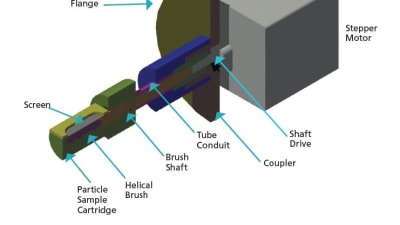
A compact sampling tool mechanism that can operate at various temperatures, and transport and sieve particle sizes of powdered cuttings and soil grains with no...

Briefs: Physical Sciences
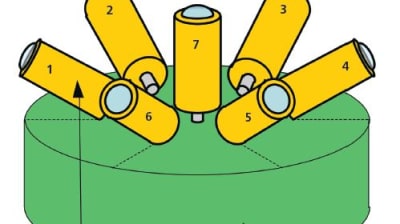
Solar System Exploration camera implementations to date have involved either single cameras with wide field-ofview (FOV) and consequently coarser spatial resolution, cameras on a movable mast, or...
Briefs: Physical Sciences
A Distributive, Non-Destructive, Real-Time Approach to Snowpack Monitoring
This invention is designed to ascertain the snow water equivalence (SWE) of snowpacks with better spatial and temporal resolutions than present techniques. The approach is ground-based, as opposed to some techniques that are air-based. In addition, the approach is compact,...
Briefs: Physical Sciences
Ka-band Digitally Beamformed Airborne Radar Using SweepSAR Technique
A paper describes a frequency-scaled SweepSAR demonstration that operates at Ka-Band (35.6 GHz), and closely approximates the DESDynl mission antenna geometry, scaled by 28. The concept relies on the SweepSAR measurement technique. An array of digital receivers captures waveforms...
Briefs: Physical Sciences
Multi-Beam Approach for Accelerating Alignment and Calibration of HyspIRI-Like Imaging Spectrometers
A paper describes an optical stimulus that produces more consistent results, and can be automated for unattended, routine generation of data analysis products needed by the integration and testing team assembling a high-fidelity imaging spectrometer...
News: Physical Sciences
Tabletop Fault Model Shows Why Some Earthquakes Shake Faster
The more time it takes for an earthquake fault to heal, the faster the shake it will produce when it finally ruptures, according to a new study by engineers at the University of California, Berkeley, who conducted their work using a tabletop model of a quake fault. While the study does...
News: Nanotechnology
Multi-Walled Carbon Nanotubes Could Become Electronic Interconnects
Using a new method for precisely controlling the deposition of carbon, researchers have demonstrated a technique for connecting multi-walled carbon nanotubes to the metallic pads of integrated circuits without the high interface resistance produced by traditional fabrication...
Articles: Medical
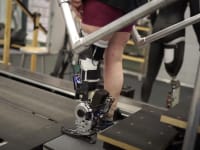
Prosthetic Leg Connector
Dave King Synergy Tech, Kelowna, BC Canada
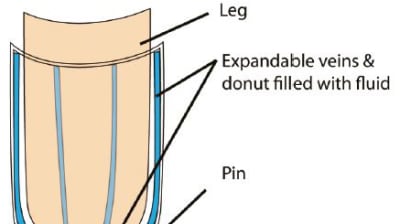
This is a device to aid those who wear prosthetic limbs. The current state of the art is a multilayer system that...
Top Stories
 Blog: Power

My Opinion: We Need More Power Soon — Is Nuclear the Answer?
 Blog: AR/AI

Aerial Microrobots That Can Match a Bumblebee's Speed
 News: Energy

 Blog: Electronics & Computers

Turning Edible Fungi into Organic Memristors
 Blog: Robotics, Automation & Control

Microscopic Swimming Machines that Can Sense, Respond to Surroundings
 INSIDER: Sensors/Data Acquisition

Webcasts
 Upcoming Webinars: Power

Hydrogen Engines Are Heating Up for Heavy Duty
 Upcoming Webinars: Electronics & Computers

Advantages of Smart Power Distribution Unit Design for Automotive...
 Upcoming Webinars: Transportation

Quiet, Please: NVH Improvement Opportunities in the Early Design...
 Upcoming Webinars: Sensors/Data Acquisition

From Spreadsheets to Insights: Fast Data Analysis Without Complex...
 Upcoming Webinars: Energy

Battery Abuse Testing: Pushing to Failure
 Upcoming Webinars: AR/AI