Stories
6,36,37,43,46,48,50,56,58,59,60
7,8,36,110,131,134,135,138,139,141,142,144,145,151,152,201,202
-1
4500
30
Application Briefs: Aerospace
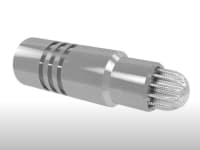
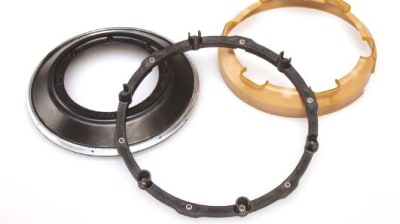
Plastic-molded components produced by Diversified Plastics are currently speeding through space towards Jupiter aboard NASA’s Juno Space Probe. The craft was launched August 5, 2011, and is...
NASA Tech Needs: Energy
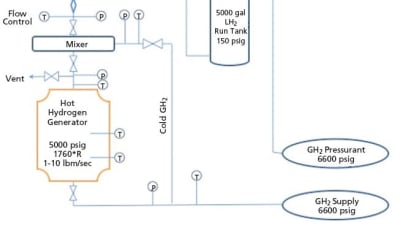
The United States National Research Council (NRC) has identified Nuclear Thermal Propulsion (NTP) as a high-priority NASA Space Technology Roadmap Area. NTP could be an enabling technology to...
Briefs: Materials
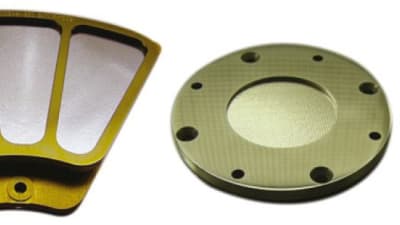
New and improved blocking filters (see figure) have been developed for microcalorimeters on several mission payloads, made of high-transmission polyimide support mesh, that...
Briefs: Medical
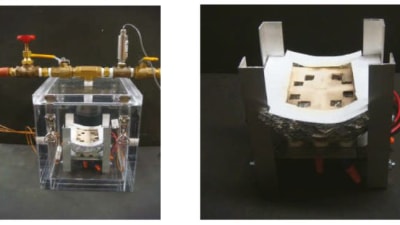
The objective of this research was to design, build, and test an experimental apparatus for studying the parameters of atmospheric entry heating, and...
Briefs: Medical
Saliva Preservative for Diagnostic Purposes
Saliva is an important body fluid for diagnostic purposes. Glycoproteins, glucose, steroids, DNA, and other molecules of diagnostic value are found in saliva. It is easier to collect as compared to blood or urine. Un for tunately, saliva also contains large numbers of bacteria that can release enzymes,...
Briefs: Aerospace
AIRS Maps From Space Processing Software
This software package processes Atmospheric Infrared Sounder (AIRS) Level 2 swath standard product geophysical parameters, and generates global, colorized, annotated maps. It automatically generates daily and multi-day averaged colorized and annotated maps of various AIRS Level 2 swath geophysical...
Briefs: Physical Sciences
Hemispherical Field-of-View Above-Water Surface Imager for Submarines
A document discusses solutions to the problem of submarines having to rise above water to detect airplanes in the general vicinity. Two solutions are provided, in which a sensor is located just under the water surface, and at a few to tens of meter depth under the water surface.
Briefs: Physical Sciences
Quantum-Well Infrared Photodetector (QWIP) Focal Plane Assembly
A paper describes the Thermal Infrared Sensor (TIRS), a QWIP-based instrument intended to supplement the Operational Land Imager (OLI) for the Landsat Data Continuity Mission (LDCM). The TIRS instrument is a far-infrared imager operating in the push-broom mode with two IR channels:...
Who's Who: Aerospace
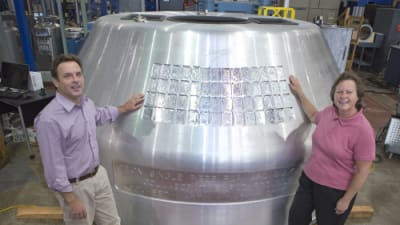
Marcia Domack and John Wagner, engineers in the Advanced Materials and Processing Branch at NASA Langley Research Center, have worked with Boston-based metal...
News: Nanotechnology
Researchers from the University of Toronto (U of T) and King Abdullah University of Science & Technology (KAUST) have made a breakthrough in the development of colloidal quantum dot (CQD)...

News: Energy
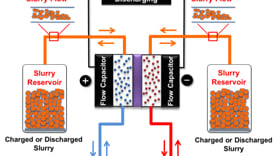
Electrical energy storage is the obstacle preventing more widespread use of renewable energy sources. Due to the unpredictable nature of wind and solar energy, the ability to store this...
News: Energy
Researchers creating electricity through photovoltaics want to convert as many of the sun’s wavelengths as possible to achieve maximum efficiency. For this reason, they see indium...

News: Software
Algorithm Simulates Particle Collisions on Quantum Computers
Quantum computers are still years away, but a trio of theorists has already figured out at least one talent they may have. According to the theorists, including one from the National Institute of Standards and Technology (NIST), physicists might one day use quantum computers to study the...
Briefs: Physical Sciences
Airborne Hyperspectral Imaging System
A document discusses a hyperspectral imaging instrument package designed to be carried aboard a helicopter. It was developed to map the depths of Greenland’s supraglacial lakes. The instrument is capable of telescoping to twice its original length, allowing it to be retracted with the door closed during...
Briefs: Physical Sciences
Measurement Via Optical Near-Nulling and Subaperture Stitching
A subaperture stitching interferometer system provides near-nulling of a subaperture wavefront reflected from an object of interest over a portion of a surface of the object. A variable optical element located in the radiation path adjustably provides near-nulling to facilitate...
Who's Who: Aerospace
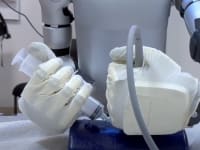
NASA robotics engineer Sandeep Yayathi works on Robonaut 2, or R2, a humanoid robot built and designed at Johnson Space Center in Houston. As a robotics engineer,...

Briefs: Physical Sciences
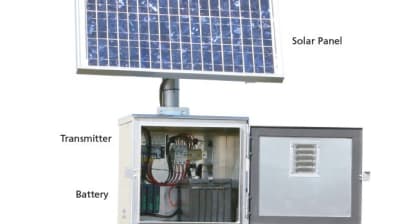
If remote sensors are to be autonomous and report their data in real time, they must have a reliable power source and a stable Ethernet connection. The United States Geological Survey (USGS),...
Briefs: Physical Sciences
Ultra-Low-Power MEMS Selective Gas Sensors
This innovation is a system for gas sensing that includes an ultra-low-power MEMS (microelectromechanical system) gas sensor, combined with unique electronic circuitry and a proprietary algorithm for operating the sensor. The electronics were created from scratch, and represent a novel design capable of...
Briefs: Physical Sciences
Terahertz Radiation Heterodyne Detector Using Two- Dimensional Electron Gas in a GaN Heterostructure
High-resolution submillimeter/terahertz spectroscopy is important for studying atmospheric and interstellar molecular gaseous species. It typically uses heterodyne receivers where an unknown (weak) signal is mixed with a strong signal from the local...
Briefs: Physical Sciences
Versatile Controller for Infrared Lamp and Heater Arrays
A paper describes a modular design for new controllers for infrared heating during cruise stage solar thermal vacuum test of the Mars Science Laboratory. The controllers had to be easy to use and maintain, used with a wide variety of different control schemes, and made using commercial...
Briefs: Physical Sciences
Instrument Suite for Vertical Characterization of the Ionosphere-Thermosphere System
A document describes a suite that provides four simultaneous ion and neutral-atom measurements as a function of altitude, with variable sensitivity for neutral atmospheric species. The variable sensitivity makes it possible to extend the measurements over the...
Briefs: Physical Sciences
Determining Performance Acceptability of Electrochemical Oxygen Sensors
A method has been developed to screen commercial electrochemical oxygen sensors to reduce the failure rate. There are three aspects to the method: First, the sensitivity over time (several days) can be measured and the rate of change of the sensitivity can be used to predict...
Briefs: Physical Sciences
High-Speed Scanning Interferometer Using CMOS Image Sensor and FPGA Based on Multifrequency Phase- Tracking Detection
A sub-aperture stitching optical interferometer can provide a cost-effective solution for an in situ metrology tool for large optics; however, the currently available technologies are not suitable for high-speed and real-time...
Briefs: Medical
Purifying, Separating, and Concentrating Cells From a Sample Low in Biomass
Frequently there is an inability to process and analyze samples of low biomass due to limiting amounts of relevant biomaterial in the sample. Furthermore, molecular biological protocols geared towards increasing the density of recovered cells and biomolecules of interest,...
Briefs: Medical
Virtual Ultrasound Guidance for Inexperienced Operators
Medical ultrasound or echocardiographic studies are highly operatordependent and generally require lengthy training and internship to perfect. To obtain quality echocardiographic images in remote environments, such as on-orbit, remote guidance of studies has been employed. This technique...
Briefs: Physical Sciences
Method to Remove Particulate Matter From Dusty Gases at Low Pressures
Future human exploration of Mars will rely on local Martian resources to reduce the mass, cost, and risk of space exploration launched from Earth. NASA’s In Situ Resource Utilization (ISRU) Project seeks to produce mission consumables from local Martian resources, such as...
Briefs: Physical Sciences
A new method has been developed for monitoring and control of automated sample processing and preparation especially focusing on desalting of samples before analytical...

Briefs: Physical Sciences
An MSK Radar Waveform
The minimum-shift-keying (MSK) radar waveform is formed by periodically extending a waveform that separately modulates the in-phase and quadraturephase components of the carrier with offset pulse-shaped pseudo noise (PN) sequences. To generate this waveform, a pair of periodic PN sequences is each passed through a...
Briefs: Physical Sciences
Telescope Alignment From Sparsely Sampled Wavefront Measurements Over Pupil Subapertures
Alignment of two-element telescopes is a classic problem. During recent integration and test of the Space Interferometry Mission’s (SIM’s) Astrometric Beam Combiner (ABC), the innovators were faced with aligning two such telescope subsystems in the presence...
Top Stories
 Blog: Power

My Opinion: We Need More Power Soon — Is Nuclear the Answer?
 Blog: AR/AI
Aerial Microrobots That Can Match a Bumblebee's Speed
 News: Energy

 Blog: Electronics & Computers

Turning Edible Fungi into Organic Memristors
 Blog: Robotics, Automation & Control

Microscopic Swimming Machines that Can Sense, Respond to Surroundings
 INSIDER: Sensors/Data Acquisition
Webcasts
 Upcoming Webinars: Energy

Hydrogen Engines Are Heating Up for Heavy Duty
 Upcoming Webinars: Transportation

Advantages of Smart Power Distribution Unit Design for Automotive...
 Upcoming Webinars: Automotive

Quiet, Please: NVH Improvement Opportunities in the Early Design...
 Upcoming Webinars: Test & Measurement

From Spreadsheets to Insights: Fast Data Analysis Without Complex...
 Upcoming Webinars: Power

Battery Abuse Testing: Pushing to Failure
 Upcoming Webinars: Internet of Things