Stories
0
1260
30
Briefs: Energy
The novel solar concentrators can be applied to textile fibers without the textile becoming brittle and susceptible to cracking or accumulating water vapor in the form of sweat. Read on to learn more.
Briefs: Energy
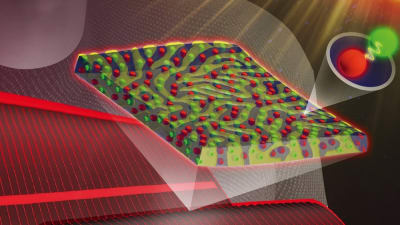
Leveraging Machine Learning and AI to Automate Wearable Tech Design
Defying engineering challenges in record time, researchers at the University of Maryland developed a machine learning model that eliminates hassles in materials design to yield green technologies used in wearable heaters. Read on to learn more.
Briefs: AR/AI
Yen-Ling Kuo at the University of Virginia School of Engineering and Applied Science is collaborating with a team at the Toyota Research Institute to build language representations of driving behavior that enable a robot to associate the meaning of words with what it sees by watching how humans interact with the environment or by its own interactions with the environment. Read on to learn more.
Briefs: Software
A Centralized Data Management Platform
Many organizations have data stored in differing formats and various locations throughout the organization and often outside the organization. It is often difficult to access such data. Developed at NASA Ames Research Center is a novel data management platform for managing interconnected data and its derivatives. Read on to learn more about it.
Briefs: Electronics & Computers
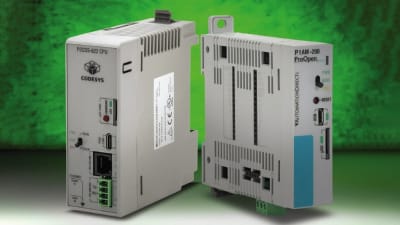
As industrial automation technologies continue to advance, the balance between traditional and open solutions will likely evolve. The emphasis will be on providing versatile platforms that meet varied user needs. Read on to learn more.
Briefs: Energy
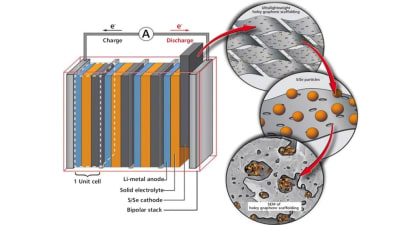
Whether for large electric vehicle systems or small electronic devices, SABERS can potentially set new benchmarks in energy density and power, all while offering the utmost in safety and reliability. Read on to learn more.
Briefs: Power
All-in-One, High-Power Microwave System
A device was developed that uses composite-based nonlinear transmission lines (NLTLs) for a complete high-power microwave system, eliminating the need for multiple auxiliary systems. Read on to learn more.
Briefs: Energy
New fuel cells could increase hydrogen’s application in vehicles, especially in extreme temperatures like cold winters. Read on to learn more about it.

Briefs: Semiconductors & ICs
It's time to rethink battery technology. Compared to other existing or developing technologies, a new lithium metal-based solid-state battery brings some significant advantages: It can be charged and discharged within one minute, lasts about 10 times as long as a Li-ion battery, and is insensitive to temperature fluctuations. Read on to learn more about it.
Briefs: Materials
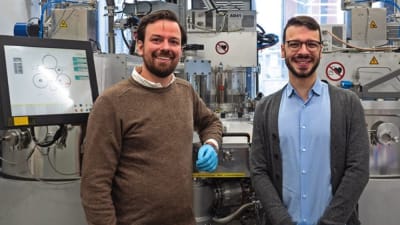
A flexible and stretchable cell has been developed for wearable electronic devices that require a reliable and efficient energy source that can easily be integrated into the human body. Read on to learn more about it.
Briefs: Materials
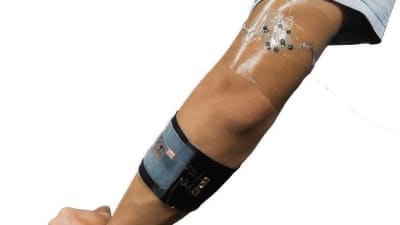
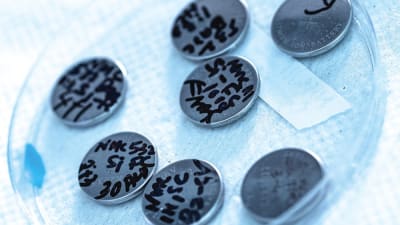
Researchers have developed better rechargeable batteries by applying silicon to the batteries’ cathodes. Read on to learn more about it.
Articles: Design
Meet Dow Silicones Belgium SRL’s Anne-Marie Vincent, Sustainable Technology Finalist. Her project focuses on commercializing silica upcycled from rice husk to address these needs.

Articles: Materials
Meet Allyson Marianelli, Lead Researcher at Dow, whose RHOBARR™ Barrier Dispersions Platform is a Manufacturing & Materials Finalist.

Articles: Design
Meet NETrolyze, the Medical Finalist. It consists of a small molecule loaded into a slow-release gel, designed to continuously fight off metastasis. It systematically targets only the cancerous tumor while preserving the integrity of the body’s overall immune system.

Articles: Materials
The wearable Thin-Film Thermoelectric Cooling (TFTEC) device is one of the world’s lightest, thinnest, and fastest refrigeration devices. It's also the Electronics Finalist. Read on to learn more.

Articles: Internet of Things
The Transensys Multi-Modal Traffic Detection System is an attempt to provide widespread, low-cost, and accurate traffic measurement. It's also the Automotive & Transportation Finalist. Read on to learn more.

Articles: Design
“AstroAnts” are small robots for inspection and diagnostic tasks on external spacecraft surfaces, both in orbit and on planetary surfaces. They're also the Robotics & Automation Finalist. Read on to learn more.

Articles: Design
AlchLight has invented and pioneered a non-coating laser surface processing (LSP) technology that turns regular transparent materials such as glass and polymers superhydrophobic. It's the Aerospace & Defense Finalist. Read on to learn more.

Articles: Design
The Create the Future Design Contest, launched in 2002 by SAE Media Group, recognizes and rewards engineering innovations that benefit humanity, the environment, and the economy. Read on to learn about the finalists in all seven categories chosen from new product ideas submitted from more than 50 countries. The Grand Prize winner and category winners will be chosen at a live competition on November 15.

Articles: Materials
To meet the ever increasing demand for silicon carbide (SiC) crystals, the world needs much higher yields without sacrificing quality. However, without advanced metrology tools capable of promptly detecting minor flaws, the SiC crystal growing sector essentially operates blindly, resulting in unacceptable defects and costly product losses. Read on to learn more.
Videos of the Month: Physical Sciences
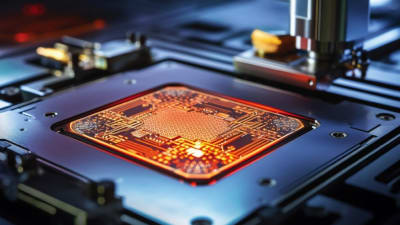
See the videos of the month, including one on a humanoid robot that can effortlessly learn and perform a variety of expressive movements all while maintaining a steady gait on diverse terrains; one on Picotaur, the first legged robot of its size to run, turn, push loads, and climb miniature stairs; one on the DoD’s All Domain Test Range; and one on using generative AI and cutting-edge scene-mapping technology to elevate robots from simple tools to being capable of providing aid in disaster and battlefield scenarios.

Articles: Photonics/Optics
The Department of Energy has given the green light for construction to begin on a high-energy upgrade that will further boost the performance of the Linac Coherent Light Source (LCLS), the world’s most powerful X-ray free-electron laser (XFEL) at the DOE’s SLAC National Accelerator Laboratory. Read on to learn more about it.

Articles: Manufacturing & Prototyping
Opto Generative Pretrained Transformer (OptoGPT), a decoder-only transformer, developed by University of Michigan engineers, harnesses the computer architecture underpinning ChatGPT to work backward from desired optical properties to the material structure that can provide them. Read on to learn more.

Products: Imaging
See what's in the product showcase, including VSD’s innovative SV-2000 Flex; Keysight Technologies' N7718C Optical Reference Transmitter; MKS Instruments' Newport™ TLS260B Tunable Light Sources; Analog Modules' Picosecond Pulsed Seed Laser Diode Driver, Model 766A; and more.

Application Briefs: Photonics/Optics
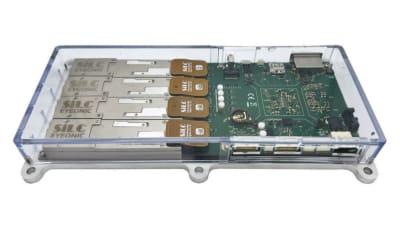
Photonics & Imaging Technology caught up with Dr. Mehdi Asghari, SiLC Technologies CEO, to discuss their approach to designing and manufacturing FMCW LiDAR technology. Read on for the entire interview.
Application Briefs: Medical
A team of researchers from Rice University has introduced 50-nm gas-filled protein nanostructures derived from genetically engineered gas vesicles(GVs) that are referred to as 50 nmGVs. Read on to learn more.

Briefs: Imaging
Researchers have developed a new way to map water on land in the tropics. Called the UC Berkeley Random Walk Algorithm WaterMask, this advanced monitoring technology uses L-band microwaves from the Cyclone Global Navigation Satellite System to “see” water hidden beneath visual barriers, like tree canopies and clouds. Read on to learn more.

Briefs: Imaging
Imagine if physicians could capture 3D projections of medical scans, suspending them inside an acrylic cube to create a hand-held reproduction of a patient’s heart, brain, kidneys, or other organs. Then, when the visit is done, a quick blast of heat erases the projection, and the cube is ready for the next scan. A new report by researchers at Dartmouth and Southern Methodist University outlines a technical breakthrough that could enable such scenarios, and others, with widespread utility. Read on to learn more.

Briefs: Software
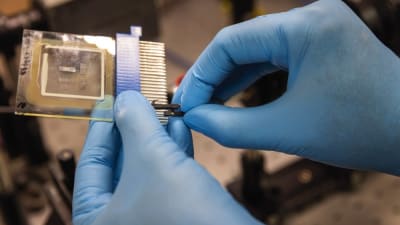
A new type of organic light emitting diode (OLED) could replace bulky night vision goggles with lightweight glasses, making them cheaper and more practical for prolonged use, according to University of Michigan researchers. Read on to learn more.
Top Stories
 Blog: Sensors/Data Acquisition

Going for Gold in Winter Olympic Curling
 Blog: Energy

Batteries that Can Withstand the Cold
 Blog: Lighting

A Stretchable OLED that Can Maintain Most of Its Luminescence
 INSIDER: Design

Advancing All-Solid-State Batteries
 Blog: Data Acquisition

 Blog: Materials

Webcasts
 On-Demand Webinars: Defense

Cooling a New Generation of Aerospace and Defense Embedded Computing...
 Upcoming Webinars: Software

Beyond AI-Copy-Paste Engineering: Advanced AI-Integration Success...
 Upcoming Webinars: Automotive

Battery Abuse Testing: Pushing to Failure
 Upcoming Webinars: Power

A FREE Two-Day Event Dedicated to Connected Mobility
 Upcoming Webinars: RF & Microwave Electronics

Choosing the Right N-Port Strategy: Multiport VNAs vs. Switch...
 Upcoming Webinars: AR/AI