Stories
0
4290
30
Question of the Week: Electronics & Computers
Will Rectennas Reduce Our Need for Batteries?
Rectennas act a bit like your car antenna. Instead of picking up radio waves, however, the tiny optical devices absorb light and convert it into power. The rectenna featured in today’s top story, generated half a nanowatt – a small amount of power that its inventors hope to increase.
Blog: Sensors/Data Acquisition
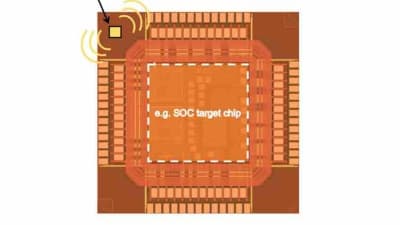
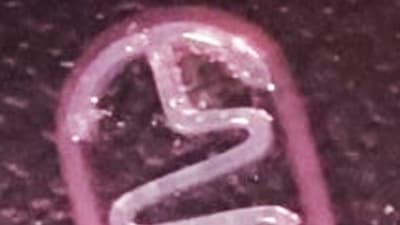
NC State researchers have made what they believe to be the smallest state-of-the-art RFID chip: a device measuring 125 micrometers (μm) by 245μm.
Blog: Energy
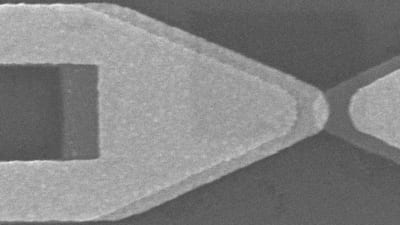
Researchers from CU Boulder gave their optical "rectennas" a ghost-like way to turn wasted heat into power.
INSIDER: Robotics, Automation & Control
As part of the Artemis program, NASA is planning to send its first mobile robot to the Moon in late 2023 in search of ice and other resources on and below the lunar surface. Data from the Volatiles...

Question of the Week: Propulsion
Will 'Zero-Impact' Planes Take Off?
Our May issue of Tech Briefs highlighted a hybrid-electric aircraft design from MIT that, according to its creators, could reduce global nitrogen oxide (NOx) emissions by 95 percent.
Blog: Transportation
A reader asks: "What are the main challenges in simulating powertrain systems? What do we struggle to model now?"

Blog: Manufacturing & Prototyping
A better aerogel features a kind of biological scaffold made from a surprising ingredient found in nature: seaweed.

Question of the Week: Materials
Will Metal-Free Batteries Catch On?
Our lead story today highlighted a metal-free battery that degrades on demand. While a cobalt-less battery has its sustainability benefits, more work will need to be done for the Texas A&M-developed technology to compete with the lithium-ion standard.
Blog: Materials
A team from Texas A&M developed a battery that's metal-free and replaces cobalt with organic, recyclable materials.

Blog: Robotics, Automation & Control
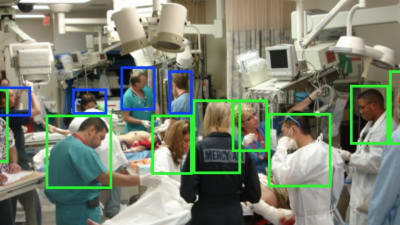
Computer scientists at UC San Diego developed a navigation system that will allow robots to better negotiate busy environments in a hospital
Question of the Week: Materials
Will ‘Living Materials’ Catch On?
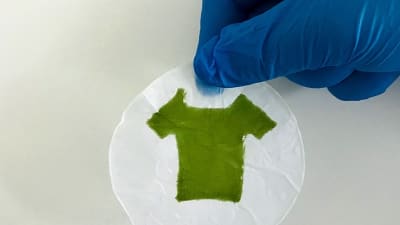
Our lead story today highlighted the possible applications for a "living material" made from microalgae and cellulose.
INSIDER: Robotics, Automation & Control
NASA’s Ingenuity Mars Helicopter has a new mission. Having proven that powered, controlled flight is possible on the Red Planet, the Ingenuity experiment will soon embark on a new operations demonstration...

INSIDER: Robotics, Automation & Control
Using 3D bioprinting, researchers have created biobots at the centimeter size range that can swim and coast like fish with unprecedented velocity. Rather than working with stiff or tethered scaffolds...
INSIDER: Robotics, Automation & Control
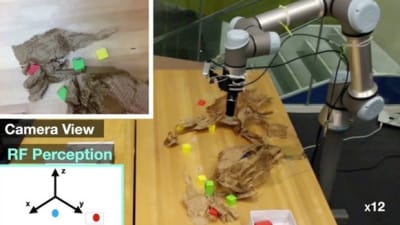
MIT researchers developed RF-Grasp, a robot that uses radio waves to sense occluded objects. RF-Grasp uses both a camera and an RF reader to find and grab tagged objects, even when they’re fully blocked from...
Blog: Manufacturing & Prototyping
By adjusting a surface's wettability and texture, IIT Bombay researchers demonstrate how to best limit the spread of coronavirus.

Blog: Materials
An international team used 3D printers and a novel bioprinting technique to print algae into living, photosynthetic materials that are tough and resilient.
Question of the Week: Aerospace
Will We See Human Exploration on Mars by 2040?
An INSIDER story last week highlighted another recent achievement on Mars: A rover instrument known as “MOXIE” created oxygen from the Martian atmosphere. The NASA-led demonstration is a first step toward human presence on the Red Planet, according to MOXIE principal lead Michael Hecht.
INSIDER: Photonics/Optics
Photonics has the potential to transform all manners of electronic devices by storing and transmitting information in the form of light, rather than electricity. Using...

INSIDER: Data Acquisition
Fiber optic technology is the holy grail of high-speed, long-distance telecommunications. Still, with the continuing exponential growth of internet traffic, researchers...

INSIDER: Photonics/Optics
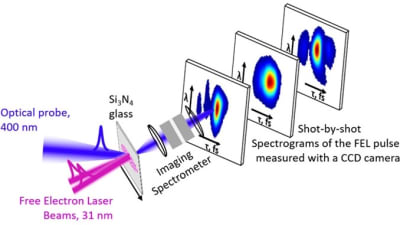
New research shows how to measure the super-short bursts of high-frequency light emitted from free electron lasers (FELs). By using the light-induced ionization itself to create a...
INSIDER: Photonics/Optics
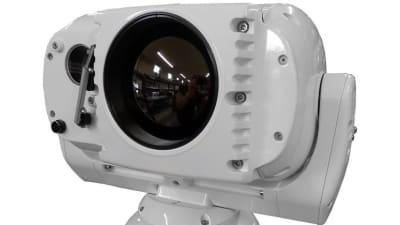
Uncooled Thermal Lens
British threat detection specialist Silent Sentinel (Hertfordshire, UK) has expanded its Aeron Ranger suite of cameras to include a brand-new 25-150mm Long Wavelength Infrared (LWIR) uncooled thermal lens,...
Special Reports: Aerospace
Advanced Materials & Coatings - May 2021
New diamond super-material enhances military aircraft survivability…a gold film gives robots “chameleon skin”…shape-shifting nanomaterial offers exciting biotech applications…aerogel-reinforced...Articles: Imaging
Learn about the benefits of SWIR imaging, from food inspection to surveillance.
Briefs: Manufacturing & Prototyping
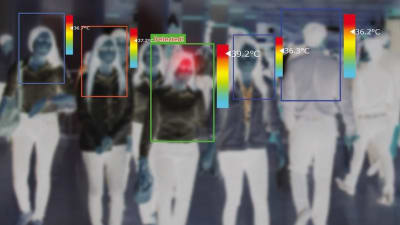
A flexible, free-standing THz sensor array images blind ends of irregularly shaped objects.

Articles: Sensors/Data Acquisition
A heat source near the optical path can introduce image warping that locally shifts the position of the image content. Learn how to fix the flaw.

Products: Manufacturing & Prototyping
Fiber coatings measurement, single-frequency laser, optical filters, and more.
Application Briefs: Photonics/Optics
Learn about tooling challenges and other considerations when designing micro-optics, including metrology equipment capabilities, and post-molding assembly.

Application Briefs: Test & Measurement
What you need to know before you incorporate large diameter aspheres into your optical systems.

Briefs: Materials
Northwestern researchers have developed a new microscopy method that allows scientists to see the building blocks of “smart” materials being formed at the nanoscale.

Top Stories
 Blog: Power

My Opinion: We Need More Power Soon — Is Nuclear the Answer?
 Blog: AR/AI

Aerial Microrobots That Can Match a Bumblebee's Speed
 News: Energy

 Blog: Electronics & Computers

Turning Edible Fungi into Organic Memristors
 Blog: Robotics, Automation & Control

Microscopic Swimming Machines that Can Sense, Respond to Surroundings
 INSIDER: Sensors/Data Acquisition

Webcasts
 Upcoming Webinars: Power

Hydrogen Engines Are Heating Up for Heavy Duty
 Upcoming Webinars: Automotive

Advantages of Smart Power Distribution Unit Design for Automotive...
 Upcoming Webinars: Automotive

Quiet, Please: NVH Improvement Opportunities in the Early Design...
 Upcoming Webinars: Test & Measurement

From Spreadsheets to Insights: Fast Data Analysis Without Complex...
 Upcoming Webinars: Automotive

Battery Abuse Testing: Pushing to Failure
 Upcoming Webinars: Connectivity