Stories
0
4920
30
Question of the Week: Manufacturing & Prototyping
Can Courtesy Be Programmed Into Self-Driving Cars?
During a recent webcast, a Tech Briefs reader raised an interesting question about self-driving cars:
Blog: Manufacturing & Prototyping
As Brazil begins mass-producing a NASA-developed ventilator, a Tech Briefs reader asks why NASA didn't go open-source.

Blog: Software
The new approach could help pave the way for smaller battery packs and greater driving range in electric vehicles.

INSIDER: Imaging
Almost all satellites are powered by solar cells – but solar cells are heavy. While conventional high-performance cells reach up to three watts of electricity per gram,...
INSIDER: Materials
New research from the University of Southampton has discovered a way to bind two negatively charged electron-like particles which could create opportunities to form novel...
INSIDER: Materials
University of North Texas professor Anupama Kaul straddles the line between electrical engineering and materials science, which puts her in the perfect place to develop new...
INSIDER Product: Test & Measurement
Machine Vision Cameras
Teledyne DALSA (Waterloo, Canada) announced its new Falcon4-CLHS M4480 and M4400 cameras, based on the Teledyne e2v Lince 11.2M monochrome sensors. The new Falcon4-CLHS interface cameras have been...

Question of the Week: Robotics, Automation & Control
Will 'Biomorphic' Batteries Support a Future of Tiny Robots?
A Tech Briefs TV video highlighted a rechargeable zinc battery from the University of Michigan that integrates into the structure of a robot to provide much more energy. The “biomorphic” battery, according to researchers, could provide 72x more energy for robots.
INSIDER: Energy
A team led by the Department of Energy’s Oak Ridge National Laboratory (ORNL) developed a novel, integrated approach to track energy-transporting ions within an ultra-thin...

INSIDER: Design
Researchers at the University of Warwick have found that asymmetric stresses within electrodes used in certain wearable electronic devices provides an important clue as to how to improve...
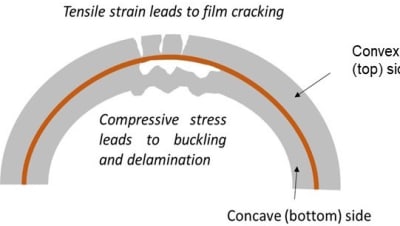
INSIDER: Energy
Researchers from the Okinawa Institute of Science and Technology Graduate University (OIST) have created next-generation solar modules with high efficiency and good stability....

INSIDER: Robotics, Automation & Control
Like biological fat reserves store energy in animals, a new rechargeable zinc battery integrates into the structure of a robot to provide much more energy, a team led by the...
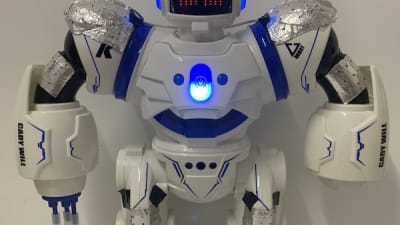
Blog: Automotive
A reader asks our expert: When it comes to autonomous vehicles, what’s best: Radar, LiDAR, or cameras?
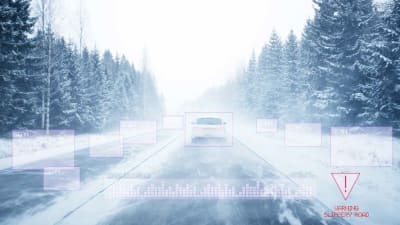
Blog: Data Acquisition
A new modeling tool from USC engineers generates automatic indicators when data and predictions from AI algorithms are trustworthy.

Question of the Week: Robotics, Automation & Control
Are You OK With a Robot Taking Your Vitals?
The "Spot" robot, developed by Boston Dynamics, can measure skin temperature, breathing rate, pulse rate, and blood oxygen saturation in healthy patients, from a distance of 2 meters.
Blog: Robotics, Automation & Control
A Cornell team developed paramecium-sized robots that can be controlled with lasers.

Podcasts: Sensors/Data Acquisition
Before delivery drones start carrying packages (and passenger drones start delivering ourselves), engineers will need to keep refining an unmanned aircraft's ability to navigate and...

Briefs: Data Acquisition
The instrument has uses in photography where the goal is to image a dim object near a bright one.

Briefs: Materials
This eye-on-a-chip can help treatment of dry eye disease.

Briefs: Photonics/Optics
The newest version of these combs could revolutionize clocks, telescopes, and telecommunications.

Facility Focus: Imaging
Stennis now is testing RS-25 rocket engines for the Space Launch System (SLS) that will carry humans back to the Moon.

Briefs: Medical
Smartphone App Detects Early Signs of Eye Disorders in Children
The CRADLE app allows parents to screen their children for eye disorders more often throughout their development.
Briefs: Sensors/Data Acquisition
Smart devices measure electrical signals from the skin, indicating stress levels and emotions.
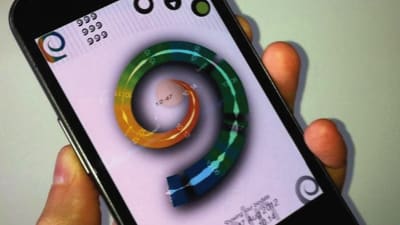
Briefs: RF & Microwave Electronics
The sensor could provide a way to detect communication signals over the entire radio frequency from 1 to 100 GHz.
Briefs: Test & Measurement
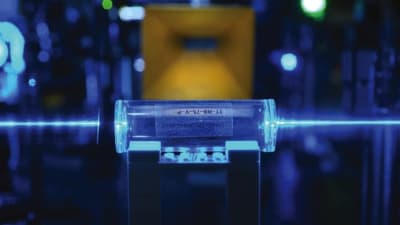
Laser light induces ultrasonic vibrations in a sample that can be used to image cells, blood vessels, and tissues.

Briefs: Aerospace
Biomaterial Shields Against Harmful Radiation
A new form of melanin can protect human tissue from X-rays during medical treatment or spaceflight.
Application Briefs: Mechanical & Fluid Systems
See how one company reached out to NASA with an offer to develop a custom sensor for the Mars 2020 mission rover.
Briefs: RF & Microwave Electronics
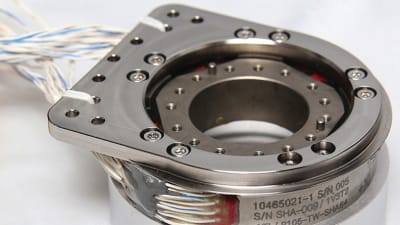
Applications include high-speed communications, networking, and sensing.

Briefs: Wearables
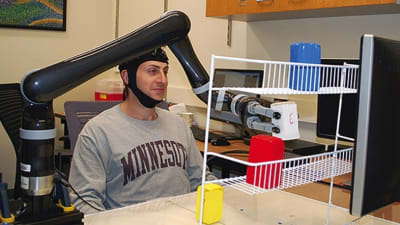
This technique can be used by people who are paralyzed or have neurodegenerative diseases.
Top Stories
 Blog: Power

My Opinion: We Need More Power Soon — Is Nuclear the Answer?
 Blog: AR/AI

Aerial Microrobots That Can Match a Bumblebee's Speed
 News: Energy

 Blog: Electronics & Computers

Turning Edible Fungi into Organic Memristors
 Blog: Robotics, Automation & Control

Microscopic Swimming Machines that Can Sense, Respond to Surroundings
 INSIDER: Sensors/Data Acquisition
Webcasts
 Upcoming Webinars: Power

Hydrogen Engines Are Heating Up for Heavy Duty
 Upcoming Webinars: Automotive

Advantages of Smart Power Distribution Unit Design for Automotive...
 Upcoming Webinars: Automotive

Quiet, Please: NVH Improvement Opportunities in the Early Design...
 Upcoming Webinars: Test & Measurement

From Spreadsheets to Insights: Fast Data Analysis Without Complex...
 Upcoming Webinars: Automotive

Battery Abuse Testing: Pushing to Failure
 Upcoming Webinars: Connectivity