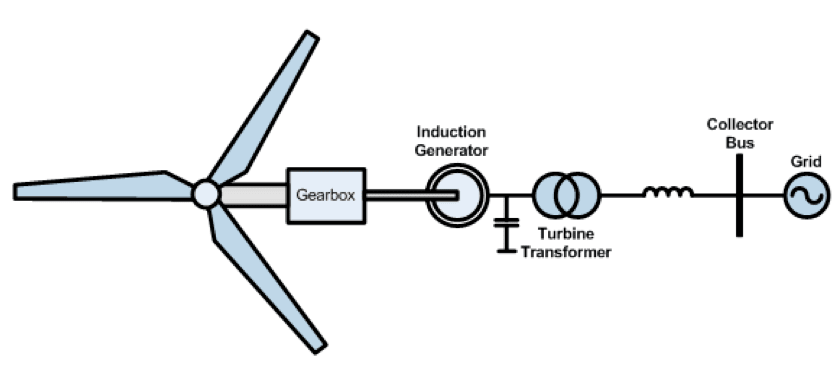
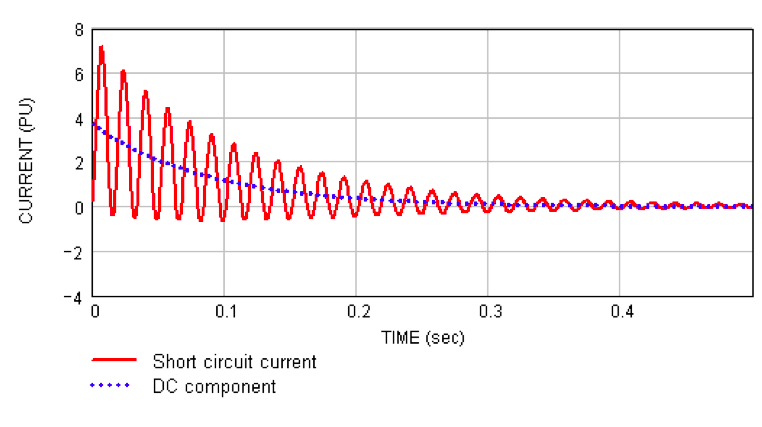
This task can be challenging to protection engineers due to the topology differences between different types of wind turbine generators and conventional generating units. Simulation results for SCC contribution for wind turbine generators obtained through transient simulation are presented. The obtained waveforms are analyzed to explain the behavior -- such as peak values and rate of decay -- of the wind turbine generator.
The effect of turbine and substation transformer winding and grounding configuration on positive, negative, and zero-sequence current and voltage magnitudes is demonstrated. The behavior of fault currents is illustrated by the output of simulations in positive, negative, and zero-sequence components.
Future plans include conducting similar type of short-circuit current modeling for other types of wind power plants.
This work was done by Vahan Gevorgian and Eduard Muljadi of National Renewable Energy Laboratory.
This Brief includes a Technical Support Package (TSP).
Wind Power Plant Short Circuit Current Contribution for Different Fault and Wind Turbine Topologies
(reference GDM0013) is currently available for download from the TSP library.
Don't have an account?
Overview
The document is a conference paper titled "Wind Power Plant Short Circuit Current Contribution for Different Fault and Wind Turbine Topologies," authored by V. Gevorgian and E. Muljadi, and prepared for the National Renewable Energy Laboratory (NREL). It presents simulation results regarding the short circuit current contributions from various types of wind turbine generators (WTGs) under different fault conditions.
The paper begins by discussing the significance of understanding short circuit currents in wind power plants, particularly as the integration of renewable energy sources into the power grid increases. Short circuit events can significantly impact the stability and reliability of power systems, making it crucial to analyze how different wind turbine designs respond to such faults.
The authors focus on Type 3 wind turbine generators, which utilize doubly fed induction generators (DFIGs). These turbines are commonly used in modern wind farms due to their ability to operate efficiently across a range of wind speeds and their capability to provide reactive power support to the grid. The paper highlights the importance of modeling the electrical behavior of these turbines during fault conditions to ensure proper grid integration and compliance with power quality standards.
Through transient and steady-state computer simulations, the authors present results that illustrate the short circuit current contributions from different WTG topologies. The findings indicate that the type of wind turbine and its control strategy significantly influence the short circuit current characteristics. The paper emphasizes the need for accurate modeling to predict these contributions effectively, which is essential for grid operators and engineers involved in the design and operation of wind power plants.
Additionally, the authors discuss the implications of their findings for the development of standards and guidelines related to wind turbine performance during fault conditions. They advocate for continued research and collaboration within the industry to enhance the reliability and performance of wind energy systems.
In conclusion, this document serves as a valuable resource for researchers, engineers, and policymakers interested in the integration of wind power into the electrical grid. It underscores the critical role of simulation and modeling in understanding the behavior of wind turbines during short circuit events, ultimately contributing to the advancement of renewable energy technologies and their safe operation within power systems.