


Advancing digitalization presents many production companies with the challenge of adapting their machinery to new technical standards. However, a complete renewal of the systems is associated with high investments. Retrofitting offers an opportunity to gradually equip existing machines with digital technologies, for example using optical measuring systems, image-processing software, or automated control technology.
Retrofit projects make it possible to specifically equip machines with modern technologies such as image processing systems, optical measurement technology, or automated data interfaces. The aim is to gradually transform existing systems into digitally networked production environments.
Digitalization of Existing Machinery
While new systems are often already supplied with digital control and integrated quality assurance, many existing systems work with conventional sensors or purely mechanical testing equipment.

This is where retrofitting comes in: By adding optical measuring systems, vision AI, or digital evaluation modules, central functions such as inline inspection, traceability, and process monitoring can be retrofitted.
The company senswork, which specializes in industrial image processing, implements such retrofit projects by installing camera-based inspection systems, integrating AI-based image processing software, and connecting to existing control and IT infrastructures, among other things.
Fields of Application and Technologies
Retrofit applications range from simple visual inspections in manual assembly areas to the three-dimensional measurement of complex components or the seamless recording and classification of inspection data in real time. Thanks to a modular approach, retrofit solutions can generally be implemented regardless of the machine type or age.
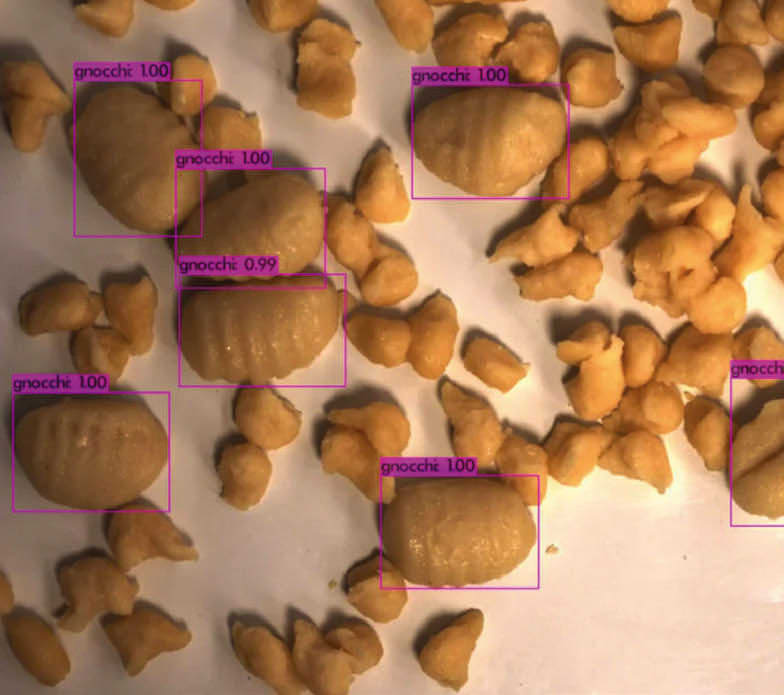
One frequently used technology is artificial intelligence (AI) for image evaluation. Deep learning models are trained using image data and are able to detect even difficult-to-define defects such as scratches, contamination, or assembly errors. The analysis is performed on edge systems or industrial PCs and can be integrated directly into the manufacturing process.
Optical Measuring Systems in a Retrofit Context
Depending on the requirements, 2D or 3D camera systems are used in retrofit projects. 2D systems are suitable for color, contour, or completeness checks, while 3D methods such as fringe light projection or laser triangulation are also used for more complex measurement tasks. The algorithms in such projects include RPS alignments or tolerance checks.
Integration into Existing Processes

A key aspect of retrofit projects is the integration of the systems into existing production landscapes. This includes not only technical integration such as connection to PLC, MES, or ERP systems, but also aspects such as visualization, user guidance, or safety concepts. Depending on the area of application, different protection and operating concepts are possible, such as collaborative work areas or closed test stations.
Application Examples from Practice
Retrofit projects are used in various industrial sectors. For example, a manual assembly line can be supplemented with a camera-based system for completeness checks, which enables continuous inspection of all units. In another scenario, existing injection molding machines can be retrofitted with 3D measurement technology for inline inspection of dimensional accuracy and surface quality — without interfering with the production flow. More precise and flexible quality control can also be achieved by replacing conventional sensors with high-resolution cameras in older automatic testing machines.
CE Conformity for Retrofits
An often underestimated aspect of retrofit projects is CE conformity. If a machine is significantly modified, for example by replacing core components or making extensive changes to the control system, this may require a complete reassessment in accordance with the Machinery Directive — with the associated effort.
To avoid this, senswork relies on encapsulated integration when retrofitting machine vision systems: cameras, evaluation units, and control technology are installed in separate control cabinets and connected via defined interfaces. This leaves the original machine untouched, and the retrofit is considered a stand-alone system. This approach enables legally compliant implementation without new CE certification of the entire system — a decisive advantage when modernizing existing production equipment.
Conclusion
Retrofitting offers a technically and economically sensible way to adapt existing production facilities to the requirements of modern manufacturing processes. The use of image processing, measurement technology, and deep learning in existing machines and systems can be decisive in this context. This not only improves quality assurance but also represents a first step toward networked production — without the need for extensive new purchases or fundamental restructuring.
This article was written by Roman Rieger, CEO of senswork GmbH (Burghausen, Germany). For more information, visit here .











