

A new method for assessing and communicating aviation in-flight icing hazards has been proposed. This methodology creates a simple numerical index for quantifying hazard severity. The index is traceable to flight-level meteorology and aircraft-specific, icing-induced reductions in aircraft performance. It also provides a connection to a statistical data base of icing meteorology. This system will clarify the terminology used to describe the degree of danger posed by specific meteorological conditions. The relationship between hazard severity and meteorology is related by measured ice accumulation rates observed on a standard airfoil under prescribed conditions. This system has greater fidelity than the existing system and is applicable to all types of air vehicles.
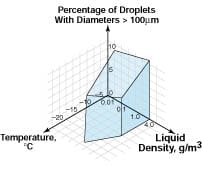
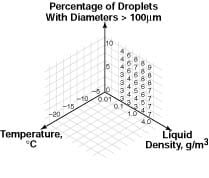
To reference each level of the proposed index to the degree of hazard, the index would be related to measured rates of ice accumulation on a standard wing cross section. The rates would be measured over a wide range of meteorological conditions for a standard set of flight conditions (such as airspeed and angle of attack). Aerodynamic modeling software could then be used to translate the observed icing phenomena to commercial airfoil shapes with some confidence.
This work was done by Steven J. Walter of Caltech for NASA's Jet Propulsion Laboratory. For further information, access the Technical Support Package (TSP) free on-line at www.nasatech.com/tsp under the Physical Sciences category. NPO-20465
This Brief includes a Technical Support Package (TSP).
Numerical Index for Quantifying Aircraft Icing Hazards
(reference NPO-20465) is currently available for download from the TSP library.
Don't have an account?
Overview
The document presents a comprehensive approach to quantifying in-flight icing hazards, which pose significant risks to both civilian and military aviation. Icing occurs when aircraft encounter supercooled liquid water in freezing conditions, leading to rapid ice accumulation on wings and airframes. This ice can severely compromise aircraft performance by reducing lift, increasing weight, and affecting control surfaces, contributing to numerous deadly air crashes over the past decade.
To enhance aviation safety, the document advocates for a new system that quantifies and communicates icing hazards effectively to pilots, air traffic control (ATC), and airlines. The current methods of characterizing icing hazards lack traceability to underlying meteorological conditions and do not provide the necessary fidelity for airframe manufacturers to assess flight characteristics across various weather scenarios. Therefore, an updated hazard rating system is essential.
The proposed solution is a twelve-level index that expresses icing hazards based on measured ice accretion rates. This index aims to improve the clarity and accuracy of hazard reporting without making distinctions between levels so fine that they become impractical for operational use. The document emphasizes the importance of developing this reporting system in collaboration with the aviation community to ensure its effectiveness and acceptance.
Additionally, the document highlights the need for clear assignment of roles and responsibilities in hazard assessment to overcome existing conflicts in accountability that hinder system implementation. It also calls for enhancements in meteorological observation systems and aircraft performance characterization to take full advantage of the new system's capabilities.
In conclusion, the proposed method for quantifying icing hazards represents a significant advancement for the aviation community. By providing timely and accurate information about meteorological conditions, the system aims to facilitate better decision-making for rerouting and rescheduling flights, ultimately enhancing the safety of air travel. The work is conducted under the auspices of the Jet Propulsion Laboratory and the National Aeronautics and Space Administration, underscoring its importance and credibility in addressing aviation safety challenges related to icing.











