

-1
660
30
Q&A: AR/AI
Dr. Aaron J. Wilson and his team at Oak Ridge National Laboratory, Lawrence Livermore National Laboratory, and Pacific Northwest National Laboratory have developed The Grid Event Signature Library — an open-access online collection of datasets containing waveforms that are visual representations of behaviors of the electric grid, which can help analyze anomalous events.

NASA Spinoff: Aerospace
A technology developed for NASA to identify pathogens inside spacecraft turned out to be beneficial for wastewater surveillance on Earth.

5 Ws: Wearables
A new device developed by MIT engineers allows people living with paralysis to interact with phones and computers using their tongue, mouth, and head gestures.

Application Briefs: Photonics/Optics
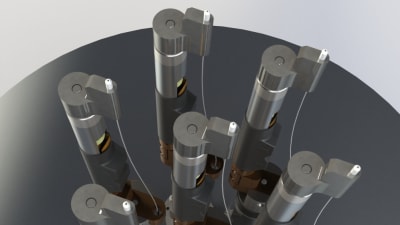
In collaboration with the Via Project Team, New Scale Technologies is manufacturing next-generation “Viper” robotic fiber positioners to enable simpler yet faster survey operations.
Briefs: Design
A team has developed a new cable system for heart pumps that doesn’t cause infections. This is particularly important given that wireless methods of transmitting power remain unavailable to patients in the foreseeable future.

Briefs: Medical
An artificial intelligence (AI) tool developed by researchers at the University of Rochester can help people with Parkinson’s disease remotely assess the severity of their symptoms within minutes. A study in npj Digital Medicine describes the new tool, which has users tap their fingers 10 times in front of a webcam to assess motor performance on a scale of 0-4.

Briefs: Electronics & Computers
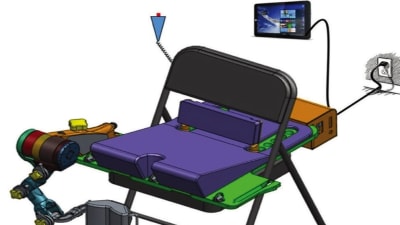
Researchers at NASA Johnson Space Center have developed the Portable Knee Dynamometer, a device that enables quadricep and hamstring strength assessment, rehabilitation, and exercise capabilities for a user outside of a traditional clinical setting.
Briefs: Materials
John Kolinski and his team at the Laboratory of Engineering Mechanics of Soft Interfaces aim to understand how cracks propagate in brittle solids, which is essential for developing and testing safe and cost-effective composite materials for use in construction, sports, and aerospace engineering.
Briefs: Physical Sciences
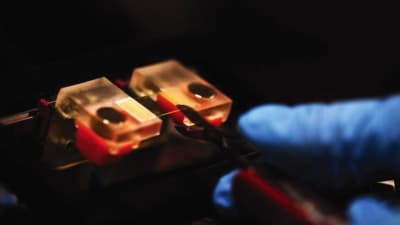
Electrodynamic dust shields (EDSs) are a key method to actively clean surfaces by running high voltages (but low currents) through electrodes on the surface. The forces generated by the voltage efficiently remove built-up, electrically charged dust particles. Innovators have developed a new transparent EDS for removing dust from space and lunar solar cells among other transparent surfaces.

Briefs: Nanotechnology
Researchers of Karlsruhe Institute of Technology and partners carried out steroid hormone adsorption experiments to study the interplay of forces in the small pores. They found that vertically aligned carbon nanotubes (VaCNT) of specific pore geometry and pore surface structure are suited for use as highly selective membranes.

Briefs: Materials
Engineers are poised to clean things up with an oxygen-free chemical vapor deposition (OF-CVD) method that can create high-quality graphene samples at scale. Their work directly demonstrates how trace oxygen affects the growth rate of graphene and identifies the link between oxygen and graphene quality for the first time.
Briefs: Materials
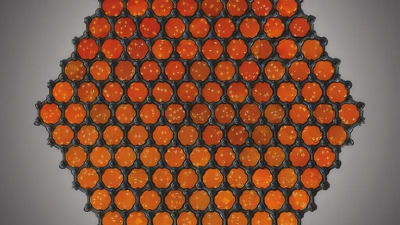
Innovators at NASA’s Glenn Research Center have made several breakthroughs in treating hexagonal boron nitride (hBN) nanomaterials, improving their properties to supplant carbon nanotubes in many applications.

Briefs: Electronics & Computers
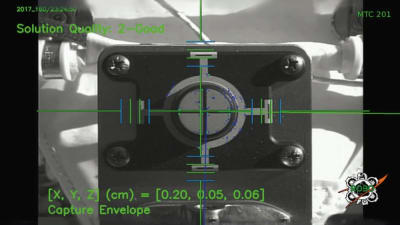
Innovators at NASA’s Johnson Space Center (JSC) have developed computer vision software that derives target posture determinations quickly and then instructs an operator how to properly align a robotic end-effector with a target that they are trying to grapple.
Briefs: Robotics, Automation & Control
Innovators at NASA Johnson Space Center have developed and successfully flight tested a high-performance computing platform, known as the Descent and Landing Computer (DLC), to suit the demands of safe, autonomous, extraterrestrial spacecraft landings for robotic and human exploration missions.

Briefs: Information Technology
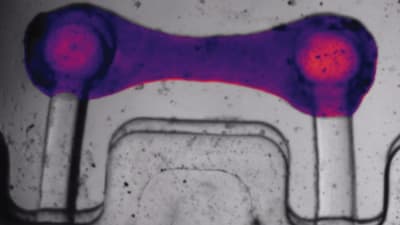
A promising way to study disease and test new drugs is to use cellular and engineered tissue models in a dish, but existing methods to study heart cell contraction and calcium handling require a good deal of manual work, are prone to errors, and need expensive specialized equipment. Researchers at Columbia Engineering unveiled a groundbreaking new tool today that addresses these challenges head-on: BeatProfiler.
Briefs: Software
The team hopes this project can better position renewable energy as the primary source of electricity in the industry sector. The project aims to enable researchers and renewable energy installation companies to determine the optimal number of solar panels and wind turbines needed to prevent over or under production.

Briefs: Green Design & Manufacturing
This technology could be incorporated into water treatment systems at various stages including water treatment, effluent polishing, resource reclamation, resource recycling, gray water treatment, etc.
Briefs: Energy
The team plans to integrate such CO2-capturing materials with its earlier porous sponge platform, which has been developed to remove environmental toxins including oil, phosphates, and microplastics.

Briefs: Materials
According to the researchers, this proof-of-concept system could be adapted to help produce precursors for plastics or other chemical feedstocks, as well as scaled up to produce larger amounts of sustainable biofuels.

Briefs: Green Design & Manufacturing
Advancing Chemical Recycling of Waste Plastics
New research from the lab of Giannis Mpoumpakis, Associate Professor of Chemical and Petroleum Engineering at the University of Pittsburgh, focuses on optimizing a promising technology called pyrolysis, which can chemically recycle waste plastics into more valuable chemicals.
Products: Electronics & Computers
See what's new on the market, including ASM's posiwire® sensors WST61, WST85, and WST21; Allegro MicroSystems' third product in its High Voltage Power-Thru™ portfolio; Sumida America's CDPQ/T150 Series of high-current power inductors; the advanced new series of USB Type C Plugs and Sockets from Keystone Electronics Corp.; Analog Devices, Inc.'s IMU; and binder's latest enhancements to its panel mount connectors in M12 size.

Articles: Connectivity
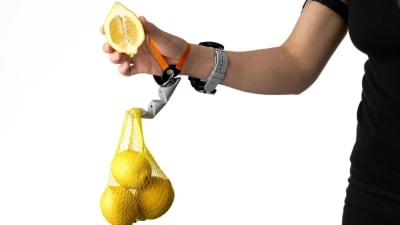
See the products of tomorrow, including the Third Thumb, an extra robotic thumb aimed at increasing the wearer’s range of movement; a way to display full-color, 3D moving images over a direct view of the real world; and an adjustable filter that can successfully prevent interference, even in higher-frequency bands of the electromagnetic spectrum.
Articles: Manufacturing & Prototyping
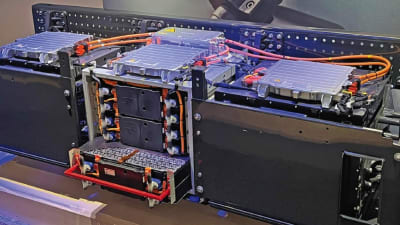
While Daimler Truck and Paccar are pursuing LFP battery cells, Volvo Trucks employs lithium-ion batteries in which lithium nickel cobalt aluminum oxide (NCA) is used as the cathode — for now anyway. The Swedish truck maker is continuously exploring other battery technologies. Read on to learn more.
Products: Manufacturing & Prototyping
See the product of the month: Dewesoft's OBSIDIAN®, a breakthrough data acquisition (DAQ) instrument that combines the best features of a high-end DAQ system, a long-term datalogger, a real-time EtherCAT data server, and a signal conditioning front end.

Articles: Energy
Accelera by Cummins, Daimler Truck, and Paccar collaborate to establish a 21-GWh dedicated factory for lithium iron phosphate battery cell manufacturing in the U.S. Read on to learn what that means for you.

Articles: Manufacturing & Prototyping
With fast charging becoming more common, precise and reliable temperature sensing across the charging chain will remain critical even as battery technologies evolve. Read on to learn why.

Briefs: Energy
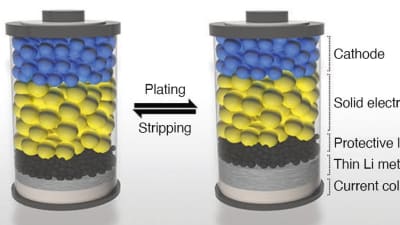
A research team from Pohang University has successfully enhanced the performance and durability of all-solid-state batteries. This breakthrough was made possible through the implementation of a novel approach known as bottom electrodeposition. Read on to learn more.
Briefs: Materials
Examining lithium metal batteries using nuclear magnetic resonance spectroscopy may help in the design of new electrolytes and anode surfaces for high-performance batteries. Read on to learn more.

Briefs: Green Design & Manufacturing
A new battery formulation captures carbon dioxide from industrial emissions and converts it into a solid form that has the potential to be used in other products. Read on to learn more.

Top Stories
 Blog: Lighting

A Stretchable OLED that Can Maintain Most of Its Luminescence
 Blog: Energy

Batteries that Can Withstand the Cold
 INSIDER: Energy

Advancing All-Solid-State Batteries
 Quiz: Energy

 Blog: Physical Sciences

 Blog: Materials

Webcasts
 Upcoming Webinars: Test & Measurement

From Spreadsheets to Insights: Fast Data Analysis Without Complex...
 Upcoming Webinars: Electronics & Computers

Cooling a New Generation of Aerospace and Defense Embedded...
 Upcoming Webinars: Test & Measurement

Beyond AI-Copy-Paste Engineering: Advanced AI-Integration Success...
 Upcoming Webinars: Automotive

Battery Abuse Testing: Pushing to Failure
 Upcoming Webinars: Internet of Things

A FREE Two-Day Event Dedicated to Connected Mobility
 Upcoming Webinars: Test & Measurement

Choosing the Right N-Port Strategy: Multiport VNAs vs. Switch...