-1
2070
30
INSIDER: Electronics & Computers
One of the biggest problems with computers is keeping them cool so they don’t overheat. University of Nebraska–Lincoln engineers developed an alternative energy source that would allow...

INSIDER: Sensors/Data Acquisition
Mark Skoog, an aerospace engineer at NASA's Armstrong Flight Research Center, led the development of new software that stores terrain data in a more efficient and accurate way. The achievement,...

INSIDER: Manufacturing & Prototyping
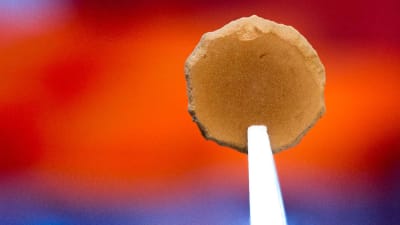
Researchers from the University of California, San Diego demonstrated a compaction technique that may someday be used to turn Mars soil into building blocks for the Red Planet. The scientists' new...
Question of the Week: Aerospace
This week’s Question: Our lead INSIDER story addressed NASA’s efforts to track and characterize asteroids. What do you think? Are you concerned about potential asteroid impacts...

News: Medical
What’s New on TechBriefs.com: Asteroid Detection, Blood-Pressure Monitoring, and Breaking the ‘Bandwidth Bottleneck’
Did you know that a 1-kilometer-wide asteroid flew past the Earth this month? Or that a chip-scale device provides broader bandwidth instantaneously to more users? Or that a new "Bold Band" offers a wearable way to monitor...
INSIDER: Motion Control
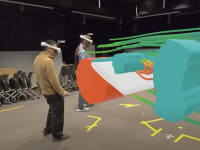
The traditional interface for remotely operating robots employs a computer screen and mouse to independently control six degrees of freedom, turning three virtual rings and adjusting arrows to get...

INSIDER: Aerospace
On Wednesday, April 19, an asteroid missed Earth by 1.1 million miles – a distance closer than you might think. This week, Tech Briefs spoke with NASA’s Planetary Defense Officer about the...

INSIDER: Medical
Creating the Future: Wearable Bands Offer Continuous Blood-Pressure Measurement
The pneumatic cuff, a device traditionally used to measure blood pressure, has had a prominent place in doctors' offices for more than a century. As part of a year-long fellowship at Northwestern University, two clinicians and two engineers teamed up to develop a new...
Question of the Week: Photonics/Optics
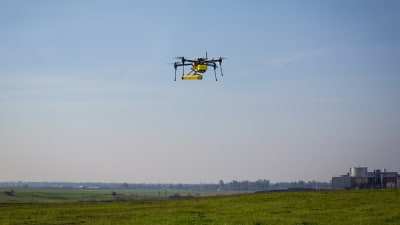
Will UAVs improve how we monitor the environment?
This week's Question: Last week's TechBriefs.com story from the SPIE Defense + Commercial Sensing 2017 conference in Anaheim revealed new ways of detecting leaks in natural gas pipelines. Panelists from industry, academia, and government demonstrated how miniaturized sensing platforms, and the...
INSIDER: Photonics/Optics
A chip-scale optical device, developed by a team from the University of Sydney’s Australian Institute for Nanoscale Science and Technology, achieves radio frequency signal control at...

Question of the Week: Materials
Will shape memory polymers play a prominent role in non-aerospace applications?
This week's Question: A featured Tech Brief in today's INSIDER highlighted a shape memory polymer from Langley Research Center. Designed initially for morphing spacecraft, the material changes shape when temperature shifts; the thermosetting polymer than returns to its...
INSIDER: Aerospace
ANAHEIM, CA. During last week’s SPIE Defense + Commercial Sensing 2017 conference, panelists from industry, academia, and government demonstrated how miniaturized sensing platforms,...
Question of the Week: Manufacturing & Prototyping
This week’s Question: Our lead stories today featured interviews with Chuck Hull, inventor of the 3D printer, and industry expert Terry Wohlers. Though the medical applications for additive...

News: Manufacturing & Prototyping
What's New on TechBriefs.com: 3D Printing's Next Frontier
In 1983, when Chuck Hull was spending nights and weekends building the first 3D printer, he couldn’t have imagined that someone would eventually use the apparatus to build a toaster from ashes.
INSIDER: Manufacturing & Prototyping
In 1983, Chuck Hull worked for a small California-based company that used ultraviolet light to turn liquid polymers into hardened, or cured, coatings. Inside the firm’s lab on his nights and weekends,...

INSIDER: Manufacturing & Prototyping
Frequently used as a design validation and prototyping tool in its early days, the 3D printer now supports a much wider range of applications, from shape-conforming electronics to the creation of printed...

Question of the Week: Automotive
This week's Question: A lead INSIDER story today focused on an add-on system from Hyliion, based in Pittsburgh, PA, that will help truck fleets to reduce gas emissions and fuel...

INSIDER: Photonics/Optics
Materials scientists at the Harvard John A. Paulson School of Engineering and Applied Sciences (SEAS) and the Wyss Institute of Biologically Inspired Engineering used a new framework to grow...
INSIDER: Robotics, Automation & Control
Magnetic Fields Enable New Soft Robots
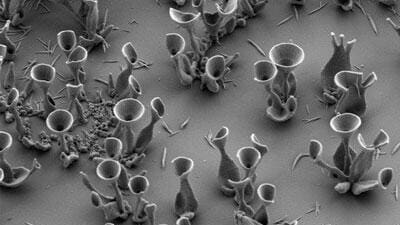
Researchers from North Carolina State University have a found a new way to control robots. The team used magnetic fields to remotely manipulate microparticle chains embedded in soft robotic devices.
News: Imaging
In 2006, the International Astronomical Union demoted Pluto to "non-planet" status. Johns Hopkins University scientist Kirby Runyon led a group of six researchers to draft a new definition of...

News: Energy
A prize-winning hybrid technology puts a Toyota Prius-like spin on the tractor trailer.

INSIDER: Motion Control
The Pop-Up Flat Folding Explorer Robot (PUFFER) that’s in development at NASA’s Jet Propulsion Laboratory in Pasadena, CA, was inspired by origami. It travels with a rover, and its lightweight...

Question of the Week: Physical Sciences
This week’s Question: Last week at the Lunar and Planetary Science Conference in Houston, Johns Hopkins University's Kirby Runyon reignited an often fierce debate within the scientific community:...

INSIDER: Materials
Non-Toxic Material Generates Electricity Through Heat, Cold Air
Imagine a body sensor powered by one's jewelry, or a cooking pan that charges a cell phone in a few hours.
Using a combination of the chemical elements calcium, cobalt, and terbium, University of Utah researchers created an efficient, inexpensive and bio-friendly material that...
INSIDER: Sensors/Data Acquisition
Silk Sensor Finds Composite Flaws
Researchers from the National Institute of Standards and Technology (NIST) have developed a way to embed a nanoscale damage-sensing probe into a lightweight composite made of epoxy and silk.
INSIDER: Photonics/Optics
Even when an X-ray beam is steered and focused with advanced mirrors and other optics, abnormalities can creep in. These problems have names familiar to those with imperfect vision,...

INSIDER: Photonics/Optics
Researchers working at the Ultrafast Laser Lab at the University of Kansas successfully created a new bilayer material, with each layer measuring less than one nanometer in...

INSIDER: Photonics/Optics
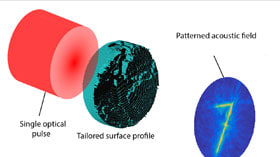
Limitations of the piezoelectric array technologies conventionally used for ultrasonics inspired a group of University College London researchers to explore an alternative mechanism for...
Question of the Week: Communications
In five years, will light-enabled Wi-Fi "find a home?"
This week’s Question: A PhD student at Eindhoven University of Technology has developed a way of using infrared rays to carry wireless data to a laptop or smartphone. The wireless data comes from central "light antennas" that could, for example, be mounted on a ceiling to direct the rays of...
Top Stories
 Blog: Lighting

A Stretchable OLED that Can Maintain Most of Its Luminescence
 Blog: Energy

Batteries that Can Withstand the Cold
 INSIDER: Energy

Advancing All-Solid-State Batteries
 Blog: Power

My Opinion: We Need More Power Soon — Is Nuclear the Answer?
 Quiz: Power

 Blog: Data Acquisition

Webcasts
 Upcoming Webinars: Test & Measurement

From Spreadsheets to Insights: Fast Data Analysis Without Complex...
 Upcoming Webinars: Aerospace

Cooling a New Generation of Aerospace and Defense Embedded...
 Upcoming Webinars: Sensors/Data Acquisition

Beyond AI-Copy-Paste Engineering: Advanced AI-Integration Success...
 Upcoming Webinars: Energy

Battery Abuse Testing: Pushing to Failure
 Upcoming Webinars: Power

A FREE Two-Day Event Dedicated to Connected Mobility
 Upcoming Webinars: RF & Microwave Electronics

Choosing the Right N-Port Strategy: Multiport VNAs vs. Switch...