54
-1
240
30
Briefs: Materials
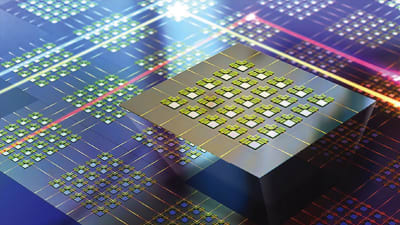
This optical switch controls the direction of light passing through optical fibers faster and more efficiently.
Briefs: Energy
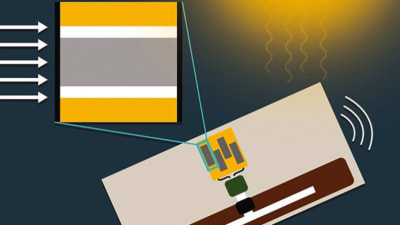
RFID-based devices work in indoor and outdoor lighting conditions and could transmit data for years before they need to be replaced.
Briefs: Test & Measurement
Undercooled metal technology was developed that features liquid metal (in this case, Field's metal, an alloy of bismuth, indium, and tin) trapped below its melting point in polished, oxide...

Briefs: Materials
A process was developed for producing oxide perovskite crystals in flexible, free-standing layers. A two-dimensional rendition of this substance is intriguing because 2D materials have been shown to...
Briefs: Sensors/Data Acquisition
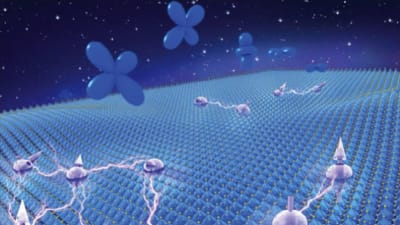
A method was developed to make atom-flat sensors that seamlessly integrate with devices to report on what they perceive. Electronically active 2D materials, touted for their strength, are difficult to move to...
Briefs: Imaging
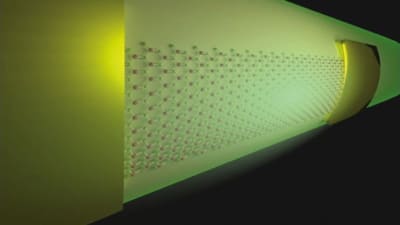
Magnetic resonance imaging (MRI) machines are employed to locate cancerous tumors and aid in the development of treatment plans, while nuclear magnetic resonance (NMR) machines are used to...

Briefs: RF & Microwave Electronics
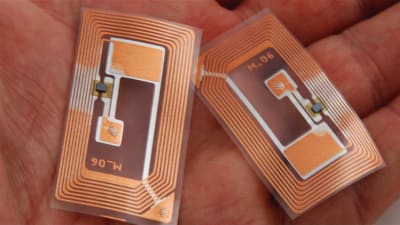
Although Radio Frequency Identification (RFID) technology is being used widely for pallet and box-level tracking in the commercial sector, significant technology gaps remain for tracking dense quantities at the item...
Briefs: Aerospace
To investigate oceans, researchers aim to build a submerged network of interconnected sensors that sends data to the surface. Supplying constant power to scores of sensors designed to stay for long...
Briefs: Wearables
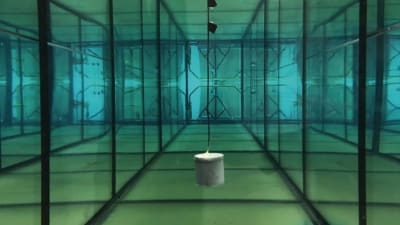
A transistor has been made from linen thread, enabling the creation of electronic devices made entirely of thin threads that could be woven into fabric, worn on the skin, or implanted...
Briefs: Semiconductors & ICs
Smart Electronic Skin for Robots and Prosthetics
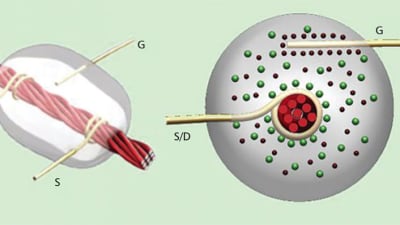
Humans use the sense of touch to accomplish almost every daily task such as picking up a cup of coffee or shaking someone’s hand. Without it, humans can even lose their sense of balance when walking. Similarly, robots need to have a sense of touch in order to interact better with humans but robots...
Briefs: Manufacturing & Prototyping
A fully print-in-place technique for electronics could enable technologies such as high-adhesion, embedded electronic tattoos and bandages with patient-specific biosensors.

Briefs: Electronics & Computers
Car engines, laptop computers, cellphones, and refrigerators all heat up with overuse. That heat can be captured and turned into energy using a method that produces electricity from heat. The...

Briefs: Motion Control
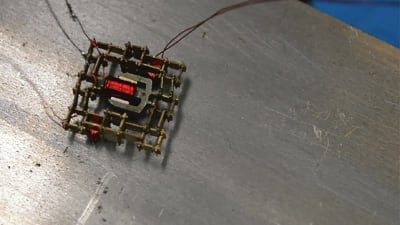
A set of five tiny fundamental parts can be assembled into a wide variety of functional devices including a tiny “walking” motor that can move back and forth across a surface or...
Briefs: Electronics & Computers
For decades, microchip transistors have become smaller, faster, and cheaper; however, miniaturization has reached a natural limit, as completely new problems arise when a length scale of only a...

Briefs: Photonics/Optics
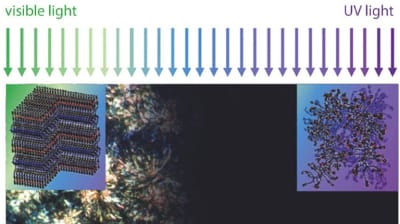
Some organic materials cannot be utilized similarly to silicon semiconductors in optoelectronics. Whether in solar cells, light-emitting diodes, or in transistors, what is important is the bandgap, i.e. the...
Briefs: Semiconductors & ICs
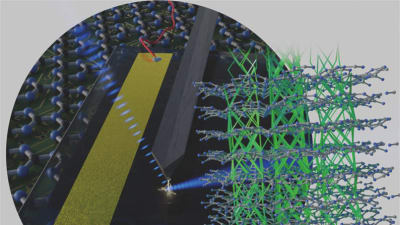
Recently discovered two-dimensional (2D) materials with superlative properties have the potential to advance semiconductors but creating 2D devices with both good electrical contacts and...

Briefs: Test & Measurement
Antenna Near-Field Probe Station Scanner
Antenna characterization techniques are often expensive and time-consuming. NASA’s Glenn Research Center developed a highly versatile and automated system to perform characterization of single or multiple small circuit antennas, printed on-wafer or on other substrates, by measuring the antenna’s...
Briefs: Imaging
The production of precision products depends on robot control systems knowing the location of the adhesive bonding head or welding head to the nearest millimeter at all times. This means the robot...

Briefs: Photonics/Optics
Scientists of Karlsruhe Institute of Technology (KIT) and École Poly-technique Fédérale de Lausanne (EPFL) have reported that they achieved the fastest distance measurement attained so far....
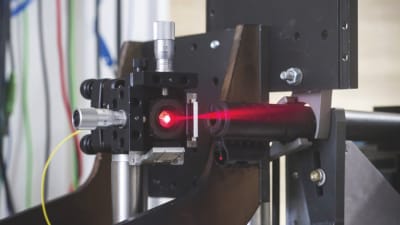
Briefs: Electronics & Computers
Smart objects are required to store and retrieve massive amounts of data quickly without consuming too much power. Millions of new memory cells could be part of a computer chip and provide that...

Briefs: Photonics/Optics
NASA Langley Research Center has developed a double-sided Si(Ge)/ Sapphire/III-Nitride hybrid structure. This technology uses both sides of a sapphire wafer to build device structures...

Briefs: Electronics & Computers
Visualizing Motion of Water Molecules for Liquid-Based Electronics
A high-resolution inelastic x-ray scattering technique was used to measure the strong bond involving a hydrogen atom sandwiched between two oxygen atoms. This hydrogen bond is a quantum-mechanical phenomenon responsible for various properties of water, including viscosity, that...
Briefs: Mechanical & Fluid Systems
Cryogenic Hydraulically Actuated Isolation Valve
Researchers at NASA's Marshall Space Flight Center have developed a cryogenic isolation valve that utilizes the upstream line pressure of cryogenic fluids for actuation. Previously, the use of cryogenic fluids for actuation systems had been too difficult to control and resulted in unsafe operating...
Briefs: Energy
Organic semiconductors (OSCs) have emerged as a new class of electronic materials promising a wide range of applications including organic field-effect transistors (OFET),...

Briefs: Energy
High-Temperature Dielectric Nanocomposite
A nanocomposite was developed that could be a superior high-temperature dielectric material for flexible electronics, energy storage, and electric devices. The nanocomposite combines one-dimensional polymer nanofibers and two-dimensional boron nitride nano-sheets. The nanofibers reinforce the...
Briefs: Electronics & Computers
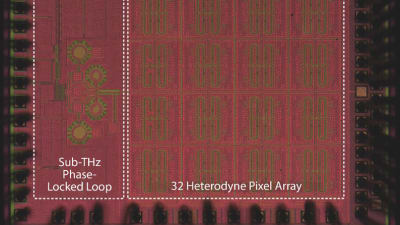
Autonomous vehicles relying on light-based image sensors often struggle to see through blinding conditions such as fog. Sub-terahertz wavelengths, which are between microwave and...
Briefs: Materials
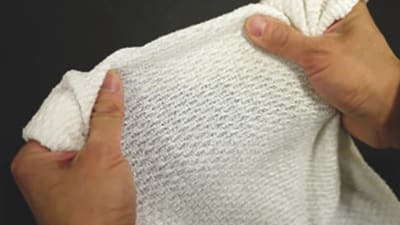
Researchers have created a fabric that automatically regulates the amount of heat that passes through, depending on conditions; for example, when conditions are warm and moist — such as those of a...
Briefs: Sensors/Data Acquisition
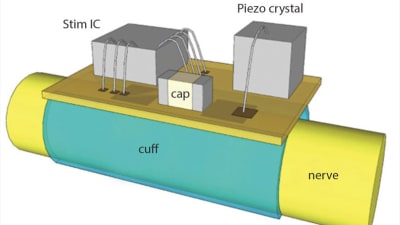
In 2016, UC Berkeley engineers demonstrated the first implanted, ultrasonic, neural dust sensors. Now, taking the next step, the smallest-volume wireless nerve stimulator was developed, called StimDust...
Briefs: Electronics & Computers
Polymers are regularly used as thermal insulators and can even be used as thermal conductors to enable efficient heating or cooling. A new type of polymer was created that demonstrates a...
Top Stories
 Blog: Lighting

A Stretchable OLED that Can Maintain Most of Its Luminescence
 Blog: Energy

Batteries that Can Withstand the Cold
 INSIDER: Energy

Advancing All-Solid-State Batteries
 Quiz: Energy

 Blog: Physical Sciences

 Blog: Materials

Webcasts
 Upcoming Webinars: Test & Measurement

From Spreadsheets to Insights: Fast Data Analysis Without Complex...
 Upcoming Webinars: Electronics & Computers

Cooling a New Generation of Aerospace and Defense Embedded...
 Upcoming Webinars: Test & Measurement

Beyond AI-Copy-Paste Engineering: Advanced AI-Integration Success...
 Upcoming Webinars: Automotive

Battery Abuse Testing: Pushing to Failure
 Upcoming Webinars: Internet of Things

A FREE Two-Day Event Dedicated to Connected Mobility
 Upcoming Webinars: Test & Measurement

Choosing the Right N-Port Strategy: Multiport VNAs vs. Switch...