38
-1
1260
30
Briefs: Materials
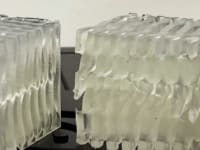
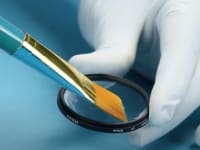
NASA’s Langley Research Center has developed a method to consolidate carbon nanotube yarns and woven sheets and graphene sheets via the dehydration of sucrose. The resulting...
Briefs: Materials
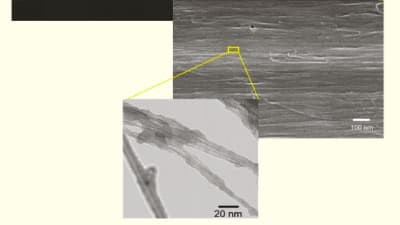
NASA’s Langley Research Center has developed a technology that uses commercially available additive print manufacturing to add various levels of structural hierarchy to thin-film...
Briefs: Materials
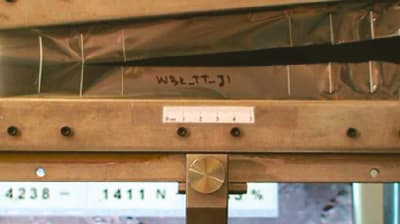
Integrated Ceramic Matrix Composite-Carbon/Carbon Structures for Large Rocket Engine Nozzles and Nozzle Extensions
Low-cost access to space demands durable, cost-effective, efficient, and low-weight propulsion systems. Key components include boost and upper stage rocket engine nozzles and extensions. Nozzle material options include ablatives,...
Briefs: Manufacturing & Prototyping
Aromatic Thermosetting coPolyester (ATSP) Composites for High-Temperature and Cryogenic Applications
Advanced composite materials processable by cost-effective manufacturing play an important role in developing lightweight structures for future space and planetary exploration missions. With the growing demand for improved performance in the...
Briefs: Materials
Ultralow-Temperature-Operable Solid Propellant Binder
A unique binder was developed that exhibits a glass transition temperature of –100 °C, which is more than 50 °C lower than that of traditional HTPB (hydroxyl-terminated polybutadiene) and CTPB (carboxyl-terminated polybutadiene) binders. This innovation would be a solid propellant that would...
Briefs: Materials
Carbon Nanotube-Assisted Microwave Healing of Thermally Re-Mendable Composites
A method creates thermally healable composites using carbon nanotubes. Carbon nanotube microwave heating provides a pathway to overcome issues associated with electrical resistive heating networks. Carbon nanotubes embedded within a thermally reversible polymer can be...
Briefs: Materials
Aluminoborosilicate Supplement for Thermal Protection of a Re-entrant Vehicle
The Toughened Uni-piece Fibrous Reinforced Oxidation-Resistant Com posite (TUFROC) allows for much more affordable and sustainable operations involving Space Launch Services and other systems that utilize Earth reentry vehicles. TUFROC has an exposed surface design and...
Briefs: Materials
Processing and Manufacture of Inorganic-Organic Hybrid Syntactic Structural Cryogenic Insulator
Reducing the cost and weight of launch structures is essential to meeting NASA goals for reliable access to space. Currently, separate systems are used for structure and pressure containment, cryogenic insulation, and high-temperature insulation. One way...
Briefs: Materials
Control of Carbon Nanotube Density and Tower Height in an Array
Use of arrays of carbon nanotubes (CNTs) as an intermediary for transport of electrical particles (e.g., electrons) and/or transport of thermal energy from one body to another has grown. For example, a CNT array may be used for dissipation of thermal energy or accumulated electrical...
Briefs: Materials
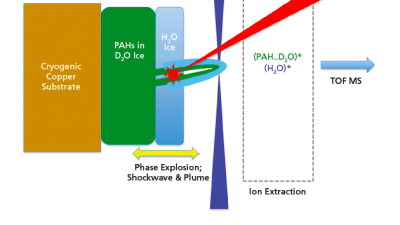
In order to understand whether the ablation laser would cause chemical reactions within the trapped organic molecules during resonant laser ablation of water ice containing organic molecules, a...
Briefs: Materials
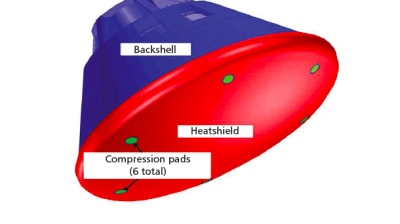
NASA has developed a unique and robust multifunctional material called 3-Dimensional Multifunctional Ablative (3DMAT) Thermal Protection System (TPS) that meets both the structural and...
Briefs: Materials
Hierarchical Support for Nanocatalysts
This work focused on enhancing catalyst activity and durability by developing a method to control size, dispersion, and exposure. Existing nanocatalysts are typically fabricated in bulk or powder form. There are monolithic catalysts, but they rely on meso-porous materials as supports. Bulk nanocatalysts suffer...
Briefs: Materials
Flexible, High-Temperature Polyimide/Urea Aerogels
Cross-linked silica-based aerogels with polymeric materials, as well as incorporating a flexible linkage into the underlying metal oxide, have been proven to improve strength and resilience over their native, or non-cross-linked, counterparts without adversely affecting porosity and density. In...
Briefs: Materials
Cryogenic fluid management (CFM) is a critical technical area that is needed for the successful development of future space exploration. A key challenge is the storability of LH2, LCH4, and LOX propellants for long...

Briefs: Materials
Colorimetric Indicator for Detection of AF-M315E
An easy and instant method of detection was needed for AF-M315E, a “green” propellant that produces very little vapor. This makes it hard to detect by smell or other active sensors.
Briefs: Materials
Oriented Nanofibers Embedded in a Polymer Matrix
A method of forming a composite of embedded nanofibers in a polymer matrix with a high degree of alignment has been created using a nanofiber continuous fiber (NCF) system. This innovation incorporates nanofibers in a plastic matrix forming agglomerates, and then uniformly distributes them by...
Briefs: Materials
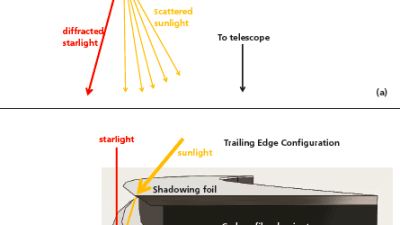
A starshade occulter is a large space structure whose shape is specially designed to produce a diffraction pattern in starlight that can aid a telescope in direct imaging of exoplanets. The diffraction pattern...
Briefs: Materials
Processing and Damage Tolerance of Continuous Carbon Fiber Composites Containing Puncture-Self-Healing Thermoplastic Matrix
The initiation and propagation of damage ultimately results in failure of aircraft structural components. Often, impact damage is difficult to identify in-service, and hence design of continuous carbon fiber reinforced polymer...
Briefs: Materials
Advanced Supported Liquid Membranes for CO2 Control in EVA Applications
NASA has a clear need to develop new technology in support of its future goals, including missions beyond low-Earth orbit, the possible development of lunar outposts, and the eventual exploration of Mars. As these missions develop, it is anticipated that crew members will...
Briefs: Materials
Ti-based bulk metallic glasses (BMGs) and matrix composites (BMGMCs) are a subset of the class of materials known synonymously as amorphous metals, liquid metals,...

Briefs: Materials
An experimental study was conducted in conjunction with the research and development program at the NASA Marshall Space Flight Center (MSFC) on thermal protection systems (TPS) for aerospace applications, a new...

Briefs: Materials
AeroHeating Tools (AHT) Suite
This suite of computer programs, called “tools,” is used to calculate local flow angles over damage sites in the Shuttle Orbiter Thermal Protection System (TPS). It provides a quick and easy way to compute cross flow angles over points of interest on the Shuttle Orbiter TPS.
Briefs: Materials
EXOS Software
An improved version of EXOS software allows for the modeling of fabrics, mixtures, and porous materials, and also provides the ability to accept hex mesh geometries. The code employs a novel numerical method, a hybrid particle finite element approach, as well as particles and elements in tandem, each modeling distinct aspects of the...
Briefs: Materials
Using Paraffin Phase Change Material to Make Optical Communication-Type Payloads Thermally Self-Sufficient for Operation in Orion Crew Module
The Orion Crew Module has a pressurized cabin of approximately 20 m3 in volume. There are a number of cold plates within the Crew Module for thermal management. An optical communication type of payload...
Briefs: Materials
Aerogel-Filled Foam Core Insulation for Cryogenic Propellant Storage
Current cryogenic insulation materials suffer from various drawbacks including high cost and weight, lack of structural or load-bearing capability, fabrication complexity, and property anisotropy. A need clearly exists for lightweight thermal insulation that is isotropic and...
Briefs: Materials
Multifunctional B/C Fiber Composites for Radiation Shielding
A versatile, novel, multifunctional hybrid structural composite of a high-hydrogen epoxy matrix (UN-10) coupled with boron and carbon fibers (IM-7) has been developed. Prototype laminates of 18×18 in. (≈46×46 cm), with the nominal areal density of 0.35 g/cm2, were fabricated in this...
Briefs: Materials
Smart MMOD Thermal Blanket
This innovation provides for significantly improved protection from micrometeoroid and orbital debris (MMOD) particles, and reliably determines the location, depth, and extent of MMOD impact damage.
Briefs: Materials
Using Black Polyimide/Kevlar as a Metering Structure Multi-Layer Insulation (MLI)
Metering structures of remote sensing instruments often have large openings or access holes. Shear panels that are X-shaped, such as those proposed for the Neutron Star Interior Composition Explorer (NICER), generally consist of C-channels and L-brackets to minimize...
Briefs: Materials
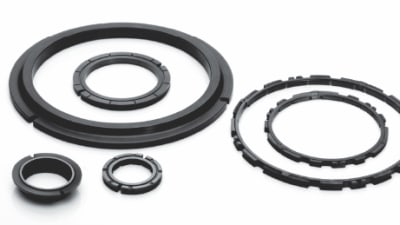
Modern mechanical carbon materials are being used in a wide variety of applications, including aircraft gear boxes, air turbine motor starters, and main shaft seals for both aircraft...
Top Stories
 Blog: Lighting

A Stretchable OLED that Can Maintain Most of Its Luminescence
 Blog: Energy

Batteries that Can Withstand the Cold
 INSIDER: Energy

Advancing All-Solid-State Batteries
 Quiz: Energy

 Blog: Physical Sciences

 Blog: Materials

Webcasts
 Upcoming Webinars: Test & Measurement

From Spreadsheets to Insights: Fast Data Analysis Without Complex...
 Upcoming Webinars: Electronics & Computers

Cooling a New Generation of Aerospace and Defense Embedded...
 Upcoming Webinars: Test & Measurement

Beyond AI-Copy-Paste Engineering: Advanced AI-Integration Success...
 Upcoming Webinars: Automotive

Battery Abuse Testing: Pushing to Failure
 Upcoming Webinars: Internet of Things

A FREE Two-Day Event Dedicated to Connected Mobility
 Upcoming Webinars: Test & Measurement

Choosing the Right N-Port Strategy: Multiport VNAs vs. Switch...