38
-1
0
30
Briefs: Lighting Technology
University of Minnesota Twin Cities researchers have discovered a new method to move objects using ultrasound waves, which opens the door for using contactless manipulation in industries in which devices wouldn’t need a built-in power source to move. Read on to learn more.
Briefs: Materials
Clean, safe water is vital for human health and well-being. However, detecting contamination quickly and accurately remains a major challenge in many parts of the world. A groundbreaking new device developed by researchers at the National University of Singapore has the potential to significantly advance water quality monitoring and management. Read on to learn more.

Briefs: Materials
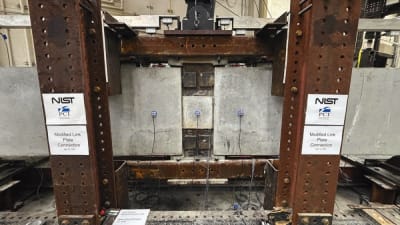
Researchers have developed five new ways to securely connect large concrete pieces. These connection methods are intended for a type of material called “precast concrete,” in which parts such as beams and columns are made in a factory and assembled later at a construction site. Read on to learn more.
Briefs: Physical Sciences
To help meet surging demand and possible supply chain problems, scientists at the U.S. Department of Energy’s Argonne National Laboratory have developed an innovative membrane technology that efficiently extracts lithium from water. Read on to learn more.

Briefs: Design
Dr. Mustafa Akbulut, Professor of Chemical engineering, has teamed up with Horticultural Science Professor Luis Cisneros-Zevallos to engineer longer-lasting, bacteria-free produce. Read on to learn more about it.

Briefs: Physical Sciences
Using mechanisms inspired by nature to create new technological innovations is a signature of one Virginia Tech research team. The group led by Associate Professor Michael Bartlett has created an octopus-inspired adhesive, inspired by the shape of octopus suckers, that can quickly grab and controllably release challenging underwater objects. Read on to learn more about it.

Briefs: Design
In two papers, one released in Nature Materials and a second in ACS Nano, researchers describe a new methodology for fabricating targeted 3D nanoscale structures via self-assembly that can find use in a variety of applications, and they provide a design algorithm for others to follow suit. And it’s all based on the most basic biomolecular building blocks: DNA. Read on to learn more.

Briefs: Wearables
MIT researchers have developed an autonomous programmable computer in the form of an elastic fiber, which could monitor health conditions and physical activity, alerting the wearer to potential health risks in real-time. Read on to learn more.

Briefs: Green Design & Manufacturing
Researchers in Korea have successfully developed a new material that significantly enhances the efficiency of green hydrogen production while reducing costs. Read on to learn more about it.

Briefs: Materials
Researchers at NASA have developed new methods to manufacture carbon materials (e.g., nanotubes, graphene) with holes through the graphitic surface of the particles. The methods generate materials with increased accessible surface area, increased functional groups at damage sites, and improved through-surface molecular transport properties.

Briefs: Energy
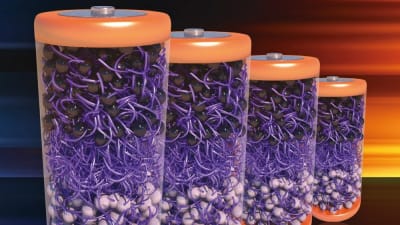
Today’s electric vehicle boom is tomorrow’s mountain of electronic waste. And while myriad efforts are underway to improve battery recycling, many EV batteries still end up in landfills. A research team from MIT wants to help change that with a new kind of self-assembling battery material that quickly breaks apart when submerged in a simple organic liquid. Read on to learn more.
Briefs: Manufacturing & Prototyping
Oak Ridge National Laboratory researchers have overcome a barrier to using a more affordable, dry process for manufacturing the Li-ion batteries used in vehicles and electronic devices. The resulting batteries provide greater electricity flow and reduced risk of overheating. Read on to learn more.
Briefs: Power
By flipping a foundational belief in battery design, Hailong Chen and his team found that charging zinc-ion batteries at higher currents can make them last longer. Read on to learn more about this surprising result.
Briefs: Medical
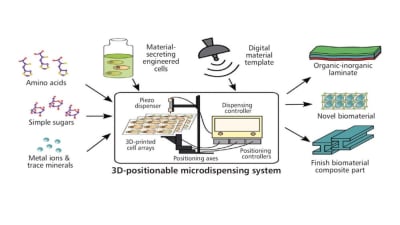
NASA has developed a novel approach for macroscale biomaterial production by combining synthetic biology with 3D printing. This innovation provides modern design and fabrication techniques for custom-designed organic or organic-inorganic composite biomaterials produced from limited resources. Read on to learn more.
Briefs: Energy
The Korea Institute of Energy Research has successfully developed ultra-lightweight flexible perovskite/ CIGS (copper indium gallium selenide) tandem solar cells and achieved a power conversion efficiency of 23.64 percent, which is the world’s highest efficiency for flexible perovskite/CIGS tandem solar cells reported to date. Read on to learn more.
Briefs: Energy
Researchers from the National University of Singapore have developed a novel triple-junction perovskite/Si tandem solar cell that can achieve a certified world-record power conversion efficiency of 27.1 percent across a solar energy absorption area of 1 sq cm, representing the best-performing triple-junction perovskite/Si tandem solar cell thus far. Read on to learn more.
Briefs: Physical Sciences
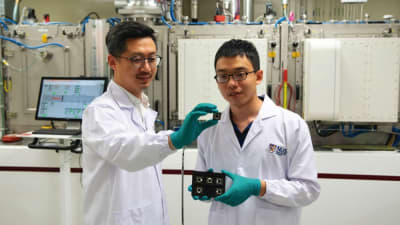
Soft robots, medical devices and implants, and next-generation drug delivery methods could soon be guided with magnetism — thanks to a metal-free magnetic gel developed by researchers at the University of Michigan and the Max Planck Institute for Intelligent Systems in Stuttgart, Germany. Read on to learn more about it.
Briefs: Electronics & Computers
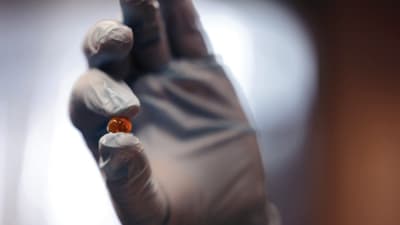
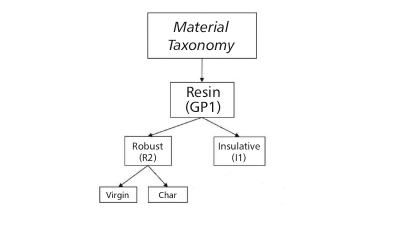
Innovators at NASA Johnson Space Center have developed additively manufactured thermal protection system (AMTPS) comprised of two printable heat shield material formulations. This technology could significantly decrease heat shield or thermal protection system (TPS) fabrication cost and time. Read on to learn more.
Briefs: Nanotechnology
Researchers at the U.S. Department of Energy (DOE)’s Oak Ridge National Laboratory (ORNL) have developed an innovative new technique using carbon nanofibers to enhance binding in carbon fiber and other fiber-reinforced polymer composites — an advance likely to improve structural materials for automobiles, airplanes and other applications that require lightweight and strong materials.

Briefs: Manufacturing & Prototyping
Finding the next groundbreaking polymer is always a challenge, but now Georgia Tech researchers are using artificial intelligence (AI) to shape and transform the future of the field. Read on to learn more.
Briefs: Power
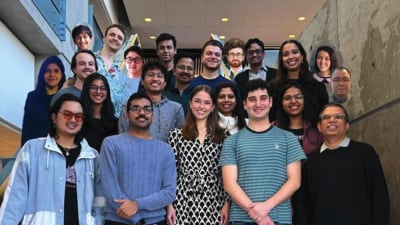
In a major step forward for sustainable energy technology, researchers at Worcester Polytechnic Institute, led by Professor Yan Wang, William B. Smith Professor of Mechanical and Materials Engineering, have developed a new, scalable method to recycle lithium-ion batteries in a way that is both efficient and environmentally friendly. Read on to learn more.

Briefs: Energy
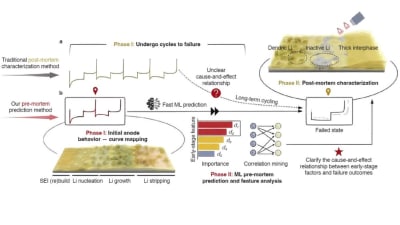
In a groundbreaking study, researchers at Tsinghua Shenzhen International Graduate School and the Shenzhen Institute of Advanced Technology, Chinese Academy of Sciences, have developed a predictive model that uses electrochemical data from the initial cycles of LMBs to forecast potential failures. Read on to learn more.
Briefs: Materials
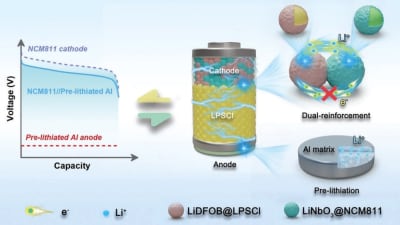
Researchers from Nanjing University, led by Professor Ping He and Professor Shaochun Tang, have published a comprehensive study in Nano-Micro Letters on the development of high-energy, stable all-solid-state lithium batteries using aluminum-based anodes and high-nickel cathodes. Read on to learn more about it.
Briefs: Energy
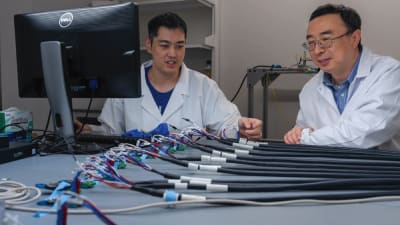
A team of Rice University researchers led by materials scientist Ming Tang showed that even if the materials used in thick battery electrodes have nearly identical structures, their internal chemistry impacts energy flow — and, hence, performance — differently. This finding goes against conventional wisdom in the field. Read on to learn more.
Briefs: Energy
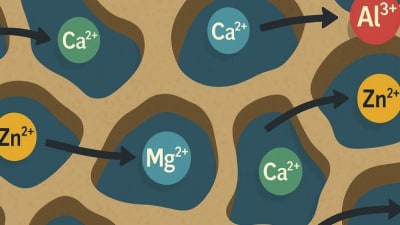
In research published in Cell Reports Physical Science, an NJIT team successfully applied generative AI techniques to rapidly discover new porous materials capable of revolutionizing multivalent-ion batteries. Read on to learn more.
Briefs: Materials
KAUST researchers have invented a robust, highly sensitive, low-cost hydrogen sensor that outperforms available commercial detectors, offering a vital safeguard for the burgeoning hydrogen economy. Read on to learn more.

Briefs: Imaging
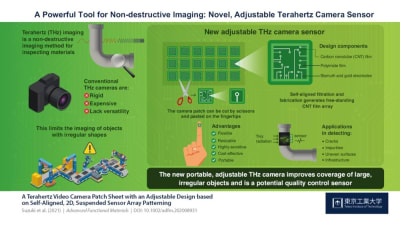
A team of researchers from Tokyo Tech, led by Associate Professor Yukio Kawano, has designed a flexible and free-standing THz sensor array that can be used to image blind ends of irregularly shaped objects. Read on to learn more about it.
Briefs: Semiconductors & ICs
Engineers at MIT, Nanyang Technological University, and several companies have developed a compact and inexpensive technology for detecting and measuring lead concentrations in water, potentially enabling a significant advance in tackling this persistent global health issue. Read on to learn more.

Briefs: Materials
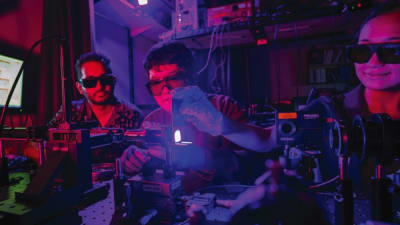
Engineers at the University of California San Diego have achieved a long-sought milestone in photonics: creating tiny optical devices that are both highly sensitive and durable — two qualities that have long been considered fundamentally incompatible. Read on to learn more.
Top Stories
 Blog: Lighting

A Stretchable OLED that Can Maintain Most of Its Luminescence
 Blog: Energy

Batteries that Can Withstand the Cold
 INSIDER: Energy

Advancing All-Solid-State Batteries
 Quiz: Energy

 Blog: Physical Sciences

 Blog: Materials

Webcasts
 Upcoming Webinars: Test & Measurement

From Spreadsheets to Insights: Fast Data Analysis Without Complex...
 Upcoming Webinars: Electronics & Computers

Cooling a New Generation of Aerospace and Defense Embedded...
 Upcoming Webinars: Test & Measurement

Beyond AI-Copy-Paste Engineering: Advanced AI-Integration Success...
 Upcoming Webinars: Automotive

Battery Abuse Testing: Pushing to Failure
 Upcoming Webinars: Internet of Things

A FREE Two-Day Event Dedicated to Connected Mobility
 Upcoming Webinars: Test & Measurement

Choosing the Right N-Port Strategy: Multiport VNAs vs. Switch...