36,38
-1
1350
30
Briefs: Materials
Despite years of effort to stabilize proteins outside of their native environments, scientists have made limited progress in combining proteins with synthetic components like fibers without compromising...

Briefs: Materials
Innovators at NASA's Glenn Research Center have adapted a process to apply thermal and environmental barrier coatings using a unique combination of a plasma spray (PS) process and a...

Briefs: Materials
A polymer was discovered that possesses many of the same characteristics as plastics, such as light weight, heat resistance, strength, and durability. But the new polymer, unlike...

Briefs: Test & Measurement
Researchers at the University of Texas at Dallas have solved a longstanding problem that has been plaguing the scanning tunneling microscope for more than 35 years: How to prevent...

Briefs: Test & Measurement
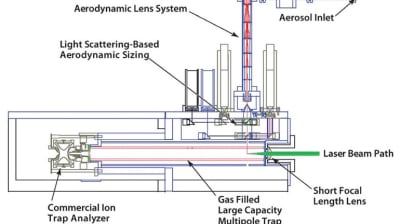
Particle analysis is useful for determining chemical compositions in a wide range of disciplines, from ascertaining the source of a petroleum sample to duplicating a fragrance. The technique is appealing to...
Briefs: Materials
Laser-induced graphene (LIG) has been used to write graphene patterns onto food and other materials to quickly embed conductive identification tags and sensors into the products...

Briefs: Materials
Polymer membrane separators play a crucial function in many energy and water technologies including energy storage, hydrogen generation through water electrolysis, and...
Briefs: Manufacturing & Prototyping
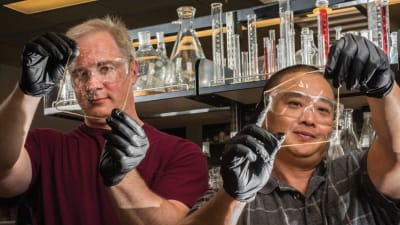
Blocking/Deblocking Resin Systems
Similar to resin systems currently used in composites for aerospace structural applications such as toughened epoxies, this innovation is a modification to traditional resin chemistry to prevent polymerization and crosslinking of the resin when heated and pressed in an autoclave or other common resin curing system....
Briefs: Robotics, Automation & Control
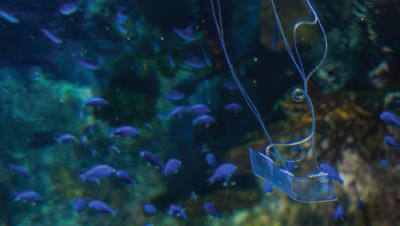
An eel-like robot was developed that can swim silently in salt water without an electric motor. Instead, the robot uses artificial muscles filled with water to propel itself. The...
Briefs: Medical
Aerogels are among the lightest materials in the world, and are highly porous with strong absorption capacity and low thermal conductivity. These unique properties make aerogels highly suitable...

Briefs: Semiconductors & ICs
NASA Langley Research Center has developed a simple mechanism for the clean cutting of high-strength and high-toughness carbon nanotube/poly-mer fiber composites on demand without high blade wear or replacement...
Briefs: Sensors/Data Acquisition
Aircraft coatings are the first line of defense when it comes to mitigating structural corrosion of an air platform. As new coatings are developed — particularly those that contain non-chrome primers...
Briefs: Sensors/Data Acquisition
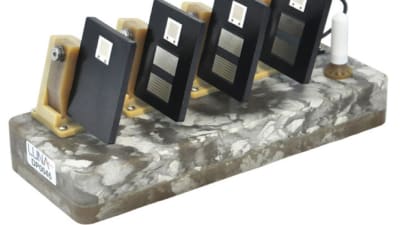
It has been established opinion since the 1950s that organic crystals and liquid scintillators can work for detecting neutrons, but that plastics are not suitable for neutron detection. For years,...
Briefs: Materials
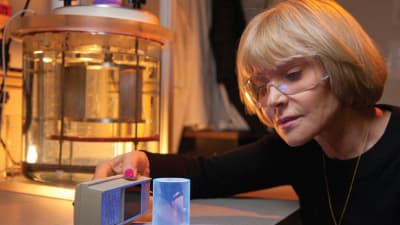
Commercial buildings in the United States account for nearly 40% of the total energy consumption. Among them, electricity is the largest energy source for buildings....

Briefs: Photonics/Optics
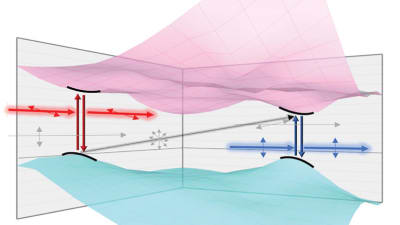
For several decades, improvements in conventional transistor materials have been sufficient to sustain Moore’s Law — the historical pattern of microchip manufacturers...
Briefs: Medical
Removable Implant May Control Type 1 Diabetes
For the more than 1 million Americans who live with Type 1 diabetes, daily insulin injections are literally a matter of life and death. And while there is no cure, a new device may help manage the disease.
Briefs: Semiconductors & ICs
Demands for improved computer processing power have led researchers to explore both new processes and other materials beyond silicon to produce electronic components....
Briefs: Mechanical & Fluid Systems
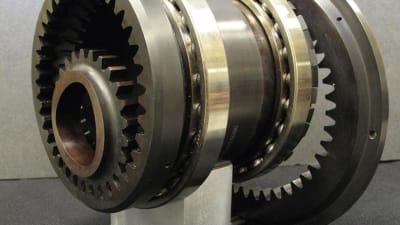
Innovators at NASA’s Glenn Research Center have developed a simple, lightweight, inline, two-speed drive that can be used either as an overall transmission, or as a supplemental add-on input...
Briefs: Mechanical & Fluid Systems
Compact Termination for Structural Soft Goods
Space environments are particularly harsh for the high-strength fibers NASA relies on for soft structures. Kevlar, Nomex, Nylon, and other synthetic fibers are broken down by exposure to the combination of vacuum, atomic oxygen, and ultraviolet radiation. Glass fiber offers unique advantages for...
Briefs: Robotics, Automation & Control
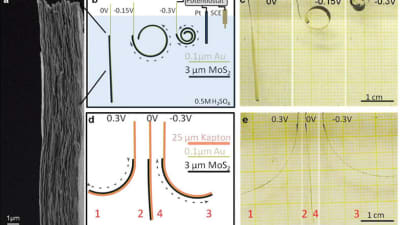
Actuators are used in a wide variety of electromechanical systems and in robotics, in applications such as steerable catheters, aircraft wings that adapt to changing conditions, and wind turbines...
Briefs: Materials
USAF-96 Steel is a low-alloy steel that, when thermally processed with the method described here, has the following typical values: an ultimate tensile strength of 245 ksi, yield strength at 0.2% offset of...

Briefs: Sensors/Data Acquisition
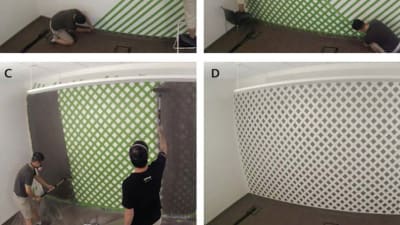
Walls often make up more than half of indoor surface area, especially in residential and office buildings. In addition to delimiting spaces, both for functional and...
Briefs: Automotive
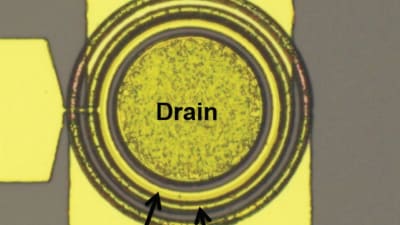
Power electronics used for routing, control, and conversion of electrical power traditionally utilize silicon semiconductors. These systems tend to be bulky, require active cooling, and are inadequate for...
Briefs: Power
Magnetic Induction Heating of Space Foods During Dispensing Under Weightless Conditions
Hot foods are psychologically pleasing. Food heating systems are currently part of the astronaut feeding program. An electrical method of heating foods during dispensing in space uses magnetic induction heating. The process is up to 95% efficient in converting...
Briefs: Mechanical & Fluid Systems
Auto-Zero Differential Amplifier
Engineers in the NASA Goddard Space Flight Center Instrument Electronics Development Branch have developed a chopper-stabilized auto-zero amplifier capable of amplifying signals with extremely small amplitude originating from a thermopile-based infrared (IR) sensor. The instrument is self-adjusting in that it...
Briefs: Sensors/Data Acquisition
Polymer-Based 2D-to-3D Transformable Surfaces
Technologies using stretchable materials are increasingly important. Yet, in general, it is not possible to control how they stretch with much more sophistication than inflating balloons. A method was developed that allows the calculated transformation of 2D stretchable surfaces into targeted 3D shapes.
Briefs: Mechanical & Fluid Systems
Large-scale liquid rocket engines with regeneratively cooled nozzles will enable reliable and reduced-cost access to space. The coolant that circulates through the internal...

Briefs: Materials
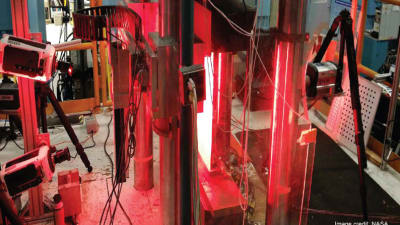
When testing composite structures, it is important to understand the response of the structure to the load. Of significance is the formation of damage and growth of that damage leading to...
Briefs: Materials
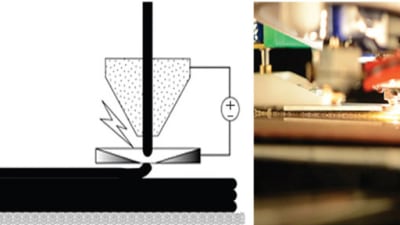
Freeform Fabrication Using Electrically Conductive Filaments
The use of multifunctional composites such as mechanically reinforced, electrically and thermally conductive parts is of interest in a range of application areas. Especially interesting and important is where tailorability of function is achieved by strategic placement of materials with...
Top Stories
 Blog: Lighting

A Stretchable OLED that Can Maintain Most of Its Luminescence
 Blog: Energy

Batteries that Can Withstand the Cold
 INSIDER: Energy

Advancing All-Solid-State Batteries
 Quiz: Energy

 Blog: Physical Sciences

 Blog: Materials

Webcasts
 Upcoming Webinars: Sensors/Data Acquisition

From Spreadsheets to Insights: Fast Data Analysis Without Complex...
 Upcoming Webinars: Electronics & Computers

Cooling a New Generation of Aerospace and Defense Embedded...
 Upcoming Webinars: Sensors/Data Acquisition

Beyond AI-Copy-Paste Engineering: Advanced AI-Integration Success...
 Upcoming Webinars: Power

Battery Abuse Testing: Pushing to Failure
 Upcoming Webinars: Connectivity

A FREE Two-Day Event Dedicated to Connected Mobility
 Upcoming Webinars: Test & Measurement

Choosing the Right N-Port Strategy: Multiport VNAs vs. Switch...