39,49,73
-1
420
30
Briefs: Mechanical & Fluid Systems
Flying animals both power and control flight by flapping their wings. This enables small natural flyers such as insects to hover close to a flower but also to rapidly escape danger. Animal flight has...

Briefs: Photonics/Optics
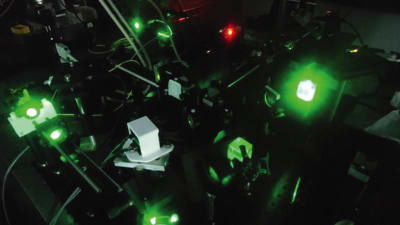
Researchers have developed a new self-calibrating endoscope that produces 3D images of objects smaller than a single cell without a lens or any optical, electrical, or...
Briefs: Electronics & Computers
To investigate oceans, researchers aim to build a submerged network of interconnected sensors that sends data to the surface. Supplying constant power to scores of sensors designed to stay for long...

Briefs: Automotive
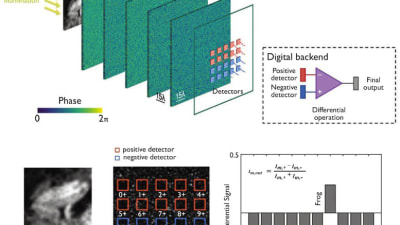
UCLA engineers have made major improvements on their design of an optical neural network — a device inspired by how the human brain works — that can identify objects or process...
Briefs: Photonics/Optics
Most of us know optical lenses as curved, transparent pieces of plastic or glass, designed to focus light for microscopes, spectacles, cameras, and more. For the most part, a lens’...

Briefs: Mechanical & Fluid Systems
Fluid-Filled Frequency-Tunable Mass Damper
Innovators at Marshall Space Flight Center developed the fluid-filled Frequency-Tunable Mass Damper (FTMD) technology that allows for significant distribution of loads while also providing a simple mechanism that allows for the capability to change its frequency of mitigation with negligible impact on the...
Briefs: Electronics & Computers
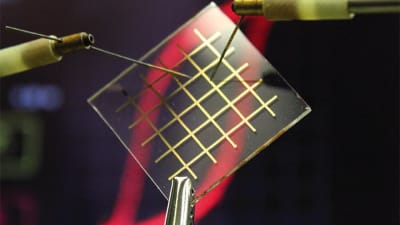
Very thin nylon films were created that can be used in electronic memory components. The films are several hundreds of times thinner than a human hair and could be used in bendable electronic...
Briefs: Electronics & Computers
Lateral Kevlar Suspension Device (LKSD)
The Lateral Kevlar Suspension Device (LKSD) is made up of a support ring that has three spring-loaded tension assemblies equally spaced around the support ring. Connected to these tension assemblies is a band that supports a separate ring capable of holding a cylindrical shaped load.
Briefs: Mechanical & Fluid Systems
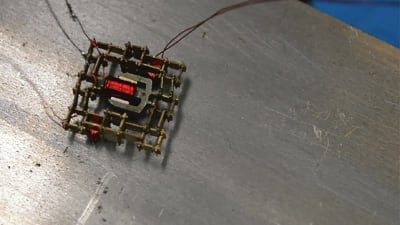
A set of five tiny fundamental parts can be assembled into a wide variety of functional devices including a tiny “walking” motor that can move back and forth across a surface or...
News: Aerospace
Lightweight Sensing and Control System for Unmanned Aerial Vehicle Monitoring
A new sensing and control system for unmanned aerial vehicles (UAVs) allows for semi-autonomous flight. Pilots need not leave the ground to conduct routine monitoring and surveillance quickly and cost-effectively. Such systems are particularly useful during long flight...
Briefs: Wearables
Between walking and running, human gaits can cover a wide range of speeds; for example, at low speeds, the metabolic rate of walking is lower than that of running in a slow jog. The...

Briefs: Mechanical & Fluid Systems
A new device, inspired by a rose, inexpensively collects and purifies water. The device is a new approach to solar steaming for water production — a technique that uses energy from sunlight to...

Briefs: Manufacturing & Prototyping
A radically new kind of airplane wing, assembled from hundreds of tiny identical pieces, can change shape to control the plane’s flight, and could provide a significant boost in aircraft...

Briefs: Mechanical & Fluid Systems
Researchers have 3D-printed an all-liquid device that, with the click of a button, can be repeatedly reconfigured on demand to serve a wide range of applications from making battery materials to screening drug...

Briefs: Nanotechnology
For decades, microchip transistors have become smaller, faster, and cheaper; however, miniaturization has reached a natural limit, as completely new problems arise when a length scale of only a...

Briefs: Aerospace
NASA’s Langley Research Center developed an inexpensive, long-endurance, vertical takeoff and landing (VTOL) unmanned aerial vehicle (UAV). It is capable of flying for 24 hours, landing in a 50 × 50...

Briefs: Sensors/Data Acquisition
Neural Lander Uses AI to Land Drones Smoothly
Landing multi-rotor drones smoothly is difficult. Complex turbulence is created by the airflow from each rotor bouncing off the ground during a descent. This turbulence is not well understood nor is it easy to compensate for, particularly for autonomous drones. That is why takeoff and landing are often...
Briefs: Aerospace
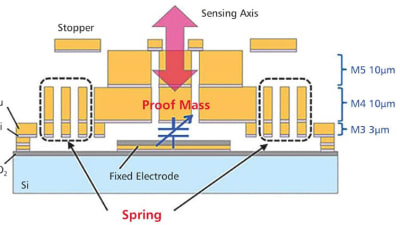
A high-sensitivity and low-noise MEMS accelerometer was developed using multi-layer metal structures composed of multiple metal layers. The accelerometer achieves 1 μG level resolution that has...
Briefs: Internet of Things
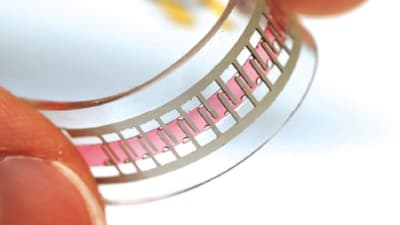
Soft robots have a distinct advantage over rigid robots: they can adapt to complex environments, handle fragile objects, and interact safely with humans. Made from silicone, rubber, or other stretchable polymers, they...
Briefs: Manufacturing & Prototyping
An automated system designs and 3D-prints complex robotic parts that are optimized according to an enormous number of specifications. The system fabricates actuators — devices that mechanically control...

Briefs: Aerospace
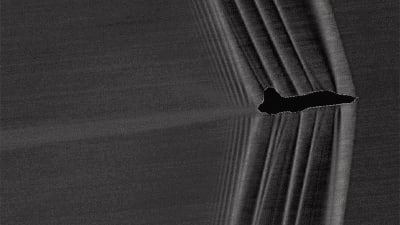
Supersonic flight over land is generally prohibited because sonic booms created by shockwaves disturb people on the ground and can damage property. Armstrong innovators are working to solve...
Briefs: Software
A smartphone app was developed that allows a user to easily program any robot to perform a mundane activity such as picking up parts from one area and delivering them to another. The app, called VRa, uses...

Briefs: Materials
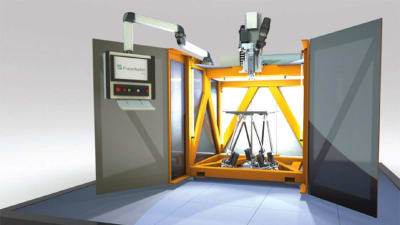
3D printers that build small parts layer by layer from melted plastic can take up to an hour to produce a pocket-sized piece. This process is far too slow for the mass-production of components...
Briefs: Test & Measurement
Software Applications for the Control and Management of the Amine Swingbed Experiment
The Swingbed software applications provide for the control, command, fault detection, fault recovery, and telemetry monitoring aspects of the Amine Swingbed experiment. These software components are the Swingbed Loader Computer Software Configuration Item (CSCI),...
Briefs: Materials
An advanced manufacturing process was developed to produce nano-structured rods and tubes directly from high-performance aluminum alloy powder in a single step. Using a Solid Phase Processing approach,...

Briefs: Software
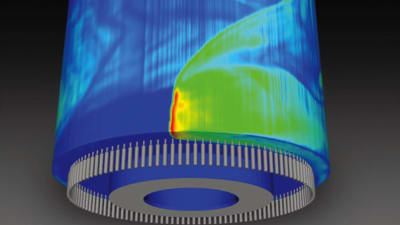
A numerical modeling tool allows for a better understanding of rotating detonation engines (RDEs).
Briefs: Photonics/Optics
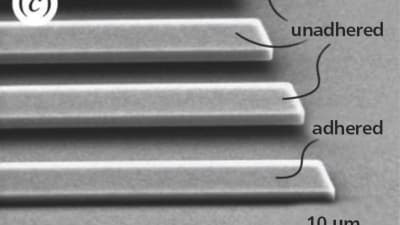
At the scale of bridges or buildings, the most important force that engineered structures need to deal with is gravity. But at the scale of microelectro-mechanical systems (MEMS) — devices like the...
Briefs: Manufacturing & Prototyping
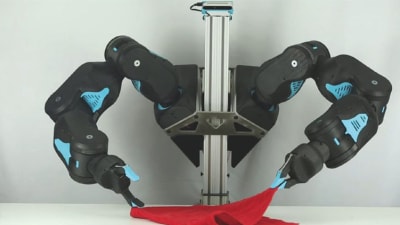
Robotics has traditionally focused on industrial applications in which robots require strength and precision to carry out repetitive tasks. These robots flourish in highly...
Briefs: Aerospace
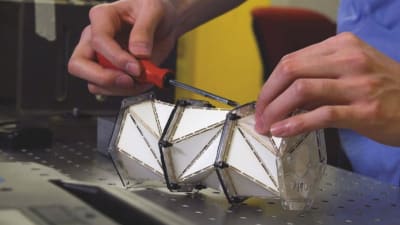
Landing is stressful on a rocket’s legs because they must handle the force from the impact with the landing pad. One way to combat this is to build legs out of materials that absorb some of the...
Top Stories
 Blog: Lighting

A Stretchable OLED that Can Maintain Most of Its Luminescence
 Blog: Energy

Batteries that Can Withstand the Cold
 INSIDER: Energy

Advancing All-Solid-State Batteries
 Quiz: Energy

 Blog: Physical Sciences

 Blog: Materials

Webcasts
 Upcoming Webinars: Test & Measurement

From Spreadsheets to Insights: Fast Data Analysis Without Complex...
 Upcoming Webinars: Electronics & Computers

Cooling a New Generation of Aerospace and Defense Embedded...
 Upcoming Webinars: Test & Measurement

Beyond AI-Copy-Paste Engineering: Advanced AI-Integration Success...
 Upcoming Webinars: Automotive

Battery Abuse Testing: Pushing to Failure
 Upcoming Webinars: Internet of Things

A FREE Two-Day Event Dedicated to Connected Mobility
 Upcoming Webinars: Test & Measurement

Choosing the Right N-Port Strategy: Multiport VNAs vs. Switch...