39,49,73
-1
750
30
Briefs: Mechanical & Fluid Systems
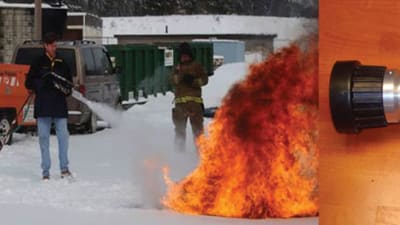
Fluorocarbon-based fire extinguishing agents are environmentally harmful since they cause depletion of the Earth's ozone layer. Fine Water Mist (FWM)-type systems have very favorable characteristics as...
Briefs: Electronics & Computers
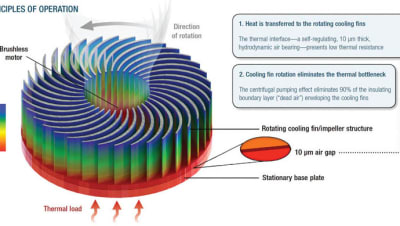
Heat exchangers are used for the transfer of heat between two or more media. The media may be separated by a solid wall so that they never mix, or they may be in direct contact. Heat exchangers may be used in HVAC systems, power...
Briefs: Defense
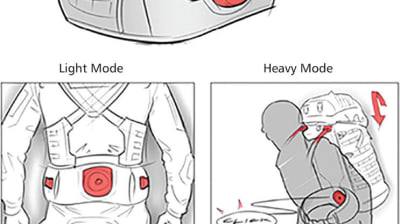
Soldiers, civilians engaged in activities such as hiking, and public safety personnel engaged in search and rescue missions all require reliable systems for the effective carriage of necessary equipment....
Briefs: Mechanical & Fluid Systems
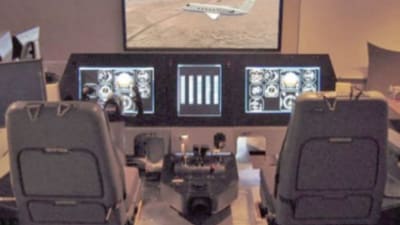
Researchers at NASA's Armstrong Flight Research Center have developed a new technology to reduce inaccuracies in force/haptic feedback devices and systems. Used at NASA in aircraft...
Briefs: Mechanical & Fluid Systems
Low-Pressure Plasma Cleaning of Aerospace Components Using Breathing/Compressed Air
A method for precision cleaning of aerospace components is needed that does not use hazardous or environmentally harmful commodities. Historically, precision cleaning methods have utilized solvents that have contributed to the depletion of the ozone layer or had...
Briefs: Mechanical & Fluid Systems
The Mars 2020 coring drill will generate a significant amount of dust and debris (known as fines) due to the volume of milled material displaced by the corer's annulus. These cuttings must be removed to ensure that the...
Briefs: Mechanical & Fluid Systems
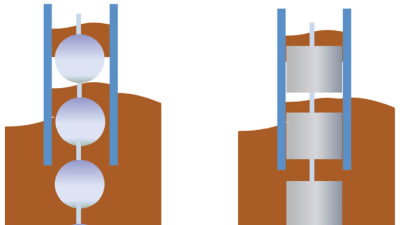
To measure organics in a fluid sample, one either has to bring the sample in the form of a colloid to the instrument, or extract the organics from the sample and bring the...

Briefs: Mechanical & Fluid Systems
Compact, Lightweight Trap Vent
This compact, lightweight trap vent is used to minimize the pressure differential of a high-altitude, balloon-borne detector. The vent allows the pressure to equalize rapidly, yet does not allow any light to enter the detector.
Briefs: Motion Control
Advanced Tool Drive System (ATDS) Camera Positioning Mechanism (CPM)
Robotic servicing of a satellite in low earth orbit (LEO) or geosynchronous Earth orbit (GEO) requires advanced systems capable of meeting the harsh environments of space. To support this effort, the Goddard Space Flight Center Satellite Servicing Capabilities Office (SSCO) has...
Briefs: Mechanical & Fluid Systems
Tangential Wrap Rib Deployable Reflector
There is a need for a large deployable reflector of 2-meter diameter or greater so smaller launch vehicles can be used. Common issues with going from a large solid reflector into deployable structures are the structural stiffness and deployable structure complexity.
Briefs: Mechanical & Fluid Systems
Oxygen, water, and fuel are of paramount importance to human life. As a leading concept, the solid-oxide electrolysis cell (SOEC) is a very powerful technology, especially in...

Briefs: Mechanical & Fluid Systems
Low Solidity Vaned Diffuser (LSVD) Design for Improvement of Pressure Recovery
Many pump vaned diffuser designs are based on existing airfoil designs, with little attention given to the vane leading edge. There is a need for a vaned diffuser leading edge that helps resist flow separation and the resultant poor diffuser pressure recovery. Diffusers...
Briefs: Mechanical & Fluid Systems
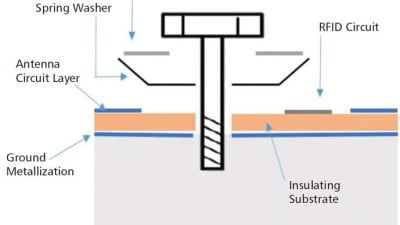
This technology is a low-cost RFID-based torque and tension sensor for high-performance fasteners, such as bolts, that are used in sophisticated high-tech equipment and systems. It offers the...
Briefs: Propulsion
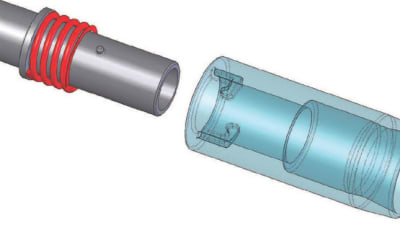
NASA's Langley Research Center is seeking to improve upon stock stainless steel flame holders. Researchers at NASA Langley have developed a new ceramic design with a service temperature of 4000 °F. The combination of high...
Briefs: Propulsion
Magnetically Conformed, Variable-Area Discharge Chamber for Hall Thruster, and Method
NASA's Jet Propulsion Laboratory has developed a Hall thruster with a variable-area discharge chamber that improves the performance and lifetime of the thruster. Conventional Hall thrusters have poor ionization efficiency, which limits the thrust-to-power ratio...
Briefs: Propulsion
Green Monopropellant Secondary Payload Propulsion System
Small satellites, launched as secondary payloads, are increasingly being fielded. Advances in liquid rocket propulsion that enhance the on-orbit maneuverability, increase the on-orbit life, and decrease the time between identified need for and deployment of such spacecraft are of great value....
Briefs: Propulsion
Multi-Thruster Propulsion Apparatus
Two different types of electrostatic thrusters are used to propel spacecraft: ion thrusters and Hall-effect thrusters. Ion thrusters have the benefit of relatively high exhaust velocities with higher overall thrust efficiencies. Hall-effect thrusters typically offer higher thrust-to-power ratios, but they operate...
Briefs: Propulsion
Propellant Distributor for a Thruster
Innovators at NASA's Glenn Research Center have developed several new technological innovations to improve the capability of Hall-effect thrusters, which are used primarily on Earth-orbiting satellites and can also be used for deep-space robotic vehicles. Hall thrusters are susceptible to discharge channel...
Briefs: Mechanical & Fluid Systems
The BiBlade sampler has been developed for potentially acquiring samples from the surface of a planetary body. The tool could conceivably be used in both in situ and notional sample return missions to planetary bodies...

Briefs: Mechanical & Fluid Systems
The Orion Crew-Service Module (CM/SM) umbilical retention and release mechanism supports, protects, and disconnects all of the cross-module commodities...
Briefs: Mechanical & Fluid Systems
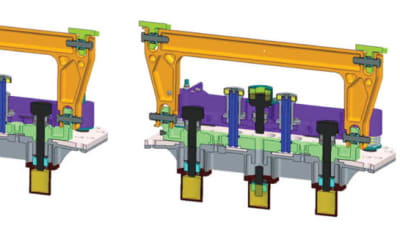
Great strides are taken to miniaturize spaceflight instrumentation, particularly analytical systems such as liquid chromatographs, gas chromatographs, and mass spectrometers....

Briefs: Mechanical & Fluid Systems
Fluid-pumped radiators are used to reject heat from structures to space. A fluid travels inside the structure to collect heat, and then travels...

Briefs: Aerospace
High Speed Idle Engine Control Mode
Innovators at NASA's Glenn Research Center have developed an engine control mode that improves an engine's responsiveness to throttle commands during emergency landing conditions. The high speed idle (HSI) control mode increases the speed of the engine's fan and core shafts, allowing faster response and increased...
Briefs: Medical
Filtering Molecules with Nanotube Technology
Innovators at NASA's Johnson Space Center have developed a filtration device to eliminate contaminants from water supplies. Originally developed to purify waste-water for reuse aboard the International Space Station, the innovation is applicable to numerous situations on Earth where there is a need to...
Briefs: Mechanical & Fluid Systems
Airfoil-Shaped Fluid Flow Tool for Use in Making Differential Measurements
Researchers at NASA’s Marshall Space Flight Center have developed a suite of adaptable flow measurement devices that can be easily installed without compromising the structural integrity of existing conduits. With their simple installation procedures, the devices can be...
Briefs: Mechanical & Fluid Systems
Mechanisms for Achieving Non-Sinusoidal Waveforms on Stirling Engines
The current state-of-the-art Stirling engines use sinusoidal piston and displacer motion to drive the thermodynamic cycle and produce power. Research performed at NASA Glenn has shown that non-sinusoidal waveforms have the potential to increase Stirling engine power density, and...
Briefs: Motion Control
Improving Stirling Engine Performance Through Optimized Piston and Displacer Motion
Stirling engines typically achieve high efficiency, but lack power density. Low power density prevents them from being used in many applications where internal combustion engines are viable competitors, and increases system costs in applications that require...
Briefs: Mechanical & Fluid Systems
Piezo-Actuated, Fast-Acting Control Valve
High-power electric propulsion systems have the potential to revolutionize space propulsion due to their extremely high performance. This can result in significant propellant savings on space vehicles, allowing the overall mass to shrink for launch on a less expensive vehicle, or to allow the space vehicle...
Briefs: Mechanical & Fluid Systems
Interface Between STAR-CCM+ and 42 for Enhanced Fuel Slosh Analysis
Fuel slosh is excited during spacecraft maneuvers. The forces and torques exerted on the spacecraft by the slosh must be controlled by the attitude control system to maintain correct pointing and spacecraft orbit. In some rare cases, the attitude control system may excite the slosh...
Top Stories
 Blog: Lighting

A Stretchable OLED that Can Maintain Most of Its Luminescence
 Blog: Energy

Batteries that Can Withstand the Cold
 INSIDER: Energy

Advancing All-Solid-State Batteries
 Quiz: Energy

 Blog: Physical Sciences

 Blog: Materials

Webcasts
 Upcoming Webinars: Test & Measurement

From Spreadsheets to Insights: Fast Data Analysis Without Complex...
 Upcoming Webinars: Electronics & Computers

Cooling a New Generation of Aerospace and Defense Embedded...
 Upcoming Webinars: Test & Measurement

Beyond AI-Copy-Paste Engineering: Advanced AI-Integration Success...
 Upcoming Webinars: Automotive

Battery Abuse Testing: Pushing to Failure
 Upcoming Webinars: Internet of Things

A FREE Two-Day Event Dedicated to Connected Mobility
 Upcoming Webinars: Test & Measurement

Choosing the Right N-Port Strategy: Multiport VNAs vs. Switch...