35
-1
60
30
Briefs: Imaging
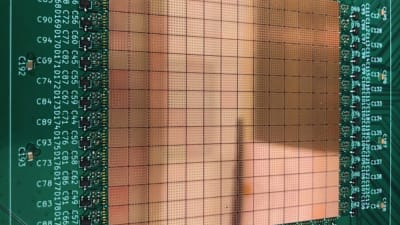
The NIST camera is made up of grids of ultrathin electrical wires, cooled to near absolute zero, in which current moves with no resistance until a wire is struck by a photon. In these superconducting-nanowire cameras, the energy imparted by even a single photon can be detected because it shuts down the superconductivity at a particular location (pixel) on the grid. Combining all the locations and intensities of all the photons makes up an image.

Briefs: Imaging
An international team of researchers reports on a compact high-brightness mid-IR-driven source combining a gas-filled anti-resonant-ring photonic crystal fiber with a novel nonlinear-crystal. The tabletop source provides a seven-octave coherent spectrum from 340 nm–40,000 nm with spectral brightness 2–5 orders of magnitude higher than one of the brightest synchrotron facilities.

Briefs: RF & Microwave Electronics
Researchers have created a device that enables them to electronically steer and focus a beam of terahertz electromagnetic energy with extreme precision. This opens the door to high-resolution, real-time imaging devices that are hundredths the size of other radar systems and more robust than other optical systems.
Briefs: Photonics/Optics
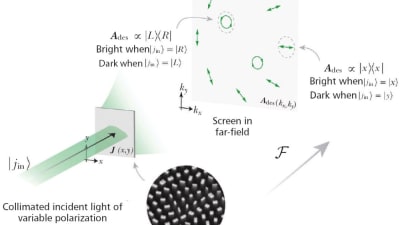
Researchers at SEAS have uncovered hidden potential in metasurfaces and demonstrated optical devices that manipulate light’s polarization state with an unprecedented degree of control. Read on to learn more.
Briefs: AR/AI
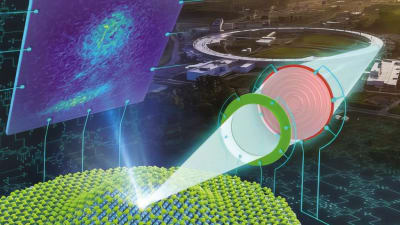
Researchers at the U.S. Department of Energy’s (DOE) Argonne National Laboratory have developed an autonomous, or self-driving, microscopy technique. It uses AI to selectively target points of interest for scanning. Read on to learn more.
Briefs: Materials
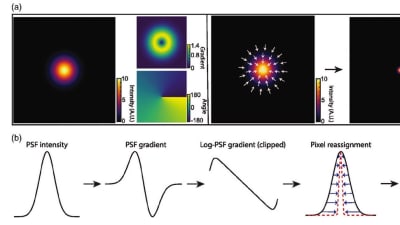
Researchers at Boston University recently developed a novel deblurring algorithm that improves the resolution of images with photon intensity conservation and local linearity.
Briefs: Physical Sciences
With this new capability, researchers can potentially use frequency combs to better understand the split-second intermediate steps in fast-moving processes ranging from the workings of hypersonic jet engines to the chemical reactions between enzymes that regulate cell growth.
Briefs: Test & Measurement
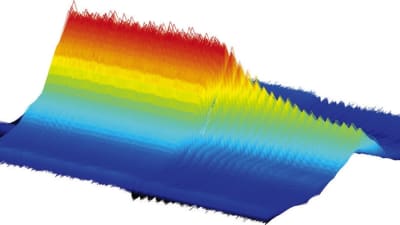
Scientists from the Institute of Geophysics at ETH Zurich, working together with the Swiss Federal Institute of Metrology (METAS), have found an inexpensive method that enables accurate earthquake measurements even on the ocean floor and in less developed countries.

Briefs: Sensors/Data Acquisition
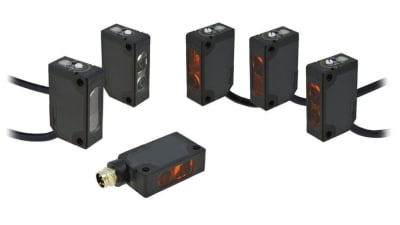
Photoelectric (PE) sensors represent a discrete sensor technology widely used throughout industry. They use the presence or absence of light to provide an on/off output to supervisory automation and monitoring systems, and are often the better choice for sensing manufacturing products.
Briefs: Lighting
The optical concentration sensor has been demonstrated to effectively measure pretreat concentrations in both still and flowing liquid conditions and is resistant to contamination issues as necessitated by the UWMS.

Briefs: Photonics/Optics
MIT researchers have developed a camera-based touch sensor that is long, curved, and shaped like a human finger. Their device provides high-resolution tactile sensing over a large area. The sensor, called the GelSight Svelte, uses two mirrors to reflect and refract light.

Briefs: Photonics/Optics
Making Satellite, Ground Communication More Effective
Rensselaer Polytechnic Institute’s Moussa N’Gom has devised a method to make communications between satellites and the ground more effective — regardless of the weather.
Briefs: Photonics/Optics
To further shrink electronic devices and to lower energy consumption, the semiconductor industry is interested in using 2D materials but manufacturers need a quick and accurate method for detecting defects in these materials to determine if the material is suitable for device manufacture.

Briefs: Photonics/Optics
Imagine being able to snap a picture of extremely fast events on the order of a picosecond.
Briefs: Test & Measurement
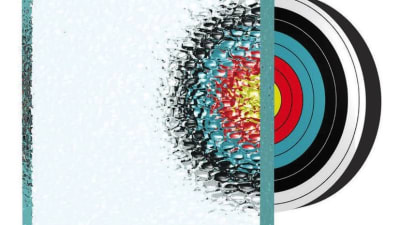
Researcher are finding ways to estimate a target location when light gets deflected by a disordered structure.
Briefs: Imaging
Processes and structures within the body that are normally hidden from the eye can be made visible through medical imaging. Scientists use imaging to investigate...
Briefs: Photonics/Optics
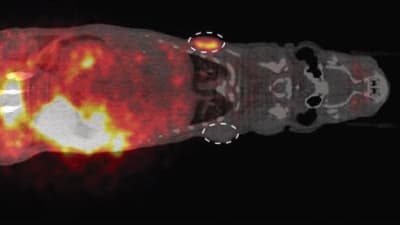
Researchers at the University of California San Diego have developed soft devices containing algae that glow in the dark when experiencing mechanical stress, such as being squished, stretched, twisted, or bent.

Briefs: Photonics/Optics
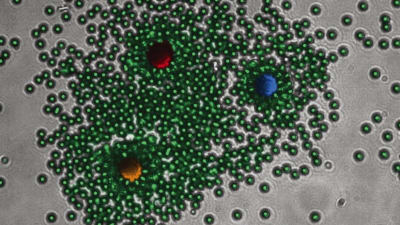
Researchers from Imperial College London and University College London have demonstrated the first spontaneously self-organizing laser device, which can reconfigure when conditions change.
Briefs: Materials
Researchers have developed a viable dust, water, and ice mitigation optical coating for space flight, aeronautical, and ground applications. The innovation of the LOTUS coating prevents contamination on sensitive surfaces.

Briefs: Photonics/Optics
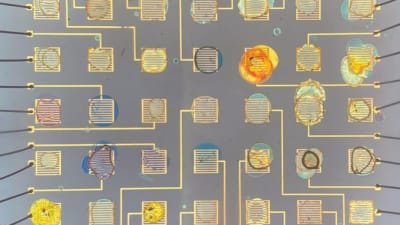
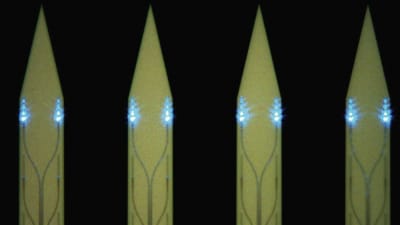
A team of researchers demonstrated the first light-emitting array with 49 different colors on a single chip. This novel optoelectronic device is built on metal-oxide semiconductor capacitors.
Briefs: Photonics/Optics
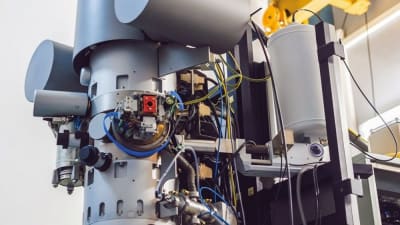
With a new microscopy technique that uses blue light to measure electrons in semiconductors and other nanoscale materials, a team of researchers is opening a new realm of possibilities in the study of these critical components, which can help power devices like mobile phones and laptops.
Briefs: Photonics/Optics
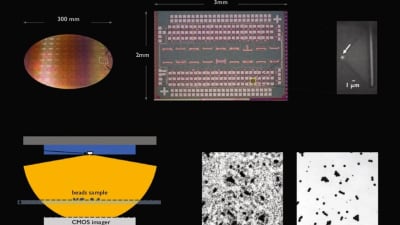
Researchers have developed the world’s smallest LED. It enables the conversion of existing mobile phone cameras into high-resolution microscopes. Smaller than the wavelength of light, the new LED was used to build the world’s smallest holographic microscope.
Briefs: Photonics/Optics
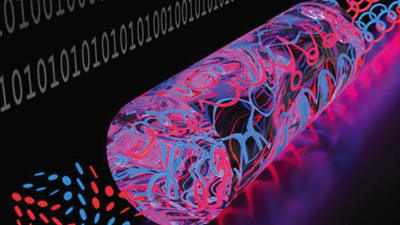
Researchers have outlined a new optical communication protocol that exploits spatial patterns of light for multi-dimensional encoding in a manner that does not require the patterns to be recognized, thus overcoming the prior limitation of modal distortion in noisy channels.
Briefs: Photonics/Optics
Research reveals that expertly timed lasers shined at an approaching LIDAR system can create a blind spot in front of the vehicle.

Briefs: Photonics/Optics
Touchless switches are an ideal solution for industries such as food, beverage, pharmaceuticals, medical, and chemicals where sanitary design is important. They are also useful for protecting the well-being of users in everyday commercial applications.

Briefs: Photonics/Optics
The tool shows promise for imaging brain activity in 3D with high speed and contrast.
Briefs: Materials
Innovators at NASA Johnson Space Center in collaboration with IRPI, LLC, have developed a compact inline filter that uses a multi-phase flow method to separate liquid from an incoming air charge. The filter also traps particulate matter and does so without significantly impinging upon flow velocity.

Briefs: Photonics/Optics
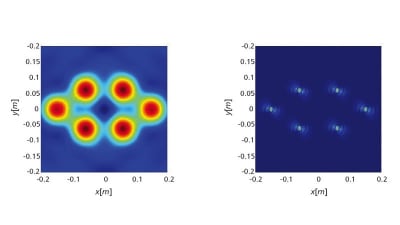
A team has introduced a new method for taking high-res images of fast-moving and rotating objects in space, such as satellites or debris in low-Earth orbit.
Briefs: RF & Microwave Electronics
The Laser Communications Relay Demonstration (LCRD) will usher in a new era of laser communications.

Top Stories
 Blog: Lighting

A Stretchable OLED that Can Maintain Most of Its Luminescence
 Blog: Energy

Batteries that Can Withstand the Cold
 INSIDER: Energy

Advancing All-Solid-State Batteries
 Quiz: Energy

 Blog: Physical Sciences

 Blog: Materials

Webcasts
 Upcoming Webinars: Test & Measurement

From Spreadsheets to Insights: Fast Data Analysis Without Complex...
 Upcoming Webinars: Electronics & Computers

Cooling a New Generation of Aerospace and Defense Embedded...
 Upcoming Webinars: Test & Measurement

Beyond AI-Copy-Paste Engineering: Advanced AI-Integration Success...
 Upcoming Webinars: Automotive

Battery Abuse Testing: Pushing to Failure
 Upcoming Webinars: Internet of Things

A FREE Two-Day Event Dedicated to Connected Mobility
 Upcoming Webinars: Test & Measurement

Choosing the Right N-Port Strategy: Multiport VNAs vs. Switch...