34,35
-1
30
30
Briefs: Robotics, Automation & Control
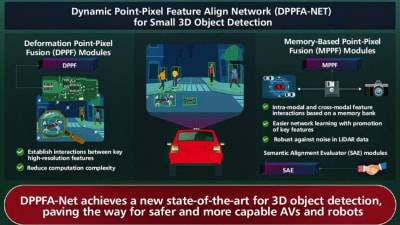
Scientists have developed multi-modal 3D object detection methods that combine 3D LiDAR data with 2D RGB images taken by standard cameras. While the fusion of 2D images and 3D LiDAR data leads to more accurate 3D detection results, it still faces its own set of challenges, with accurate detection of small objects remaining difficult. Read on to learn more about it.
Briefs: Imaging
Researchers at the Harvard John A. Paulson School of Engineering and Applied Sciences have developed a compact, single-shot polarization imaging system that can provide a complete picture of polarization. Read on to learn more about it.
Briefs: Imaging
Daniel Gehrig and Davide Scaramuzza from the Department of Informatics at the University of Zurich have combined a novel bio-inspired camera with AI to develop a system that can detect obstacles around a car much quicker than current systems and using less computational power. Read on to learn more about the study, which is published in Nature.

Briefs: Sensors/Data Acquisition
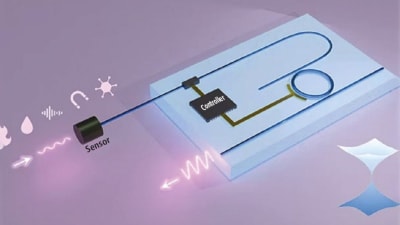
New research unlocks the power of exceptional points (EPs) for advanced optical sensing. In a study published in Science Advances , a team showed that these unique EPs — specific conditions in systems where extraordinary optical phenomena can occur — can be deployed on conventional sensors to achieve a striking sensitivity to environmental perturbations. Read on to learn more.
Briefs: AR/AI
Researchers in the emerging field of spatial computing have developed a prototype augmented reality headset that uses holographic imaging to overlay full-color, 3D moving images on the lenses of what would appear to be an ordinary pair of glasses. Read on to learn more about it.

Briefs: Electronics & Computers
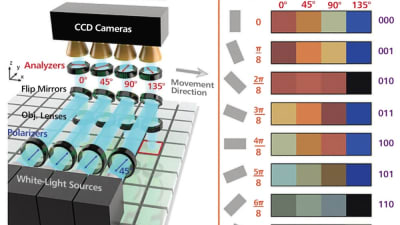
Purdue researchers have created technology aimed at replacing Morse code with colored “digital characters” to modernize optical storage. They are confident the advancement will help with the explosion of remote data storage during and after the COVID-19 pandemic. Read on to learn more.
Briefs: Physical Sciences
Researchers have designed a way to levitate and propel objects using only light by creating specific nanoscale patterning on the objects' surfaces. The work could be a step toward developing a spacecraft that could reach the nearest planet outside of our solar system in 20 years, powered and accelerated only by light. Read on to learn more.

Briefs: Semiconductors & ICs
Researchers have created visible lasers of very pure colors from near-ultraviolet to near-infrared that fit on a fingertip. The colors of the lasers can be precisely tuned and extremely fast — up to 267 petahertz per second, which is critical for applications such as quantum optics. Read on to learn more.

Briefs: Sensors/Data Acquisition
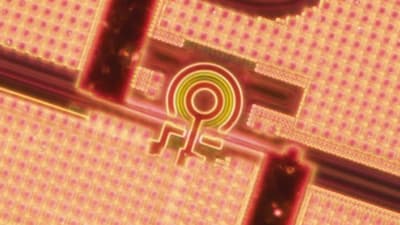
A Bristol-led team of physicists has found a way to operate mass manufacturable photonic sensors at the quantum limit. This breakthrough paves the way for practical applications such as monitoring greenhouse gases and cancer detection. Read on to learn more.
Videos: Imaging
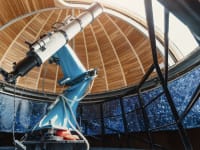
In this video, we provide an overview of the Nancy Grace Roman Space Telescope’s mission, capabilities and timeline to launch.

Briefs: Photonics/Optics
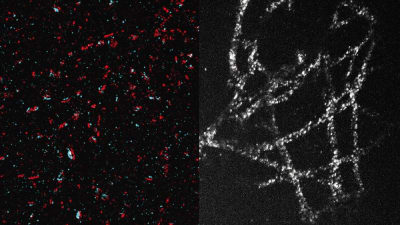
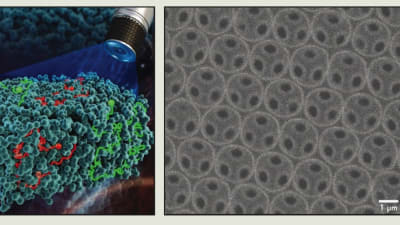
Researchers have made it possible to expand tissue twentyfold in a single step. This simple, inexpensive method could pave the way for nearly any biology lab to perform nanoscale imaging. Read on to learn more.
Briefs: Imaging
Researchers have developed an optical design technology that dramatically reduces the volume of cameras with a folded lens system utilizing “metasurfaces,” a next-generation nano-optical device. Read on to learn more.

Briefs: Lighting Technology
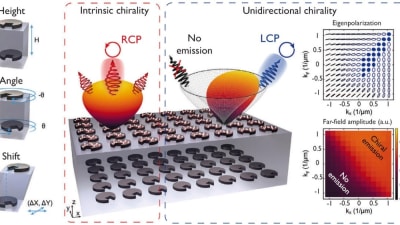
Researchers have designed a spiral ladder-inspired tool that allows precision control of light direction and polarization to control the direction of the emitted beam and the polarization of the light, while using a precisely engineered resonance of the structure. Read on to learn more.
Briefs: Imaging
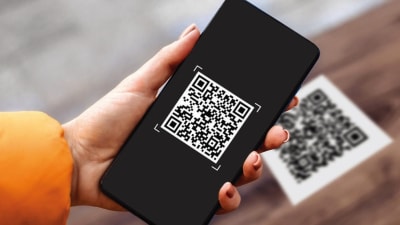
A team from the University of Barcelona and the Universitat Oberta de Catalunya has designed a methodology that facilitates the recognition of QR codes in these physical environments, where reading is more complicated. Read on to learn more.
Briefs: Semiconductors & ICs
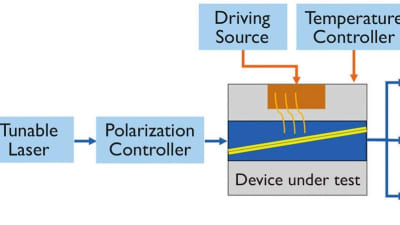
Researchers have successfully developed a wide-bandwidth, low-polarization semiconductor optical amplifier based on tensile-strained quantum wells. The study, published in the journal Sensors, presents a significant advancement in optical communication technology, addressing the growing demand for higher bandwidth and lower polarization sensitivity. Read on to learn more.
Briefs: Imaging
A team led by University of Maryland computer scientists invented a camera mechanism that improves how robots see and react to the world around them. Inspired by how the human eye works, their innovative camera system mimics the tiny involuntary movements used by the eye to maintain clear and stable vision over time. Read on to learn more.

Briefs: RF & Microwave Electronics
In a paper published in the journal Nature Nanotechnology, a team of Caltech engineers reports building a metasurface patterned with miniscule tunable antennas capable of reflecting an incoming beam of optical light to create many sidebands, or channels, of different optical frequencies. Read on to learn more.

Briefs: RF & Microwave Electronics
Researchers have achieved data rates as high as 424Gbit/s across a 53-km turbulent free-space optical link using plasmonic modulators — devices that uses special light waves called surface plasmon polaritons to control and change optical signals. The new research lays the groundwork for high-speed optical communication links that transmit data over open air or space. Read on to learn more.

Briefs: Photonics/Optics
A team of scientists has developed an ultrafast imaging technique, called femtosecond laser sheet-compressed ultrafast photography, that can compile videos of incredibly transient details. Read on to learn more about it.
Briefs: Imaging
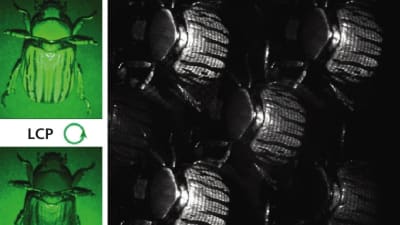
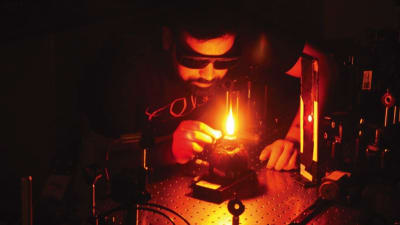
Butterflies can see more of the world than humans, including more colors and the field oscillation direction, or polarization, of light. Other species, like the mantis shrimp, can sense an even wider spectrum of light, as well as the circular polarization, or spinning states, of light waves. Inspired by these abilities in the animal kingdom, researchers have developed an ultrathin optical element known as a metasurface, which can attach to a conventional camera and encode the spectral and polarization data of images captured in a snapshot or video through tiny, antenna-like nano-structures that tailor light properties.
Briefs: Software
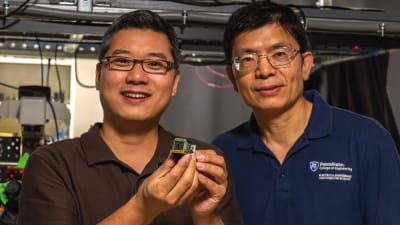
A new type of organic light emitting diode (OLED) could replace bulky night vision goggles with lightweight glasses, making them cheaper and more practical for prolonged use, according to University of Michigan researchers. Read on to learn more.
Briefs: Photonics/Optics
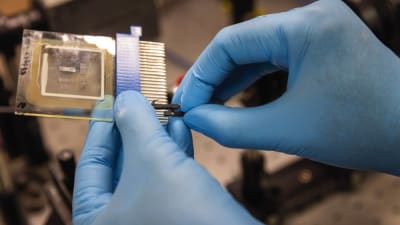
Imagine if physicians could capture 3D projections of medical scans, suspending them inside an acrylic cube to create a hand-held reproduction of a patient’s heart, brain, kidneys, or other organs. Then, when the visit is done, a quick blast of heat erases the projection, and the cube is ready for the next scan. A new report by researchers at Dartmouth and Southern Methodist University outlines a technical breakthrough that could enable such scenarios, and others, with widespread utility. Read on to learn more.
Briefs: Green Design & Manufacturing
Researchers have developed a new way to map water on land in the tropics. Called the UC Berkeley Random Walk Algorithm WaterMask, this advanced monitoring technology uses L-band microwaves from the Cyclone Global Navigation Satellite System to “see” water hidden beneath visual barriers, like tree canopies and clouds. Read on to learn more.

Briefs: Materials
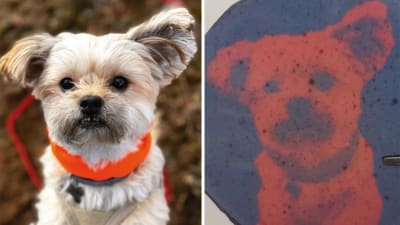
If the outside of clothing or a vehicle were covered with the coating, an infrared camera would have a harder time distinguishing what is underneath. Read on to learn what this means.

Briefs: Robotics, Automation & Control
The “nanoswimmers” could be used to remediate contaminated soil, improve water filtration, or even deliver drugs to targeted areas of the body.
Briefs: Imaging
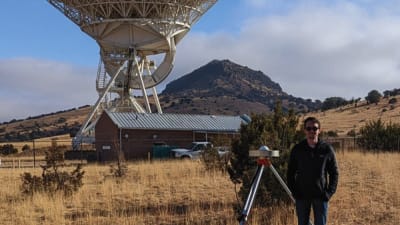
For the first time, researchers at The University of Texas at Austin’s Applied Research Laboratories and NASA’s Goddard Space Flight Center have formed a radio interferometer between a GPS antenna and receiver and a large radio telescope. Read on to learn more about the new technique.
Briefs: RF & Microwave Electronics
Southwest Research Institute has developed off-road autonomous driving tools with a focus on stealth for the military and agility for space and agriculture clients. The vision-based system pairs stereo cameras with novel algorithms, eliminating the need for LiDAR and active sensors. Read on to learn more.

Briefs: Imaging
In a newly published paper in the journal Science, researcher Qiushi Guo demonstrated a novel approach for creating high-performance, ultrafast lasers on nanophotonic chips. His work centers on miniaturizing mode-lock lasers. Read on to learn more.

Briefs: AR/AI
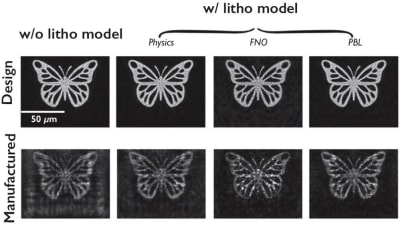
A new method enables optical devices that more closely match their design specifications, boosting accuracy and efficiency. Read on to learn more.
Top Stories
 Blog: Lighting

A Stretchable OLED that Can Maintain Most of Its Luminescence
 News: Energy

 INSIDER: Energy

Advancing All-Solid-State Batteries
 Blog: Energy

My Opinion: We Need More Power Soon — Is Nuclear the Answer?
 Blog: Robotics, Automation & Control
Aerial Microrobots That Can Match a Bumblebee's Speed
 Blog: Communications

Microscopic Swimming Machines that Can Sense, Respond to Surroundings
Webcasts
 Upcoming Webinars: Electronics & Computers

Advantages of Smart Power Distribution Unit Design for Automotive...
 Upcoming Webinars: Unmanned Systems

Quiet, Please: NVH Improvement Opportunities in the Early Design...
 Upcoming Webinars: Test & Measurement

From Spreadsheets to Insights: Fast Data Analysis Without Complex...
 Upcoming Webinars: Electronics & Computers

Cooling a New Generation of Aerospace and Defense Embedded...
 Upcoming Webinars: Test & Measurement

Beyond AI-Copy-Paste Engineering: Advanced AI-Integration Success...
 Upcoming Webinars: Energy