41,46
-1
60
30
Briefs: Software
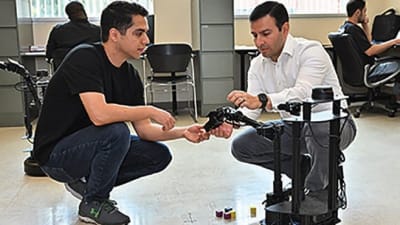
A new algorithm may make robots safer by making them more aware of human inattentiveness. In simulations, it improved safety by about a maximum of 80 percent and efficiency by about a maximum of 38 percent compared to existing methods. Read on to learn more about it.
Briefs: Nanotechnology
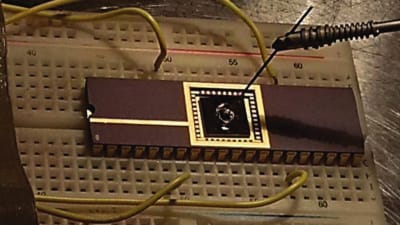
Engineers have developed an ultra-sensitive sensor made with graphene that can detect extraordinarily low concentrations of lead ions in water. The device achieves a record limit of detection of lead down to the femtomolar range, which is one million times more sensitive than previous sensing technologies. Read on to learn more.
Briefs: RF & Microwave Electronics
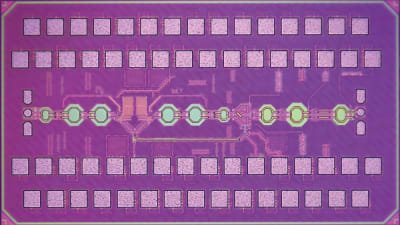
Researchers at the University of California, Davis, have developed a proof-of-concept sensor that may usher in a new era for millimeter wave radars. They call its design a “mission impossible” made possible. Read on to learn more.
Briefs: Energy
The data collected from cameras and vibration sensors continue to inform next steps in research. The goal is to make this technology commercially available for land-based and offshore wind turbines to ensure a harmonic relationship between wind energy and surrounding wildlife. Read on to learn more.

Briefs: Medical
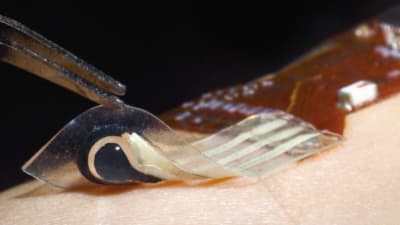
Detecting diseases early requires the rapid, continuous, and convenient monitoring of vital biomarkers. Researchers have developed a novel sensor that enables the continuous, real-time detection of solid-state epidermal biomarkers. Read on to learn more.
Briefs: RF & Microwave Electronics
The researchers are currently refining their approach with an eye toward applications where data is limited but high fidelity is required, such as target detection. Read on to learn more.

Briefs: Materials
Researchers at Stanford have been working on skin-like, stretchable electronic devices for over a decade. Recently, they presented a new design and fabrication process for skin-like integrated circuits that are five times smaller and operate at one thousand times higher speeds than earlier versions. Read on to learn more about it.

Briefs: Sensors/Data Acquisition
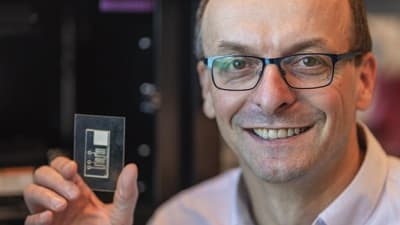
McGill University researchers have made a breakthrough in diagnostic technology, inventing a ‘lab on a chip’ that can be 3D-printed in just 30 minutes. The chip has the potential to make on-the-spot testing widely accessible. Read on to learn more.
Briefs: Power
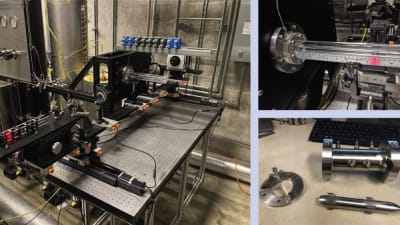
Engineers at NASAs Stennis Space Center have developed the HYdrocarbon Propellants Enabling Reproduction of Flows in Rocket Engines (HYPERFIRE), a sub-scale, non-reacting flow test system. HYPERFIRE uses heated ethane to enable physical simulation of rocket engines powered by a broad range of propellants in an inexpensive, accurate, and simple fashion. Read on to learn more.
Briefs: Test & Measurement
Capacitive Microgravity Fluid Mass Gauge
Measuring fluid mass in microgravity, where fluid behavior is dominated by fluid properties, is a challenging problem. To address this problem, engineers at NASA are developing a capacitance-based, mass-fraction gauge for vessels containing two-phase fluids. Read on to learn more.
Briefs: Medical
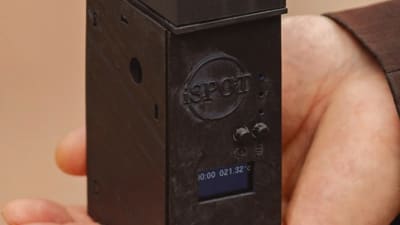
A new coronavirus test can get accurate results from a saliva sample in less than 30 minutes. Many of the components of the handheld device used in this technology can be 3D printed, and the test can detect as little as one viral particle per 1-μL drop of fluid. Read on to learn more.
Briefs: Sensors/Data Acquisition
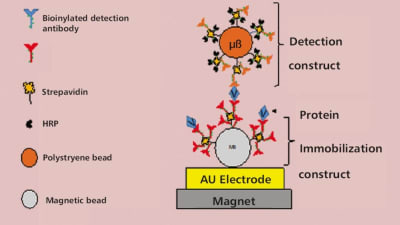
Researchers at NASA Ames Research Center developed an electrochemical, bead-based biological sensor based on Enzyme-Linked Immunosorbent Assay (ELISA) combining a magnetic concentration of signaling molecules and electrochemical amplification using wafer-scale fabrication of microelectrode arrays. Read on to learn more.
Briefs: Mechanical & Fluid Systems
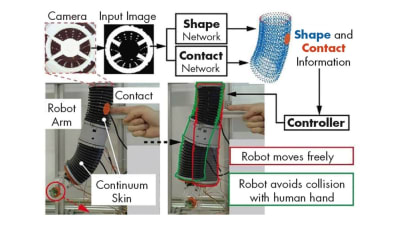
The sensing and control principles used in this framework could lead to new tactile sensors that can be attached to any existing robotics system, offering new sensing and control paradigms for safe human-robot interaction without altering the robot’s original design. Read on to learn more.
Briefs: Photonics/Optics
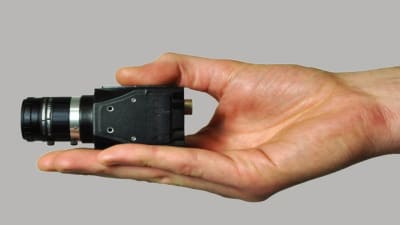
The palm-sized light field camera could improve autonomous driving, classification of recycled materials, and remote sensing. Read on to learn more about it.
Briefs: AR/AI
The camera mimics the involuntary movements of the human eye to create sharper, more accurate images for robots, smartphones, and other image-capturing devices. Read on to learn more about it.

Briefs: Semiconductors & ICs
Engineers have developed a new technique for making wearable sensors that enables medical researchers to prototype and test new designs much faster and at a far lower cost than existing methods. Read on to learn more.
Briefs: Medical
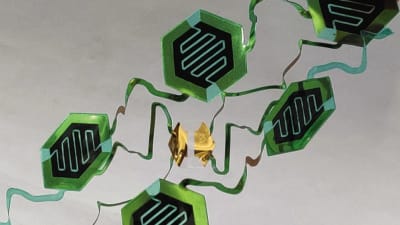
Researchers have developed a method to detect bacteria, toxins, and dangerous chemicals in the environment with a biopolymer sensor that can be printed like ink on a wide range of materials — including wearables. Read on to learn more.
Briefs: Sensors/Data Acquisition
A research team created a noninvasive electroencephalogram (EEG) sensor that was installed in a Meta VR headset that can be worn comfortably for long periods. The EEG measures the brain’s electrical activity during the immersive VR interactions. Read on to learn more.

Briefs: AR/AI
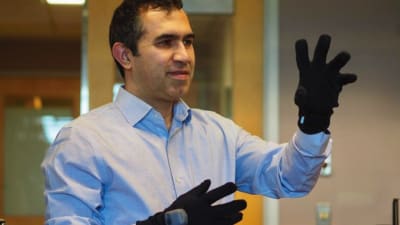
A new groundbreaking “smart glove” is capable of tracking the hand and finger movements of stroke victims during rehabilitation exercises. The glove incorporates a sophisticated network of highly sensitive sensor yarns and pressure sensors that are woven into a comfortable stretchy fabric. Read on to learn more about the smart glove.
Briefs: Aerospace
Researchers at Chalmers University of Technology have developed an optical amplifier that they expect will revolutionize both space and fiber communication.

Briefs: Software
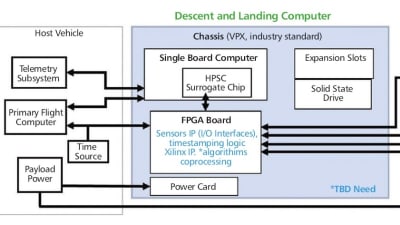
Innovators at NASA Johnson Space Center have developed and successfully flight tested a high-performance computing platform, known as the Descent and Landing Computer (DLC), to suit the demands of safe, autonomous, extraterrestrial spacecraft landings for robotic and human exploration missions.
Briefs: Sensors/Data Acquisition
Researchers from Tsinghua University worked to break through the difficulties of robotic recognition of various common, yet complex, items. Read on to learn more.

Briefs: Sensors/Data Acquisition
A research team from Kyushu University, in collaboration with Japanese company Nitto Denko, has developed a tape that can be used to stick 2D materials to many different surfaces, in an easy and user-friendly way.

Briefs: RF & Microwave Electronics
Innovators have developed a method and apparatus to multiplex Radio Frequency Identification (RFID) signals efficiently. The resulting Hyper-Distributed RFID Antenna (HYDRA) system enhances distribution of the RFID reader signal, providing improved coverage for large areas as well as for small, fixed regions requiring a high density of reader antennas.

Briefs: Software
Because it requires no battery that must be recharged or replaced, and because it requires no special wiring, such a sensor could be embedded in a hard-to-reach place, like inside the inner workings of a ship’s engine. There, it could automatically gather data on the machine’s power consumption and operations for long periods of time.

Briefs: Energy
Researchers have found ways to develop soft OECTs for wearable pressure sensors. They first experimented with a solid type of gating substance: a charged, gelatinous substance called an ionic hydrogel. Read on to learn more.
Briefs: Electronics & Computers
An innovative approach to artificial intelligence (AI) enables reconstructing a broad field of data, such as overall ocean temperature, from a small number of field-deployable sensors using low-powered edge computing, with broad applications across industry, science, and medicine.

Briefs: RF & Microwave Electronics
To help improve the safety and security of AVs, researchers have devised a novel algorithm designed to mimic an attacking device. The algorithm lets researchers identify areas for improvement in autonomous vehicle security.

Briefs: Sensors/Data Acquisition
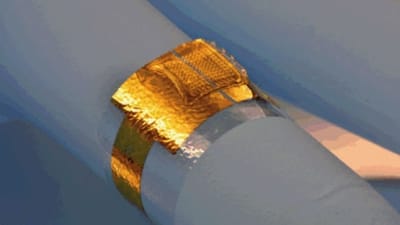
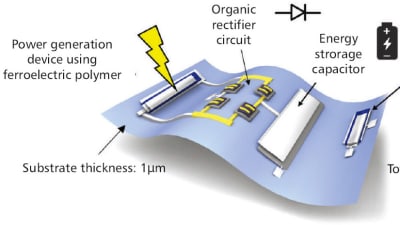
An international team of researchers from Japan and Austria has invented new ultraflexible patches with a ferroelectric polymer that can not only sense a patient’s pulse and blood pressure, but also power themselves from normal movements. The key was starting with a substrate just 1-μm thick.
Top Stories
 Blog: Lighting

A Stretchable OLED that Can Maintain Most of Its Luminescence
 Blog: Energy

Batteries that Can Withstand the Cold
 INSIDER: Energy

Advancing All-Solid-State Batteries
 Quiz: Energy

 Blog: Physical Sciences

 Blog: Materials

Webcasts
 Upcoming Webinars: Test & Measurement

From Spreadsheets to Insights: Fast Data Analysis Without Complex...
 Upcoming Webinars: Electronics & Computers

Cooling a New Generation of Aerospace and Defense Embedded...
 Upcoming Webinars: Test & Measurement

Beyond AI-Copy-Paste Engineering: Advanced AI-Integration Success...
 Upcoming Webinars: Automotive

Battery Abuse Testing: Pushing to Failure
 Upcoming Webinars: Internet of Things

A FREE Two-Day Event Dedicated to Connected Mobility
 Upcoming Webinars: Test & Measurement

Choosing the Right N-Port Strategy: Multiport VNAs vs. Switch...