41,46
-1
90
30
Briefs: AR/AI
Researchers from Japan have developed DPPFA–Net, an innovative network that overcomes challenges related to occlusion and noise introduced by adverse weather.

Briefs: Sensors/Data Acquisition
Researchers from Tokyo University of Science (TUS) led by Associate Professor Takashi Ikuno have developed a flexible paper-based sensor that operates like the human brain. The researchers fabricated a photo-electronic artificial synapse device composed of gold electrodes on top of a 10 μm transparent film consisting of zinc oxide (ZnO) nanoparticles and cellulose nanofibers (CNFs).

Briefs: Medical
Glow Sticks: From Parties to Detecting Biothreats for the Navy
Remember that party where you were swinging glow sticks above your head or wearing them as necklaces? Fun times, right? Science times, too. Turns out those fun party favors are now being used by a University of Houston researcher to identify emerging biothreats for the United States...
Briefs: Medical
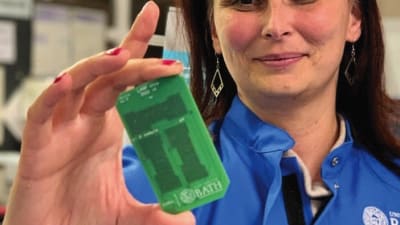
Developed by engineers at the University of Bath, the prototype LoCKAmp device uses innovative Lab-on-a-Chip technology and has been proven to provide rapid and low-cost detection of COVID-19 from nasal swabs.
Briefs: Medical
Detector can identify radioactive isotopes with high resolution.

Briefs: Electronics & Computers
Innovators at the NASA Glenn Research Center have developed the PLGRM system, which allows an installed antenna to be characterized in an aircraft hangar. All PLGRM components can be packed onto pallets, shipped, and easily operated.

Briefs: Design
A pair of earbuds can be turned into a tool to record the electrical activity of the brain as well as levels of lactate in the body with the addition of two flexible sensors screen-printed onto a stamp-like flexible surface.

Briefs: Sensors/Data Acquisition
Researchers have developed a sensor that, similar to human skin, can sense temperature variation that originates from the touch of a warm object as well as the heat from solar radiation. The sensor combines pyroelectric and thermoelectric effects with a nano-optical phenomenon.
Briefs: Materials
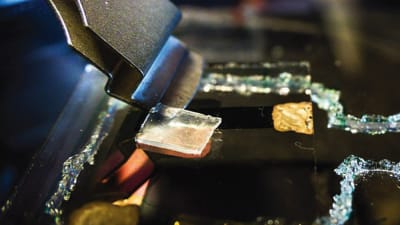
In a new study, engineers from Korea and the United States have developed a wearable, stretchy patch that could help to bridge the divide between people and machines — and with benefits for the health of humans around the world. In lab experiments, the researchers showed that humans could use these devices to operate robotic exoskeletons more efficiently.

Briefs: Energy
Ice build-up on aircraft and wind turbines can impact the safety and efficiency of their systems. Microwave sensors were developed that can identify in real time these accumulations while calculating the rate of melting. This is crucial data for aviation.

Briefs: Robotics, Automation & Control
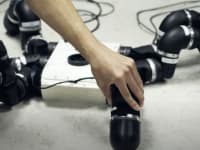
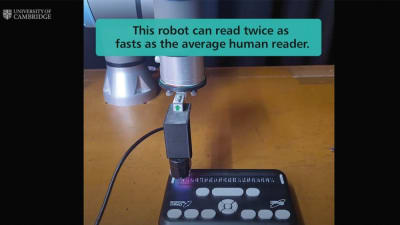
Although the robot braille reader was not developed as an assistive technology, the researchers say the high sensitivity required to read braille makes it an ideal test in the development of robot hands or prosthetics with comparable sensitivity to human fingertips.
Briefs: Manufacturing & Prototyping
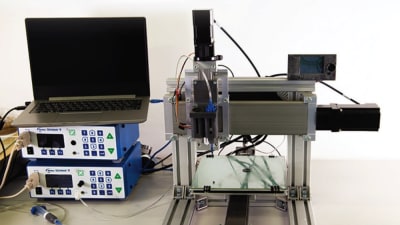
Researchers at Universidad Carlos III de Madrid (UC3M) have created software and hardware for a 4D printer with applications in the biomedical field.
Briefs: Design
Engineers at the University of California San Diego have developed electronic “stickers” that measure the force exerted by one object upon another. The force stickers are wireless, run without batteries and fit in tight spaces. That makes them versatile for a wide range of applications.

Briefs: Robotics, Automation & Control
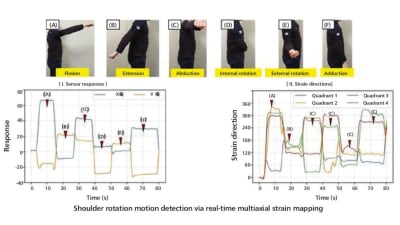
A research team has successfully overcome the limitations of soft strain sensors by integrating computer vision technology into optical sensors. The team developed a sensor technology known as computer vision-based optical strain (CVOS) during its study. Unlike conventional sensors reliant on electrical signals, CVOS sensors employ computer vision and optical sensors to analyze microscale optical patterns, extracting data regarding changes.
Briefs: Sensors/Data Acquisition
Monitoring the success of surgery on blood vessels is challenging, as the first sign of trouble often comes too late. A new device could make it easier for doctors to monitor the success of blood vessel surgery.

Briefs: Sensors/Data Acquisition
Researchers at The Ohio State University have fabricated the first wearable sensor designed to detect and monitor muscle atrophy. This new study published in the journal IEEE Transactions on Biomedical Engineering suggests that an electromagnetic sensor made out of conductive “e-threads” could be used as an alternative to frequent monitoring using MRI.

Briefs: RF & Microwave Electronics
Northrop Grumman Corporation is developing AN/APG-85, an advanced Active Electronically Scanned Array (AESA) radar for the F-35 Lightning II.

Briefs: Medical
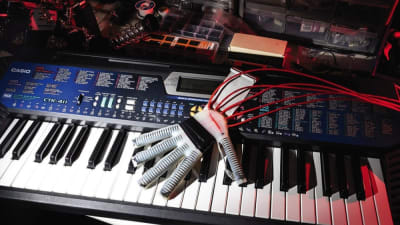
A first-of-its-kind robotic glove is lending a “hand” and providing hope to piano players who have suffered a disabling stroke. Developed by researchers from Florida Atlantic University’s College of Engineering and Computer Science, the soft robotic hand exoskeleton uses artificial intelligence to improve hand dexterity.
Briefs: Photonics/Optics
Scientists from the Institute of Geophysics at ETH Zurich, working together with the Swiss Federal Institute of Metrology (METAS), have found an inexpensive method that enables accurate earthquake measurements even on the ocean floor and in less developed countries.

Briefs: Sensors/Data Acquisition
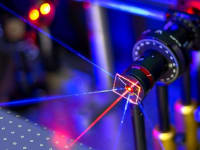
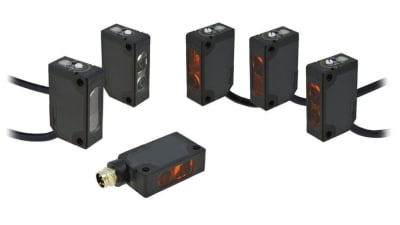
Photoelectric (PE) sensors represent a discrete sensor technology widely used throughout industry. They use the presence or absence of light to provide an on/off output to supervisory automation and monitoring systems, and are often the better choice for sensing manufacturing products.
Briefs: Sensors/Data Acquisition
The optical concentration sensor has been demonstrated to effectively measure pretreat concentrations in both still and flowing liquid conditions and is resistant to contamination issues as necessitated by the UWMS.

Briefs: Sensors/Data Acquisition
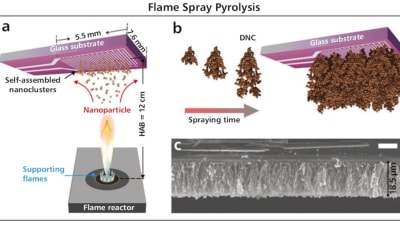
Macquarie University engineers have developed a new technique to make the manufacturing of nanosensors far less carbon-intensive, much cheaper, more efficient, and more versatile — substantially improving a key process in this trillion-dollar global industry.
Briefs: Manufacturing & Prototyping
A Molecular-Sized, More Efficient Electronic Sensor
Australian researchers have developed a molecular-sized, more efficient version of a widely used electronic sensor, in a breakthrough that could bring widespread benefits.
Briefs: Robotics, Automation & Control
Using a new type of dual-polymer material capable of responding dynamically to its environment, researchers have developed a set of modular hydrogel components that could be useful in a variety of soft robotic and biomedical applications.

Briefs: Energy
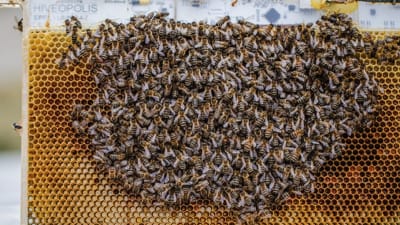
A research team has developed a robotic system that can be unobtrusively built into the frame of a standard honeybee hive. Composed of an array of thermal sensors and actuators, the system measures and modulates honeybee behavior through localized temperature variations.
Briefs: Robotics, Automation & Control
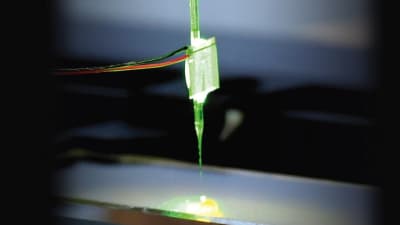
A team at ETH Zurich has developed an ultrasonically actuated glass needle that can be attached to a robotic arm. This lets them pump and mix minuscule amounts of liquid and trap particles.
Briefs: Robotics, Automation & Control
MIT researchers have developed a camera-based touch sensor that is long, curved, and shaped like a human finger. Their device provides high-resolution tactile sensing over a large area. The sensor, called the GelSight Svelte, uses two mirrors to reflect and refract light.

Briefs: Robotics, Automation & Control
A new soft sensor developed by UBC and Honda researchers opens the door to a wide range of applications in robotics and prosthetics. When applied to the surface of a prosthetic arm or a robotic limb, the sensor skin provides touch sensitivity and dexterity, enabling tasks that can be difficult for machines such as picking up a piece of soft fruit.

Briefs: Electronics & Computers
When multiple drones are working together in the same airspace, perhaps spraying pesticide over a field of corn, there’s a risk they might crash into each other. To help avoid these costly crashes, MIT researchers developed a system called MADER in 2020.

Top Stories
 Blog: Lighting

A Stretchable OLED that Can Maintain Most of Its Luminescence
 Blog: Energy

Batteries that Can Withstand the Cold
 INSIDER: Energy

Advancing All-Solid-State Batteries
 Quiz: Energy

 Blog: Physical Sciences

 Blog: Materials

Webcasts
 Upcoming Webinars: Test & Measurement

From Spreadsheets to Insights: Fast Data Analysis Without Complex...
 Upcoming Webinars: Electronics & Computers

Cooling a New Generation of Aerospace and Defense Embedded...
 Upcoming Webinars: Test & Measurement

Beyond AI-Copy-Paste Engineering: Advanced AI-Integration Success...
 Upcoming Webinars: Automotive

Battery Abuse Testing: Pushing to Failure
 Upcoming Webinars: Internet of Things

A FREE Two-Day Event Dedicated to Connected Mobility
 Upcoming Webinars: Test & Measurement

Choosing the Right N-Port Strategy: Multiport VNAs vs. Switch...