41,46
-1
120
30
Briefs: Photonics/Optics
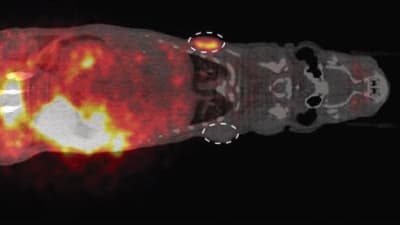
Processes and structures within the body that are normally hidden from the eye can be made visible through medical imaging. Scientists use imaging to investigate...
Briefs: Sensors/Data Acquisition
Research reveals that expertly timed lasers shined at an approaching LIDAR system can create a blind spot in front of the vehicle.

Briefs: Semiconductors & ICs
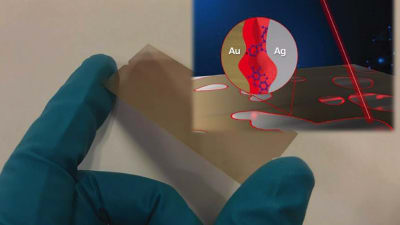
Study shows improvements to chemical sensing chip that aims to quickly and accurately identify drugs and other trace chemicals.
Briefs: Medical
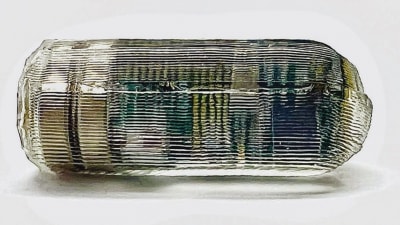
Engineers have demonstrated an ingestible sensor whose location can be monitored as it moves through the digestive tract, an advance that could help doctors more easily diagnose gastrointestinal motility disorders such as constipation, gastroesophageal reflux disease, and gastroparesis.
Briefs: Imaging
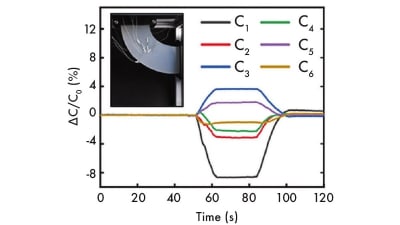
Prompted by conversations regarding soft robotics, a research group has developed a design for a new sensor using 3D electrodes inspired by the folding patterns used in origami, able to measure a strain range of up to three times higher than a typical sensor.
Briefs: Sensors/Data Acquisition
Sensor Enhances Robots’ Tactile Capabilities
Achieving human-level dexterity during manipulation and grasping has been a long-standing goal in robotics. To accomplish this, having a reliable sense of tactile information and force is essential for robots.
Briefs: Sensors/Data Acquisition
In people with epilepsy, seizure-alert dogs can smell small changes in body chemistry and warn of an impending seizure an hour or more before it occurs. Inspired by this feat of nature, a team of researchers has developed a way to replicate that ability with technology.

Briefs: AR/AI
Praneeth Namburi is a research scientist at the MIT.nano Immersion Lab. One project that bridges the physical and digital worlds uses VR simulations to train people to fabricate computer chips and semiconductors.

Briefs: Sensors/Data Acquisition
NASA Ames has developed a new state-of-the-art method for measuring fluctuating aerodynamic-induced pressures on wind tunnel models using unsteady Pressure Sensitive Paint (uPSP).
Briefs: Test & Measurement
The vibrating device uses bone-conducted sounds to achieve better results.

Briefs: Test & Measurement
Researchers from Northwestern University have collaborated on the implementation of an accurate, low-cost, and easy-to-use test for detecting toxic levels of fluoride in water. The new biosensor device has been field tested in Kenya.

Briefs: Sensors/Data Acquisition
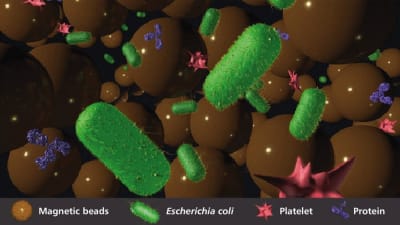
Researchers were able to successfully isolate bacteria from various fluids with a microparticle-based matrix filter. The filter trapped particles in small voids in the device, providing a larger concentration of bacteria for analysis.
Briefs: Medical
Enhancing At-Home COVID Tests with Glow-in-The-Dark Materials
Researchers at the University of Houston are using glow-in-the-dark materials to enhance and improve rapid COVID-19 home tests.
Briefs: Sensors/Data Acquisition
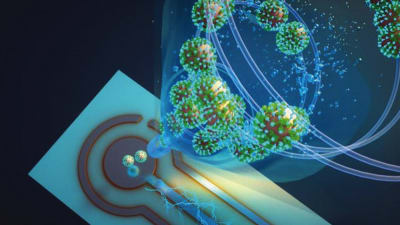
By combining recent advances in aerosol sampling technology and an ultrasensitive biosensing technique, researchers at Washington University in St. Louis have created a real-time monitor that can detect any of the SARS-CoV-2 virus variants in a room in about five minutes.
Briefs: Test & Measurement
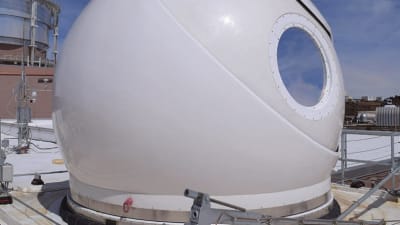
The Laser Communications Relay Demonstration (LCRD) will usher in a new era of laser communications.
Briefs: Energy
The future of wearable technology just got a big boost thanks to a team of University of Houston researchers who designed, developed, and delivered a successful prototype of a fully stretchable fabric-based lithium-ion (Li-ion) battery.

Briefs: Photonics/Optics
A research team has developed a 3D imaging sensor that has an extremely high angular resolution — it can distinguish points of an object separated by an angular distance, of as little as 0.0018°. The sensor operates on a unique angle-to-color conversion principle.

Briefs: Electronics & Computers
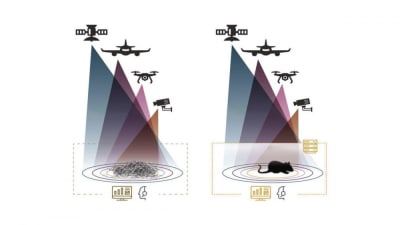
A new patented software system can find the curves of motion in streaming video and images from satellites, drones, and far-range security cameras and turn them into signals to find and track moving objects as small as one pixel.
Briefs: Medical
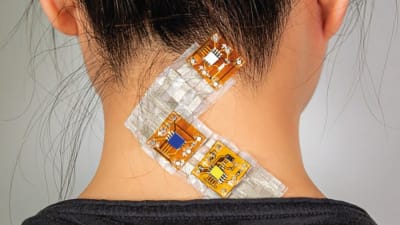
The next generation of wearable computing technology will be even closer to the wearer than a watch or glasses: It will be affixed to the skin.
Briefs: RF & Microwave Electronics
Innovators at NASA Johnson Space Center have developed a quarter-wavelength RFID slot antenna that provides polarization diversity and employs dual resonances, but in a form factor that is much smaller than other RFID antennas that provide similar functionality.

Briefs: Mechanical & Fluid Systems
To improve efficiency, it is necessary to characterize and reduce flow separation on curved surfaces.
Briefs: Medical
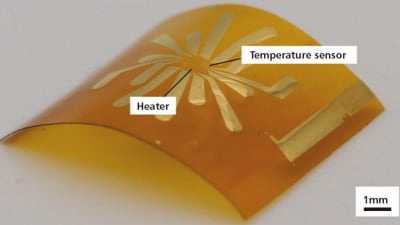
Scientists have created a new way to detect the proteins that make up the pandemic coronavirus as well as antibodies against it. They designed protein-based biosensors that glow when mixed with components of the virus or specific COVID-19 antibodies.

Briefs: Wearables
The patch uses ultrasound to monitor blood flow to organs.

Briefs: Sensors/Data Acquisition
Researchers from the University of Technology Sydney (UTS) have developed biosensor technology that will allow you to operate devices, such as robots and machines, solely through thought-control.

Briefs: Photonics/Optics
A novel nanostructure produces uniquely shaped light.
Briefs: Test & Measurement
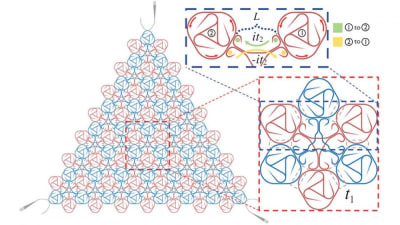
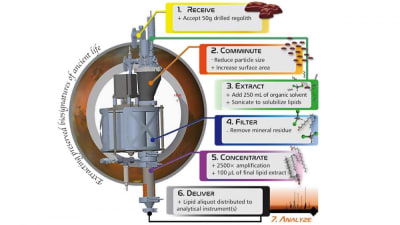
NASA Ames Research Center has developed a novel technology that provides an autonomous, miniaturized fluidic system for lipid analysis.
Briefs: Manufacturing & Prototyping
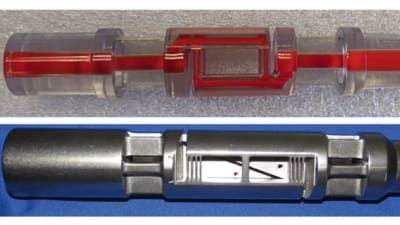
To enable key aerospace R&D applications, NASA’s Langley Research Center has developed a single-piece flow-through transducer design capable of measuring all six components adding in the Axial force measurement.
Briefs: Medical
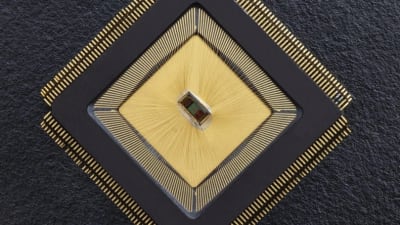
Boasting a 256-channel high-resolution sensing array and an energy-efficient machine learning processor, NeuralTree can extract and classify a broad set of biomarkers from real patient data and animal models of disease in-vivo.
Briefs: Sensors/Data Acquisition
MIT researchers have built an AR headset that gives the wearer X-ray vision. The headset combines computer vision and wireless perception to automatically locate a specific item that is hidden from view.

Top Stories
 Blog: Lighting

A Stretchable OLED that Can Maintain Most of Its Luminescence
 Blog: Energy

Batteries that Can Withstand the Cold
 INSIDER: Energy

Advancing All-Solid-State Batteries
 Quiz: Energy

 Blog: Physical Sciences

 Blog: Materials

Webcasts
 Upcoming Webinars: Test & Measurement

From Spreadsheets to Insights: Fast Data Analysis Without Complex...
 Upcoming Webinars: Electronics & Computers

Cooling a New Generation of Aerospace and Defense Embedded...
 Upcoming Webinars: Test & Measurement

Beyond AI-Copy-Paste Engineering: Advanced AI-Integration Success...
 Upcoming Webinars: Automotive

Battery Abuse Testing: Pushing to Failure
 Upcoming Webinars: Internet of Things

A FREE Two-Day Event Dedicated to Connected Mobility
 Upcoming Webinars: Test & Measurement

Choosing the Right N-Port Strategy: Multiport VNAs vs. Switch...