
Stories
44
127
0
90
30
Briefs: Wearables
The device is stretchy enough to wear like a ring, a bracelet, or any other accessory that touches the skin.

Briefs: Electronics & Computers
The biofuel cells can power wearable electronics purely by using human sweat.

INSIDER: Power
Every year, 50 percent of the energy produced worldwide from coal, oil, natural gas, nuclear, and renewable energy sources is lost as heat. This untapped resource could...

Facility Focus: Energy
Learn about the technologies being developed at NC State, including vehicle armor, a monitoring patch for plants, and origami-inspired materials.

5 Ws: RF & Microwave Electronics
About the size of a grain of sand, the flying microchip (or microflier) does not have a motor or engine.

Briefs: Nanotechnology
The device combines with body power to treat tendon disease and damage, and sports injuries.
Question of the Week: Electronics & Computers
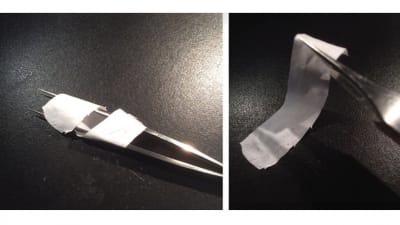
Will Our Bodies Power Our Everyday Electronics?
One of the top INSIDER stories of 2021 included a “wearable microgrid” that harvests energy from motion and sweat to power electronics. (Read the 2021 INSIDER story.)
5 Ws: Energy
Fibers sewn into fabrics can turn heat from the Sun into energy that could power textile electronics.

Briefs: Energy
Polymer cores redirect light from any source to solar cells.

Briefs: Automotive
This practical technique uses magnetism to transmit electricity wirelessly to recharge electric cars, robots, or drones.

UpFront: Manufacturing & Prototyping
NASA's satellite data reveals the pandemic's effect on our atmosphere, and a team of shoebox-sized rover scouts is prepped for the lunar surface.

5 Ws: Sensors/Data Acquisition
The wearable device turns the touch of a finger into a source of power for small electronics and sensors.

Articles: Motion Control
The e-kit promises to be a low-cost solution in the developing world.

Articles: Electronics & Computers
Freetouch turns a smartphone into a touchscreen remote control.

Blog: Energy
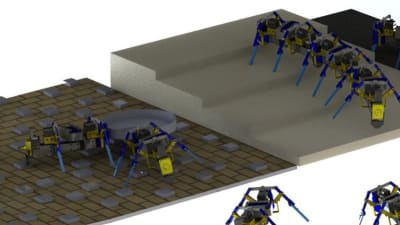
Forget puzzles — In the early days of quarantine, Notre Dame professor and robotics engineer Yasemin Ozkan-Aydin used the time at home to put together robots.
Articles: Transportation
A tiny investment in system capital expenditures can lead to huge rewards in reduced capital and operating expenses.

Briefs: RF & Microwave Electronics
The electricity can be used to power wireless devices or to charge energy storage devices such as batteries and supercapacitors.
Briefs: Energy
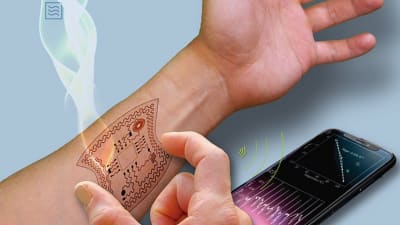
The soft and stretchable device converts movement into electricity and can work in wet environments.

UpFront: Robotics, Automation & Control
NASA reveals winners of a CO2 conversion challenge.

Briefs: RF & Microwave Electronics
Implantable chips visible only in a microscope point the way to developing chips that can be injected into the body with a hypodermic needle to monitor medical conditions.

INSIDER: Electronics & Computers
While researchers around the globe are working on free-position wireless charging — which would unchain devices from set charging points — the most common solutions...
Blog: Electronics & Computers
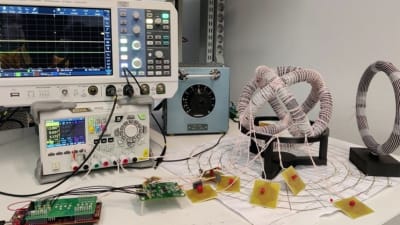
Prof. Alanson Sample and his team want to turn entire buildings into wireless charging zones. Learn how their system delivers electricity over the air.

Products: Manufacturing & Prototyping
Power distribution units, pressure sensors, connector straps, and more.

Briefs: Data Acquisition
This work could help severely injured people, such as soldiers, regain the ability to control their movements.
Briefs: Energy
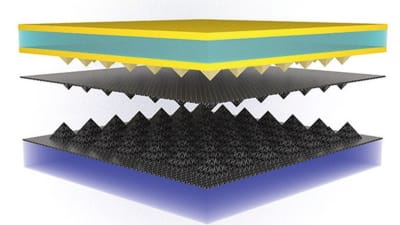
A skin-like device can measure small facial movements in patients who have lost the ability to speak.

Special Reports: Automotive

Power Electronics - August 2021
This compendium of recent articles from the editors of Tech Briefs and Aerospace & Defense Technology looks at the latest advances in power electronics and energy storage for a range of applications including...Briefs: Energy
A flexible device worn on the wrist harvests heat energy from the human body to monitor health.

Briefs: Electronics & Computers
A connection between electricity and mechanical motion in soft, rubber-like materials could improve robot range.

Question of the Week: Energy
Will ‘Sweat Power’ Make Wearables Mainstream?
Engineers at the University of California San Diego developed a thin, flexible strip that can be worn on a fingertip and generate small amounts of electricity when a person’s finger sweats or presses on it. (Watch the demo on Tech Briefs TV.)
Top Stories
 Blog: Design

Aerial Microrobots That Can Match a Bumblebee's Speed
 Blog: Manufacturing & Prototyping

Revolutionizing the Production of Semiconductor Chips
 Blog: Electronics & Computers

Turning Edible Fungi into Organic Memristors
 News: Energy

 INSIDER: Propulsion

World’s Smallest Programmable, Autonomous Robots
 INSIDER: Design
Webcasts
 On-Demand Webinars: Energy

Powering America’s EV Future: Connect, Collaborate, Innovate
 Upcoming Webinars: Motion Control

Next-Generation Linear and Rotary Stages: When Ultra Precision...
 Upcoming Webinars: Power

E/E Architecture Redefined: Building Smarter, Safer, and Scalable...
 Upcoming Webinars: Energy

Hydrogen Engines Are Heating Up for Heavy Duty
 Upcoming Webinars: Transportation

Advantages of Smart Power Distribution Unit Design for Automotive...
 Upcoming Webinars: Automotive

Quiet, Please: NVH Improvement Opportunities in the Early Design...