Stories
36
0
1920
30
Briefs: Manufacturing & Prototyping
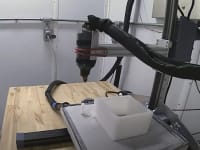
Every complex human tool has contained multiple materials wedged, tied, screwed, glued, or soldered together. But the next generation of tools, from autonomous squishy robots to flexible...
Briefs: Materials
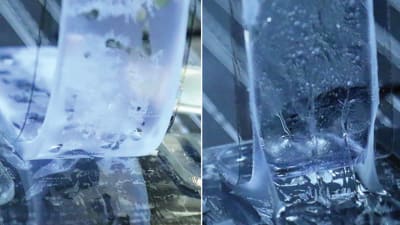
A new way to treat wood makes it 12 times stronger than natural wood and ten times tougher. The wood substance could be comparable to steel or titanium alloys; it is also comparable to...

Briefs: Materials
Most electronic devices have glass or plastic covers that protect against dust, moisture, and other environmental contaminants, but light reflection from these surfaces can make...

Briefs: Semiconductors & ICs
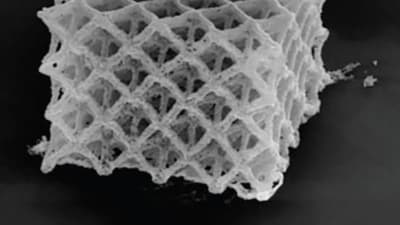
In 3D printing — also known as additive manufacturing — an object is built layer-by-layer, allowing for the creation of structures that would be impossible to manufacture by...
Products: Test & Measurement
Product of the Month
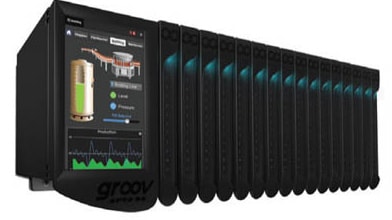
Opto 22, Temecula, CA, introduced the groov EPIC® system that incorporates into one unit everything needed to connect and control field and operational devices and data through on-premises IT...
Blog: Manufacturing & Prototyping
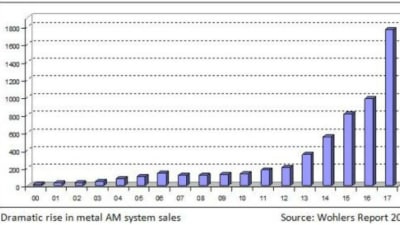
A report released this week revealed a spike in the adoption of metal additive-manufacturing systems – an increase due largely to a growing number of new companies.

INSIDER: Test & Measurement
Researchers from the University of British Columbia have developed a stretchable sensor that can be weaved into a fabric to detect a range of complex human movements, including finger gestures and heartbeats.

Q&A: Sensors/Data Acquisition
Researchers from NC State have developed a new technique for directly printing metal circuits, creating flexible, stretchable electronics. The technique can...

Briefs: Semiconductors & ICs
New graphene printing technology can produce electronic circuits that are low-cost, flexible, highly conductive, and water-repellent. Low-cost, inkjet-printed graphene can...

Application Briefs: Photonics/Optics
StratasysEden Prairie, MNwww.stratasys.com
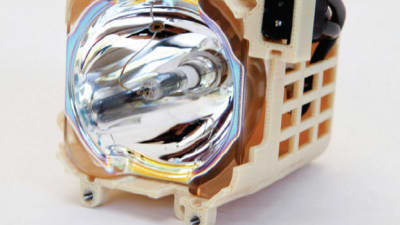
Christie Digital Systems manufactures advanced digital projectors and displays using an innovative prototyping program. The company serves...
Articles: Transportation
Revolutionary changes are driving the mobility industry forward. Explore the next generation of transportation engineering at SAE’s WCX: World Congress Experience from April 10-12 in Detroit, MI....

Briefs: Manufacturing & Prototyping
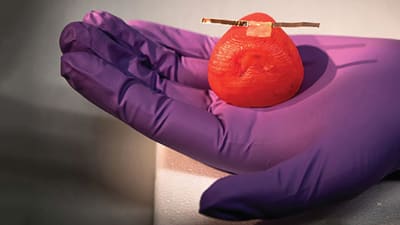
Currently, most 3D-printed organ models are made using hard plastics or rubbers. This limits their application for accurate prediction and replication of the organ’s physical behavior...
Briefs: Mechanical & Fluid Systems
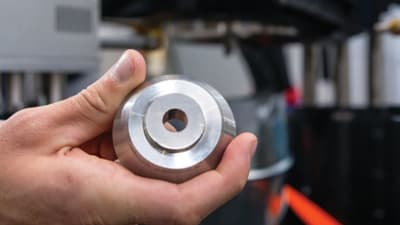
NASA is preparing for the next generation of CubeSats that are propelled and will make directional maneuvers. The new gimbal mount provides a seat for the motor, and controls the position of the thrusters...

Products: Mechanical & Fluid Systems
Product of the Month
Keysight Technologies, Santa Rosa, CA, introduced the PathWave software platform that integrates design, test, measurement, and analysis to enable product development from concept to...

Technology Leaders: Manufacturing & Prototyping
Exciting new technological innovations are making the planet cleaner, people healthier, food more plentiful, transportation speedier, communication more accessible, and...

Briefs: Materials
Green Approach for Toughening Thermosetting Reactive Resins
Thermosetting reactive resin systems such as epoxy, bismaleimide, and polyimide classes of material are brittle. The origin of brittleness is attributed to the high crosslinking density that exists in the fully cured forms of these materials. Traditionally, the toughness of these resins is...
Facility Focus: Energy
Located in Argonne, IL, Argonne National Laboratory (ARL) is a multidisciplinary science and engineering research center. Born out of the University of Chicago’s work on the Manhattan Project in the...
Briefs: Photonics/Optics
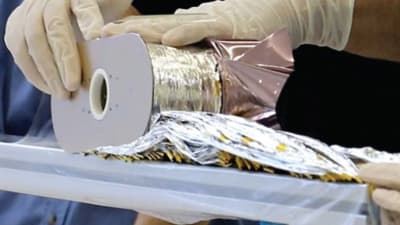
NASA’s Marshall Space Flight Center is building a small CubeSat that uses an 85-m2 solar sail deployed from a central location to capture the push of photons from the Sun as...
Briefs: Photonics/Optics
High-speed images of a common laser-based metal 3D printing process, coupled with newly updated computer models, have revealed the mechanisms behind material redistribution, a phenomenon that...

News: Software
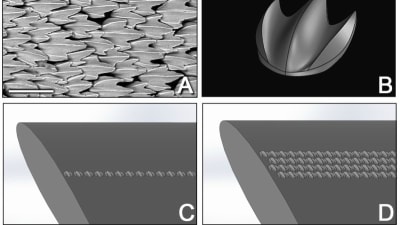
To improve a flying vehicle, sometimes you have to turn to a reliable model that has been operating for hundreds of millions of years.
Question of the Week: Manufacturing & Prototyping
Would you use color-changing 3D printables?
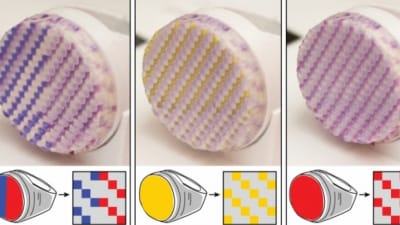
In today’s INSIDER, MIT researcher Professor Stefanie Mueller said that her laboratory’s color-changing 3D printables support new customizable objects and accessories, as well as opportunities for product designers showing off their prototypes.
INSIDER: Manufacturing & Prototyping
Professor Stefanie Mueller and fellow researchers from MIT’s Computer Science and Artificial Intelligence Laboratory (CSAIL) are exploring a more efficient way to cut down on print jobs: objects that change color.
INSIDER: Manufacturing & Prototyping
An electrically-driven demolition probe originally funded by NASA enables a more precise, quieter fracturing method that its creators hope will give construction workers on...

Blog: Manufacturing & Prototyping
Shape-Morphing Materials Add 4th Dimension to 3D Printing
3D printing uses computer control to fuse layers of polymers or powders into a three-dimensional object. Rutgers University researchers found a way to add to a fourth dimension – time – to the manufacturing process.
Question of the Week: Manufacturing & Prototyping
Would you wear a moisture-managing ski jacket?
Today's INSIDER featured an electronic textile technology designed to keep skiers warm and dry. What do you think? Would you wear a moisture-managing ski jacket?
Articles: Mechanical & Fluid Systems
The wide variety of industrial applications each independently calls for a level of robustness from the physical (PHY) layer, all the way up to applications. Time...
Briefs: Materials
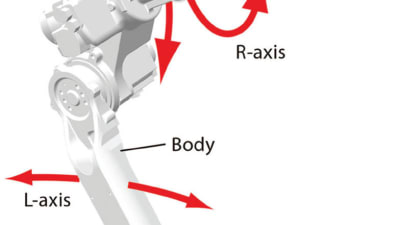
Using 3D printers, researchers have created a metamaterial from cubic building blocks that responds to compression forces by a rotation. Usually, this can only be...

Briefs: Manufacturing & Prototyping
Conductive, High-Toughness Oxides Deposited by Plasma Spray-Physical Vapor Deposition (PS-PVD)
Oxide coatings deposited in Glenn Research Center's Plasma Spray-Physical Vapor Deposition (PS-PVD) facility can be processed to be mechanically tough (erosion-resistant) and electrically conductive at room temperature. The electrically conductive phase...
Top Stories
 Blog: Lighting

A Stretchable OLED that Can Maintain Most of Its Luminescence
 Blog: Energy

Batteries that Can Withstand the Cold
 INSIDER: Energy

Advancing All-Solid-State Batteries
 Blog: Power

My Opinion: We Need More Power Soon — Is Nuclear the Answer?
 Quiz: Power

 Blog: Data Acquisition

Webcasts
 Upcoming Webinars: AR/AI

From Spreadsheets to Insights: Fast Data Analysis Without Complex...
 Upcoming Webinars: Electronics & Computers

Cooling a New Generation of Aerospace and Defense Embedded...
 Upcoming Webinars: Sensors/Data Acquisition

Beyond AI-Copy-Paste Engineering: Advanced AI-Integration Success...
 Upcoming Webinars: Automotive

Battery Abuse Testing: Pushing to Failure
 Upcoming Webinars: Communications

A FREE Two-Day Event Dedicated to Connected Mobility
 Upcoming Webinars: Test & Measurement

Choosing the Right N-Port Strategy: Multiport VNAs vs. Switch...