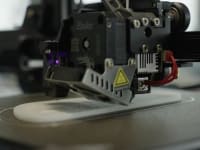
Explore the fast-paced developments in 3D printing and additive manufacturing. Access the essential technical briefs and resources for design engineers working in manufacturing and medical industries.
See the future of aerospace and defense manufacturing in this compendium of articles from the editors of Tech Briefs and Aerospace & Defense Technology magazines.
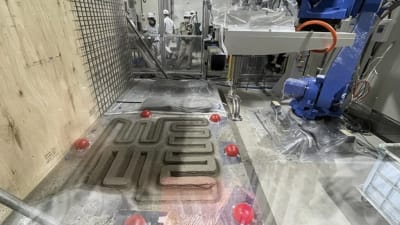
Engineers at Carnegie Mellon University have created a fast, highly accurate simulator for spray-based concrete 3D printing that could enable stronger, more complex, and less wasteful construction by predicting how concrete behaves and solidifies, even around rebar.
As engineering continues to shape society and drive innovation, here are the year’s top 10 engineering stories that resonated most with Tech Briefs' audience.
We here at Tech Briefs want to remedy that toxic part of the holidays. So, we put together a list of terrific gift ideas for anyone — but especially the engineer — in your life.
Engineers at The University of Texas at Austin are leading an academic and industry all-star team that aims to revolutionize the production of semiconductor chips with a new 3D printing method.
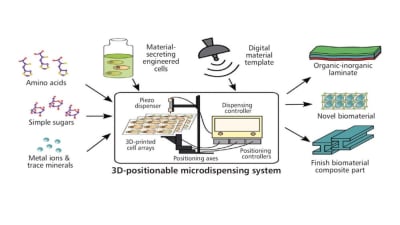
NASA has developed a novel approach for macroscale biomaterial production by combining synthetic biology with 3D printing. This innovation provides modern design and fabrication techniques for custom-designed organic or organic-inorganic composite biomaterials produced from limited resources. Read on to learn more.
NASA Johnson Space Center has developed the Micro-Organ Device (MOD) platform technology that serves as a drug screening system with human or animal cell micro-organs to supplement and reduce animal studies while potentially increasing the success of clinical trials. Read on to learn more.
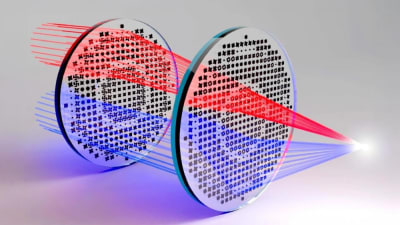
See the products of tomorrow, including a drone with flapping wings that can locate and hover around a moving light like a moth to a flame; a new multi-layered metalens design that could revolutionize portable optics in devices like phones, drones, and satellites; and more.
Spider silk spins new life into nerve repair…3D‐printed implants help repair spinal cord injuries…plasma pen transforms adhesion in medical device manufacturing. Read about these and...
On this episode of the Aerospace & Defense Technology podcast we examine the technical and strategic foundations behind Guam’s new advanced manufacturing hub. Neal Orringer of ASTRO America and Alex Benham of GAMMA are the guests to discuss the facility’s additive manufacturing capabilities, supply-chain objectives, and workforce development plans. Listen now!
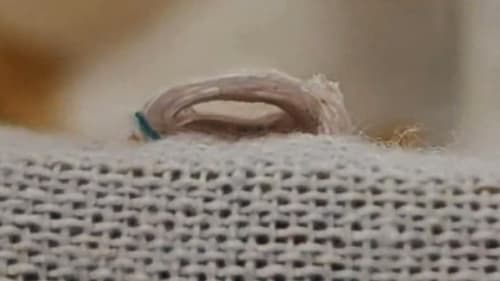
A new prototype of a knitting machine creates solid, knitted shapes, adding stitches in any direction — forward, backward, and diagonal — so users can construct a wide variety of shapes and add...
Charles Wade, a fourth-year Ph.D. student in the Matter Assembly Computation Lab (MACLab) at the University of Colorado, Boulder, and Professor Rob MacCurdy, who leads the MACLab, have created a design package that uses functions and code to map not just shapes but where different materials belong in a 3D object.
MIT engineers have developed a printable aluminum alloy that can withstand high temperatures and is five times stronger than traditionally manufactured aluminum.
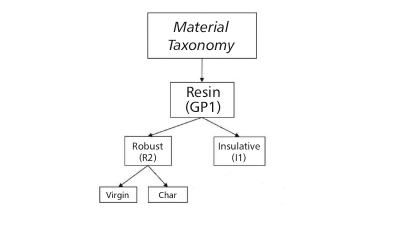
Innovators at NASA Johnson Space Center have developed additively manufactured thermal protection system (AMTPS) comprised of two printable heat shield material formulations. This technology could significantly decrease heat shield or thermal protection system (TPS) fabrication cost and time. Read on to learn more.
Finding the next groundbreaking polymer is always a challenge, but now Georgia Tech researchers are using artificial intelligence (AI) to shape and transform the future of the field. Read on to learn more.
Lasers vs. drones: military demonstrates new tech…high-‐flying uncrewed solar aircraft aces key test…the next frontier for autonomous UAVs. Read about these and other developments in this...
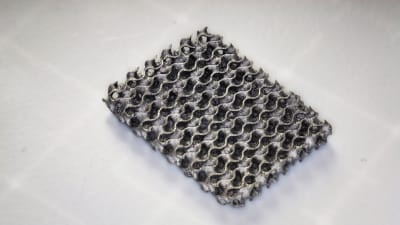
EPFL researchers have pioneered a 3D printing method that grows metals and ceramics inside a water-based gel, resulting in constructions for next-gen energy, biomedical, and sensing technologies.
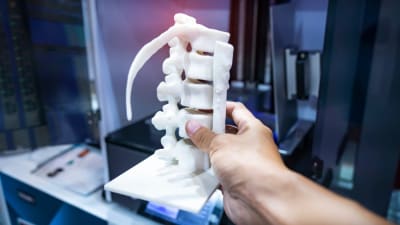
3D printing is transforming the design and production of medical devices. Benefits include creating custom implants, prosthetics, and surgical tools tailored to individual patients, as well as the ability to quickly prototype new devices for testing and development.
See the products of tomorrow, including a new type of 3D-printed titanium that’s about a third cheaper than commonly used titanium alloys; specially designed metasurfaces — flat devices etched with nanoscale light-manipulating patterns — to act as ultra-thin upgrades for quantum-optical chips and setups; and a handheld slide staining system designed to support medical, research, or environmental monitoring.
Blue Ghost, an historic lunar mission, is paving the way for future crewed endeavors and long‐term surface operations under NASA's Artemis campaign. Read about this and other recent advances in a compendium...
Dronelike robot has the “brains” to morph from fly to drive mode midair…new cobot cuts construction time in half…AI system empowers robots with human‐like perception. Read about these...
See the future of aerospace and defense manufacturing in this compendium of articles from the editors of Tech Briefs and Aerospace & Defense Technology magazines.
The future of robotics and automation in medical manufacturing...how micro molding is shaping the next generation of medical devices...special preview of the upcoming MD&M Midwest...
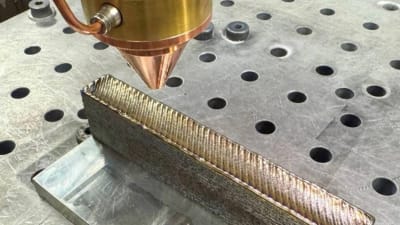
NASA researchers are eliminating complex joints by manufacturing a 1-piece TCA utilizing 3D printing and large-scale additive manufacturing technologies to directly deposit the nozzle onto the combustion chamber. And, by replacing a traditional solid metal jacket with a composite overwrap for support, the overall weight is reduced by over 40 percent. Read on to learn more.