Stories
39
0
120
30
Briefs: Robotics, Automation & Control
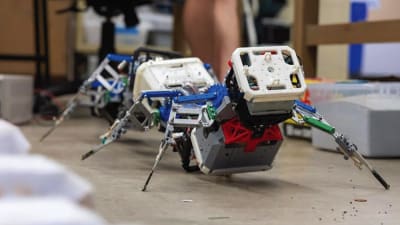
Intrigued to see if many limbs could be helpful for locomotion in this world, a team at the Georgia Institute of Technology is using a centipede's style of movement to its advantage. They developed a new theory of multilegged locomotion and created many-legged robotic models.
Briefs: Materials
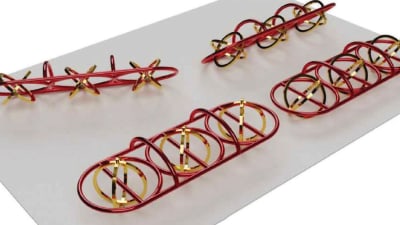
A technique enables manufacturing of minuscule robots by interlocking multiple materials in a complex way.
Briefs: Manned Systems
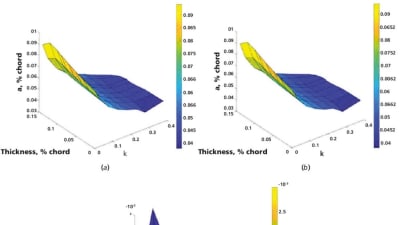
NASA’s Ames Research Center has developed a novel closed-form solution to model wing flutter aerodynamics for any aircraft wing (within a certain thickness regime and without camber). This closed-form solution can be readily extended to wing sections with camber.
INSIDER: Research Lab
Researchers at Lawrence Livermore National Laboratory have furthered a new type of soft material that can change shape in response to light, a discovery that could advance “soft...

INSIDER: Propulsion
Compared to robots, human bodies are more flexible, capable of fine movements, and can efficiently convert energy into movement. Drawing inspiration from human gait, researchers...

Briefs: Manufacturing & Prototyping
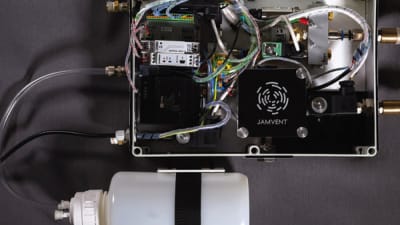
The ventilators are simpler and cheaper to make than those currently available.
INSIDER: Sensors/Data Acquisition
An inspection design method and procedure by which mobile robots can inspect large pipe structures has been demonstrated with the successful inspection of multiple...
Briefs: Robotics, Automation & Control
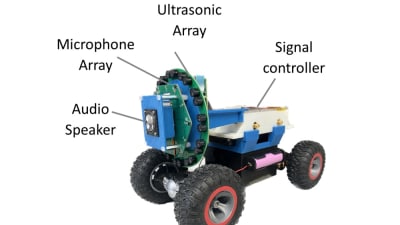
A team at ETH Zurich has developed an ultrasonically actuated glass needle that can be attached to a robotic arm. This lets them pump and mix minuscule amounts of liquid and trap particles.

Blog: Mechanical & Fluid Systems
Find out which five of our quizzes were the most popular in 2023.

INSIDER: Mechanical & Fluid Systems
MIT engineers have developed a robotic replica of the heart’s right ventricle, which mimics the beating and blood-pumping action of live hearts.

Articles: Regulations/Standards
Grayson Brulte, host of SAE’s Tomorrow Today podcast, interviewed Christian Thiele, Director, Global Ground Vehicle Standards, SAE International, and Dr. Rodney McGee, P.E. Chairman, SAE J3400 NACS Task Force, regarding the work of the J3400 Task Force. This Q&A is an abbreviated portion of that interview.

Q&A: Design
Doctor Sergiy Kalnaus and his team at Oak Ridge National Laboratory have developed a framework for designing solid-state batteries that focuses on their underlying mechanics.

Briefs: Electronics & Computers
An ultra-small actuator has nanometer-scale precision.
Briefs: Electronics & Computers
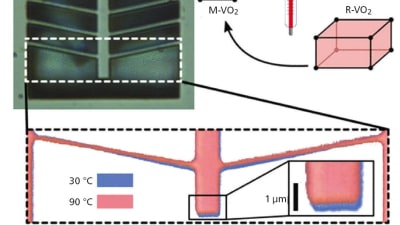
Integrating sensors into rotational mechanisms could make it possible for engineers to build smart hinges that know when a door has been opened, or gears inside a motor that tell a mechanic how fast they are rotating. Engineers have now developed a way to easily integrate sensors into these types of mechanisms.
Briefs: Design
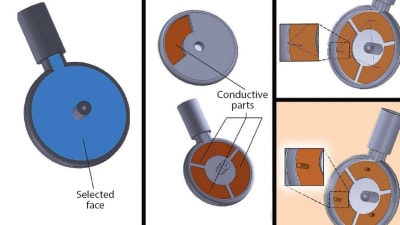
The innovation can provide a wide range of damping forces, a linear damping function and/or an extended dynamic range of attenuation, providing broad flexibility in configuration size and functional applicability.
Briefs: Energy
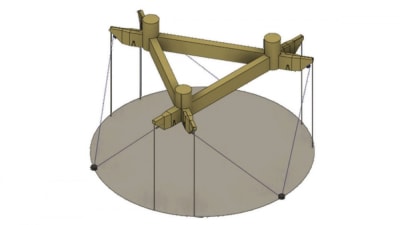
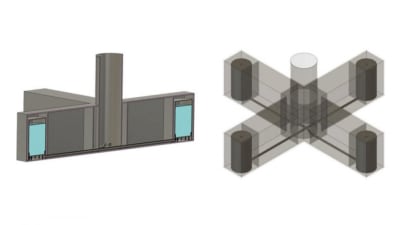
NASA engineers have developed a new approach to mitigating unwanted motion in floating structures. Ideally suited to applications including offshore wind energy platforms and barges, the innovation uses water ballast as a motion damping fluid.
Q&A: Manufacturing & Prototyping
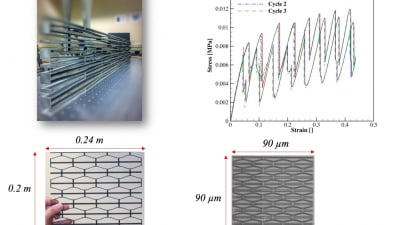
Professor Pablo Zavattieri and his team from Purdue University have developed an architected material that can dissipate energy caused by bending, compression, torque, and tensile stresses, avoiding permanent plastic deformation or damage.
Application Briefs: Aerospace
As part of the NASA’s Perseverance rover, MOXIE (Mars Oxygen In-Situ Resource Utilization Experiment), has generated oxygen for the 16th and final time, successfully completing its mission goal.

INSIDER: Mechanical & Fluid Systems
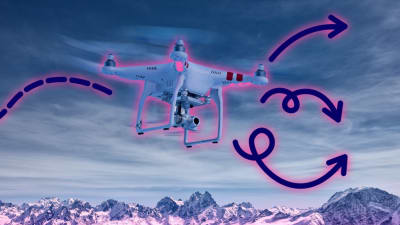
Researchers from MIT and Stanford University have devised a new machine-learning approach that could be used to control a robot, such as a drone or autonomous vehicle, more effectively and efficiently in dynamic...
Q&A: Mechanical & Fluid Systems
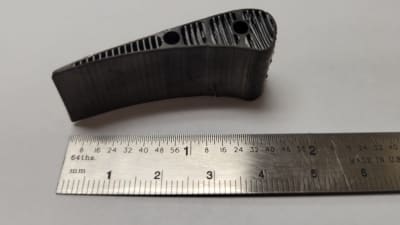
Professor Stephen Lynch, of Penn State’s College of Engineering, along with colleagues at Michigan State University and the University of Wyoming, have developed a process for 3D printing a high-temperature ceramic gas turbine part.
Special Reports: Software

Smart Factory/IIoT - September 2023
Factories are getting "smarter" and more automated by the day, thanks to advances in AI, robotics, connectivity and sensors. In this compendium of recent articles from the editors of Tech Briefs and Sensor...Briefs: Mechanical & Fluid Systems
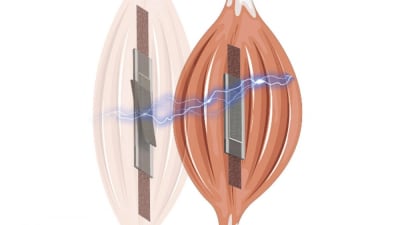
Taking inspiration from nature, a team of researchers at Queen Mary’s School of Engineering and Materials Science has successfully created an artificial muscle that seamlessly transitions between soft and hard states while also possessing the remarkable ability to sense forces and deformations.
Briefs: Sensors/Data Acquisition
To improve efficiency, it is necessary to characterize and reduce flow separation on curved surfaces.
INSIDER: Manufacturing & Prototyping
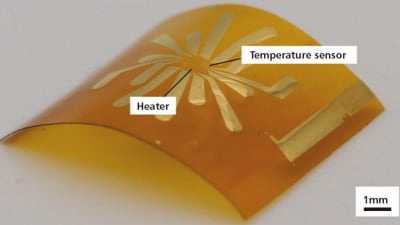
A new type of ferroelectric polymer that is exceptionally good at converting electrical energy into mechanical strain holds promise as a high-performance motion controller or...

Application Briefs: Motion Control
A company from Denmark found a problem with its oil rig, where wind caused service loops to swing, become entangled and snag, resulting in downtime. The company solved the problem with a 33.5-meter e-loop from igus, the Germany-based manufacturer of high-performance plastics.

Articles: Motion Control
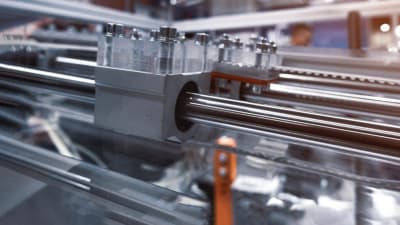
As the demand grows for increased productivity, higher product quality, rapid development time, and lower engineering costs, adopting linear motor technology is increasingly popular by leveraging modular linear motor designs.
Application Briefs: Aerospace
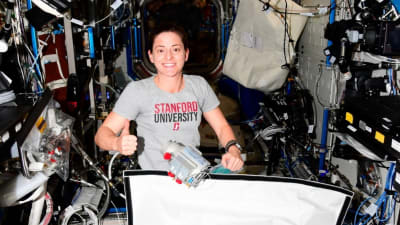
Leveraging a high-speed permanent magnet motor, an environmental control system aboard the ISS represents a step change toward electrification and optimization.
INSIDER: Design
Scientists at the Department of Energy’s Oak Ridge National Laboratory have invented a coating that could dramatically reduce friction in common load-bearing systems with moving...
INSIDER: Sensors/Data Acquisition
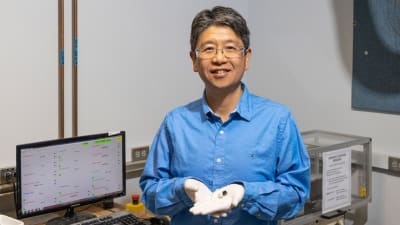
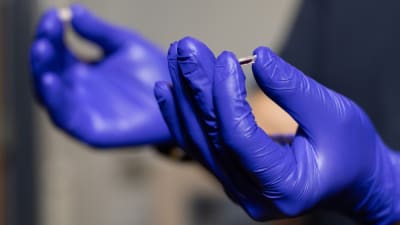
Extreme environments in several critical industries — aerospace, energy, transportation, and defense — require sensors to measure and monitor numerous factors under...
Top Stories
 Blog: Lighting

A Stretchable OLED that Can Maintain Most of Its Luminescence
 INSIDER: Design

Advancing All-Solid-State Batteries
 Blog: Energy

Batteries that Can Withstand the Cold
 Blog: AR/AI

My Opinion: We Need More Power Soon — Is Nuclear the Answer?
 News: Power

 Blog: Aerospace

Webcasts
 On-Demand Webinars: Transportation

Quiet, Please: NVH Improvement Opportunities in the Early Design Cycle
 Upcoming Webinars: Test & Measurement

From Spreadsheets to Insights: Fast Data Analysis Without Complex...
 Upcoming Webinars: Aerospace

Cooling a New Generation of Aerospace and Defense Embedded...
 Upcoming Webinars: AR/AI

Beyond AI-Copy-Paste Engineering: Advanced AI-Integration Success...
 Upcoming Webinars: Energy

Battery Abuse Testing: Pushing to Failure
 Upcoming Webinars: Power