Stories
34
0
60
30
INSIDER: Electronics & Computers
A beam of light doesn’t sound like a material that can create a knot. Until now.

Briefs: Imaging
Daniel Gehrig and Davide Scaramuzza from the Department of Informatics at the University of Zurich have combined a novel bio-inspired camera with AI to develop a system that can detect obstacles around a car much quicker than current systems and using less computational power. Read on to learn more about the study, which is published in Nature.

Briefs: Imaging
Researchers at the Harvard John A. Paulson School of Engineering and Applied Sciences have developed a compact, single-shot polarization imaging system that can provide a complete picture of polarization. Read on to learn more about it.
Briefs: Robotics, Automation & Control
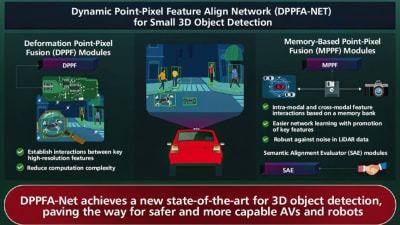
Scientists have developed multi-modal 3D object detection methods that combine 3D LiDAR data with 2D RGB images taken by standard cameras. While the fusion of 2D images and 3D LiDAR data leads to more accurate 3D detection results, it still faces its own set of challenges, with accurate detection of small objects remaining difficult. Read on to learn more about it.
Blog: Imaging
A research team has recently developed a neuromorphic exposure control system that revolutionizes machine vision under extreme lighting variations.

Special Reports: Test & Measurement

Robotics & Motion Control - March 2025
From the operating room to the family farm to your next hotel stay, advances in robotics and automation are impacting a wide range of industries. Read all about it in this compendium of articles from the...Blog: Imaging
An AI system developed by NYU Tandon School of Engineering researchers promises a new tool for the millions of people who want to manage their weight, diabetes, and other diet-related health conditions.

Products: Mechanical & Fluid Systems
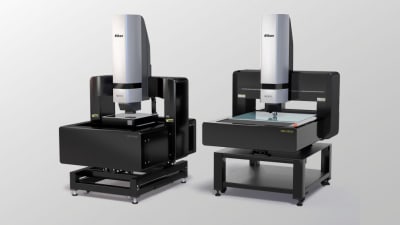
See what's new on the market, including Nikon Corporation's NEXIV VMF-K Series, a next-generation video measuring system; the surfaceCONTROL 3D snapshot sensors from Micro-Epsilon; InfraTec's INDU-SCAN base, a flexible and cost-effective thermography solution for use in industrial applications 24/7; Curtiss-Wright Actuation Division's Exlar® electric actuator product offerings; and more.
Articles: Robotics, Automation & Control
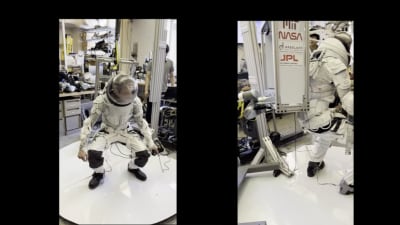
Watch this video to learn more about three new robotic technologies: A soft robot developed at NC State University; a pair of wearable robotic limbs developed by MIT engineers; and a camera inspired by the human eye developed at the University of Maryland.
INSIDER: Photonics/Optics
Seven early-stage startup companies have been selected to compete for a top prize of $10,000 at the 15th annual SPIE Startup Challenge at Photonics West Tuesday, January 28.

INSIDER: Lighting
The SPIE Photonics West 2025 technical conference and exhibition returns to San Francisco's Moscone Center, January 25 to 30, providing attendees the opportunity to learn...
INSIDER: Robotics, Automation & Control
Cornell researchers in physics and engineering have created the smallest walking robot yet. Its mission: to be tiny enough to interact with waves of visible light and still move...

Briefs: Test & Measurement
In this video, we provide an overview of the Nancy Grace Roman Space Telescope’s mission, capabilities and timeline to launch.

Videos of the Month: Materials
See the videos of month, including one on UW researchers developing a flexible, durable electronic prototype that can harvest energy from body heat and turn it into electricity that can be used to power small electronics; one on Purdue University researchers using both ultrasonic waves and X-ray CT to “see inside” manufactured objects nondestructively; one on Rotograb, a robotic hand that merges the dexterity of human hands with the strength and efficiency of industrial grippers; and more.

Briefs: Imaging
A team led by University of Maryland computer scientists invented a camera mechanism that improves how robots see and react to the world around them. Inspired by how the human eye works, their innovative camera system mimics the tiny involuntary movements used by the eye to maintain clear and stable vision over time. Read on to learn more.

Products: Imaging
See the new products, including TRIOPTICS' compact and retrofittable solution for processing laser diodes on the ATS 100 alignment turning station; TRUMPF's VCSELs and photodiodes; Edmund Optics’ TECHSPEC® UV Fused Silica Plano-Convex (PCX) Lenses MgF2 Coated feature precision specifications; Imperx' two new Cheetah cameras: the CXP-C1941 and the SFP-C1941; and more.

Briefs: Imaging
A team from the University of Barcelona and the Universitat Oberta de Catalunya has designed a methodology that facilitates the recognition of QR codes in these physical environments, where reading is more complicated. Read on to learn more.

Briefs: AR/AI
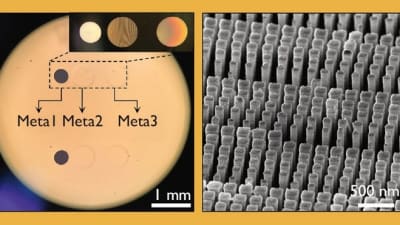
Researchers have developed an optical design technology that dramatically reduces the volume of cameras with a folded lens system utilizing “metasurfaces,” a next-generation nano-optical device. Read on to learn more.
Briefs: Photonics/Optics
Researchers have made it possible to expand tissue twentyfold in a single step. This simple, inexpensive method could pave the way for nearly any biology lab to perform nanoscale imaging. Read on to learn more.

Application Briefs: Imaging
Today, companies are building small satellite constellations with tens to hundreds of units, far exceeding the scale of traditional space operations. Read on to learn more.

Products: Software
Read about the product of the month, Synopsys' ImSym — Imaging System Simulator, a virtual prototyping platform for imaging systems, encompassing lenses, sensors, and image signal processors (ISPs).
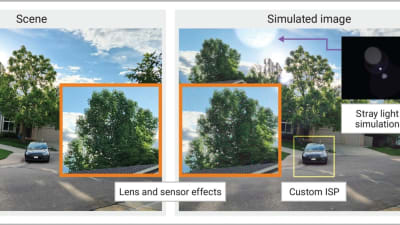
Products: Software
See what's new on the market, including Nikon Metrology NV's Scatter Correction CT; Emerson's next-generation Rosemount™ 3490 Controller; Fischer Connectors' USB 3.2 connectors and cable assembly solutions; Renesas Electronics' R-Car Family of system-on-chips for entry-level Advanced Driver Assistance Systems (ADAS); and much more.
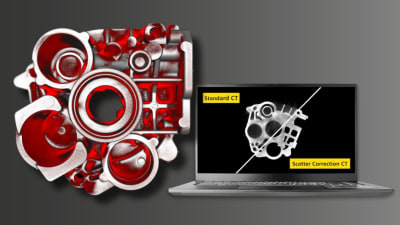
INSIDER: Imaging
An international research team has for the first time designed realistic photonic time crystals – exotic materials that exponentially amplify light. The...

Briefs: Energy
The “nanoswimmers” could be used to remediate contaminated soil, improve water filtration, or even deliver drugs to targeted areas of the body.
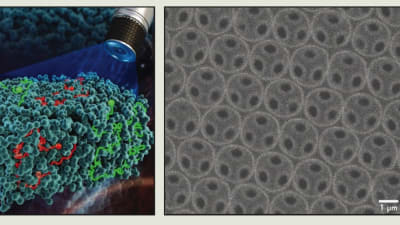
Briefs: Lighting Technology
If the outside of clothing or a vehicle were covered with the coating, an infrared camera would have a harder time distinguishing what is underneath. Read on to learn what this means.

Products: Photonics/Optics
See what's in the product showcase, including VSD’s innovative SV-2000 Flex; Keysight Technologies' N7718C Optical Reference Transmitter; MKS Instruments' Newport™ TLS260B Tunable Light Sources; Analog Modules' Picosecond Pulsed Seed Laser Diode Driver, Model 766A; and more.

Briefs: Photonics/Optics
Researchers have developed a new way to map water on land in the tropics. Called the UC Berkeley Random Walk Algorithm WaterMask, this advanced monitoring technology uses L-band microwaves from the Cyclone Global Navigation Satellite System to “see” water hidden beneath visual barriers, like tree canopies and clouds. Read on to learn more.
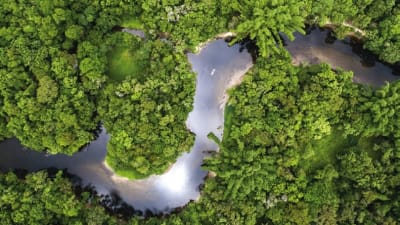
Briefs: Photonics/Optics
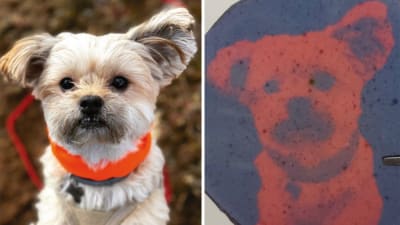
Imagine if physicians could capture 3D projections of medical scans, suspending them inside an acrylic cube to create a hand-held reproduction of a patient’s heart, brain, kidneys, or other organs. Then, when the visit is done, a quick blast of heat erases the projection, and the cube is ready for the next scan. A new report by researchers at Dartmouth and Southern Methodist University outlines a technical breakthrough that could enable such scenarios, and others, with widespread utility. Read on to learn more.
Briefs: Imaging
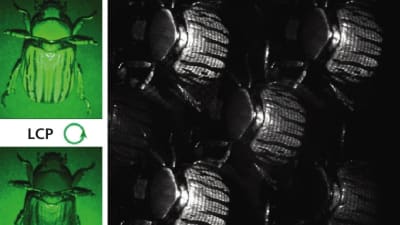
Butterflies can see more of the world than humans, including more colors and the field oscillation direction, or polarization, of light. Other species, like the mantis shrimp, can sense an even wider spectrum of light, as well as the circular polarization, or spinning states, of light waves. Inspired by these abilities in the animal kingdom, researchers have developed an ultrathin optical element known as a metasurface, which can attach to a conventional camera and encode the spectral and polarization data of images captured in a snapshot or video through tiny, antenna-like nano-structures that tailor light properties.

Top Stories
 Blog: Sensors/Data Acquisition

Going for Gold in Winter Olympic Curling
 Blog: Energy

Batteries that Can Withstand the Cold
 INSIDER: Design

Advancing All-Solid-State Batteries
 Blog: Design

 Blog: Materials

Making Tungsten Carbide a More Viable Alternative
 INSIDER: Power

Webcasts
 Upcoming Webinars: Sensors/Data Acquisition

Beyond AI-Copy-Paste Engineering: Advanced AI-Integration Success...
 Upcoming Webinars: Energy

Battery Abuse Testing: Pushing to Failure
 Upcoming Webinars: Power

A FREE Two-Day Event Dedicated to Connected Mobility
 Upcoming Webinars: Test & Measurement

Choosing the Right N-Port Strategy: Multiport VNAs vs. Switch...
 Upcoming Webinars: Energy

2026 Battery & Electrification Summit (Online)
 Upcoming Webinars: Mechanical & Fluid Systems

The Over-Engineering Trap: Aligning Custom Equipment Specs with...