Stories
41
80
0
120
30
INSIDER: Sensors/Data Acquisition
Developed by a Norwegian sensor startup Sonair, a safe 3D ultrasonic sensor — ADAR — designed to boost safety in spaces shared by humans and robots debuted at...

INSIDER: AR/AI
InOrbit.AI (Mountain View, CA) is unveiling the InOrbit Business Execution System™ at Automate 2025. This key addition to InOrbit Space Intelligence™ transforms how...

INSIDER: Robotics, Automation & Control
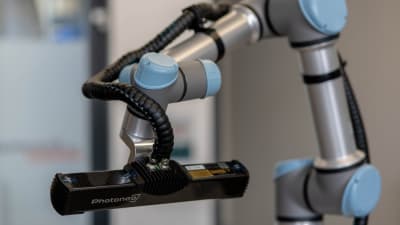
A new state-of-the-art robot-assisted 3D inspection and metrology system designed for real-time quality control in manufacturing, is being showcased by senswork...
Briefs: Sensors/Data Acquisition
A team of researchers has developed self-powered, wearable, triboelectric nanogenerators (TENGs) with polyvinyl alcohol (PVA)-based contact layers for monitoring cardiovascular health. TENGs help conserve mechanical energy and turn it into power. Read on to learn more.

Briefs: Sensors/Data Acquisition
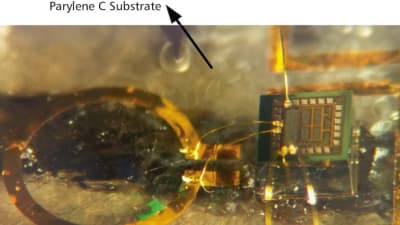
An invention that uses microchip technology in implantable devices and other wearable products such as smart watches can be used to improve biomedical devices including those used to monitor people with glaucoma and heart disease. Read on to learn more.
Articles: AR/AI
Thanks to Internet of Things technologies, there are many ways to make previously unconnected things talk. Processes, conditions, equipment, or machines have much to say about themselves and help keep the industry applications they’re integrally involved in running smoothly.

Products: Software
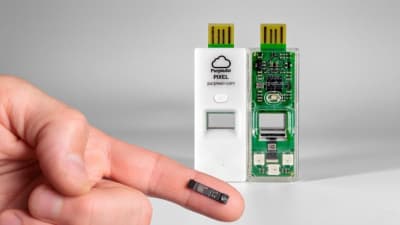
See the new products, including Teledyne FLIR's radiometric models of its high-performance Boson®+ thermal and Hadron™ 640R+ dual thermal-visible camera modules; Insight SIP's ISP2554-HM module — a dynamic IOT node, with support for Bluetooth Low Energy, Thread, and Zigbee radios; Bosch Sensortec's BMV080 particulate matter sensor; dSPACE's MicroLabBox II, a very flexible entry-level system for closed-loop tests at the controller level; and more.
Briefs: Sensors/Data Acquisition
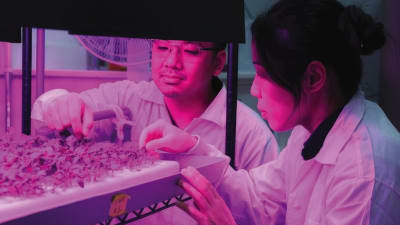
Researchers have developed a groundbreaking near-infrared fluorescent nanosensor capable of simultaneously detecting and differentiating between iron forms — Fe(II) and Fe(III) — in living plants. Read on to learn more about it.
Briefs: Photonics/Optics
Residents of the Manu’a Islands in American Samoa were feeling the earth shake, raising concerns of an imminent volcanic eruption or tsunami. Scientists from the U.S. Geological Survey used machine learning and a technique called template matching on shaking data recorded from a single seismic sensor located 250 kilometers away to locate the source of the shaking. Read on to learn more.

Briefs: Materials
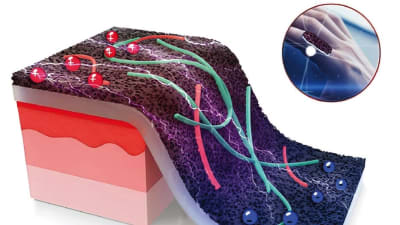
A major challenge in self-powered wearable sensors for health care monitoring is distinguishing different signals when they occur at the same time. Researchers addressed this issue by uncovering a new property of a sensor material, enabling the team to develop a new type of flexible sensor that can accurately measure both temperature and physical strain simultaneously but separately to more precisely pinpoint various signals. Read on to learn more.
Application Briefs: Information Technology
While the rapid advancement of IIoT applications is exciting, it also come with its challenges, especially from a security perspective. A recent study found that 57 percent of all IoT devices are vulnerable to medium- or high-severity threats and that two in five chief information security officers struggle to gain visibility into — and understand — their IoT deployments. Read on to learn more.
Application Briefs: Sensors/Data Acquisition
The MEMS industry can’t match the rapid innovation cycles typical of the semiconductor industry — it’s been more than a decade since we’ve seen a major leap in MEMS manufacturing processes. However, Omnitron is confident that they can rapidly improve the approach to manufacturing MEMS. Read on to learn more.

Special Reports: Sensors/Data Acquisition

Unmanned Aerial Vehicles & Systems - April 2025
How next‐gen edge computers will shape drone warfare…first tests of a drone‐killing RF weapon…AI‐trained vehicles adjust to extreme turbulence on the fly. Read about these and other...Blog: Motion Control
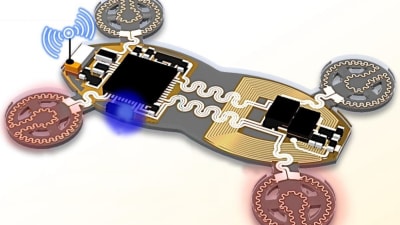
A tiny, soft, flexible robot that can crawl through earthquake rubble or travel inside the human body may seem like science fiction, but a team is pioneering such adaptable robots by integrating flexible electronics with magnetically controlled motion.
Special Reports: Sensors/Data Acquisition

Electric Vehicles - April 2025
In this collection of articles from the editors of Automotive Engineering and Battery & Electrification Technology, get an inside look at Hyundai's electrified and hydrogen future, Mercedes' innovative 'in...White Papers: Robotics, Automation & Control

How High-performance Micrometers Set New Standards in Precision and Versatility
Optical micrometers detect and measure a range of process variables in industrial production, including thickness, gaps, edges, and segments. This article explores...INSIDER: Sensors/Data Acquisition
A tiny, soft, flexible robot that can crawl through earthquake rubble to find trapped victims or travel inside the human body to deliver medicine may seem like science fiction, but an...

Blog: Sensors/Data Acquisition
A research team has developed an electronic skin that detects and precisely tracks magnetic fields with a single global sensor. Read on to learn more.

Technology & Society: Software
A wave-powered remote sensing platform enhances data collection and processing at sea.

Quiz: Sensors/Data Acquisition
Smart glasses are wearable devices that integrate computer technology into eyeglasses. These glasses work by projecting digital images onto the user’s field of vision. Test your knowledge about smart glasses.

INSIDER: Sensors/Data Acquisition
Imagine navigating a virtual reality with contact lenses or operating your smartphone under water — this and more could soon be a reality thanks to innovative e-skins. A research team...

INSIDER: Government
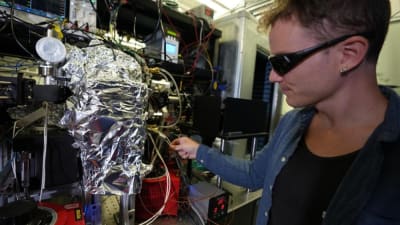
Scientists at the National Institute of Standards and Technology (NIST) have created a new thermometer using atoms boosted to such high energy levels that they are a thousand...
INSIDER: Electronics & Computers
Researchers from the National University of Singapore (NUS) have demonstrated that a single, standard silicon transistor, the fundamental building block of microchips used in...
INSIDER: Electronics & Computers
When it comes to haptic feedback, most technologies are limited to simple vibrations. But our skin is loaded with tiny sensors that detect pressure, vibration, stretching, and more. Now,...

Products: Physical Sciences
See what's new on the market, including Endress+Hauser's FMR63B 80 GHz radar level sensor; the TP-108 Series, the smallest of all test points from Components Corporation; Sumida America's family of Resin-Shielded Surface-Mount Power Inductors; Coilcraft's XGL3020 series of ultra-low loss power inductors; Yokogawa Electric Corporation's OpreX™ Intelligent Manufacturing Hub; and much more.

Briefs: Sensors/Data Acquisition
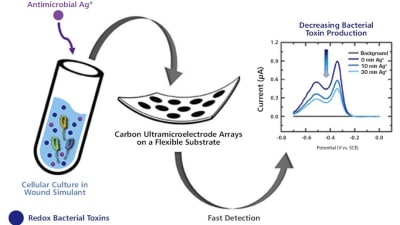
Researchers from Skoltech and the University of Texas at Austin have presented a proof-of-concept for a wearable sensor that can track healing in sores, ulcers, and other kinds of chronic skin wounds, even without the need to remove the bandages. Read on to learn more.
Briefs: Sensors/Data Acquisition
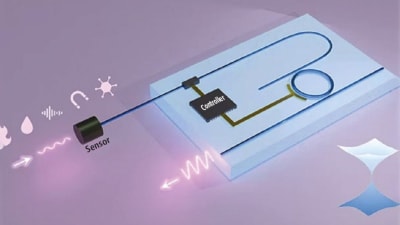
New research unlocks the power of exceptional points (EPs) for advanced optical sensing. In a study published in Science Advances , a team showed that these unique EPs — specific conditions in systems where extraordinary optical phenomena can occur — can be deployed on conventional sensors to achieve a striking sensitivity to environmental perturbations. Read on to learn more.
Briefs: Imaging
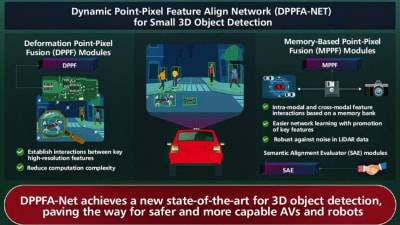
Scientists have developed multi-modal 3D object detection methods that combine 3D LiDAR data with 2D RGB images taken by standard cameras. While the fusion of 2D images and 3D LiDAR data leads to more accurate 3D detection results, it still faces its own set of challenges, with accurate detection of small objects remaining difficult. Read on to learn more about it.
Articles: Power
Motor commutation involves the process of switching between motor phases to ensure smooth, continuous operation. In this article, we’ll dive into the importance of commutation, explain how it works, and discuss the challenges faced when trying to pair different motors and drives, especially across brands.

Top Stories
 Blog: Power

My Opinion: We Need More Power Soon — Is Nuclear the Answer?
 Blog: AR/AI
Aerial Microrobots That Can Match a Bumblebee's Speed
 News: Energy

 Blog: Electronics & Computers

Turning Edible Fungi into Organic Memristors
 Blog: Robotics, Automation & Control

Microscopic Swimming Machines that Can Sense, Respond to Surroundings
 INSIDER: Sensors/Data Acquisition
Webcasts
 Upcoming Webinars: Energy

Hydrogen Engines Are Heating Up for Heavy Duty
 Upcoming Webinars: Electronics & Computers

Advantages of Smart Power Distribution Unit Design for Automotive...
 Upcoming Webinars: Unmanned Systems

Quiet, Please: NVH Improvement Opportunities in the Early Design...
 Upcoming Webinars: AR/AI

From Spreadsheets to Insights: Fast Data Analysis Without Complex...
 Upcoming Webinars: Automotive

Battery Abuse Testing: Pushing to Failure
 Upcoming Webinars: AR/AI