Stories
41
80
0
2220
30
Products: Manufacturing & Prototyping
Prova Systems (Carbondale, PA) has announced its Vehicle Inertia Monitor (VIM). The VIM is a dual-mode advanced J1939 CAN-bus vibration analyzer and vehicle attitude sensor for heavy duty vehicle prognostics and...

Products: Manufacturing & Prototyping
STMicroelectronics (Geneva, Switzerland) has introduced two central airbag crash sensors. The AIS1120SX and AIS2120SX single- and dual-axis 120g in-plane MEMS accelerometers are designed to be mounted in the vehicle’s...

Products: Manufacturing & Prototyping
New Avionics Corp (Ft. Lauderdale, FL) has announced its Ice*Meister™ Model 9732-PLASTIC Ice Detecting Sensor for Aircraft. The unit consists of a probe, housing, circuit board, and lightweight blue cable. The product, tested at...

Products: Sensors/Data Acquisition
The new Revolution series of q-switched, green, pulsed lasers from Coherent, Inc. (Santa Clara, CA) provides average power up to 80W at a wavelength of 527 nm, with a beam profile featuring an extremely smooth energy...

Application Briefs: Unmanned Systems
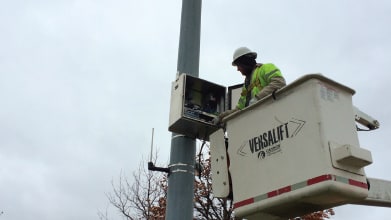
In an effort to improve traffic flow, driver safety, and asset management, the Michigan Department of Transportation (DOT) has installed 17 sensors on a 50-mile stretch of...
Articles: Sensors/Data Acquisition
Successful magnetic circuits are built upon proper planning and design principles. Experienced design engineers take a holistic approach to the design process by considering the full...

Articles: Sensors/Data Acquisition
The field of wireless vital sign monitoring has a relatively long history, almost as long as radar itself. Doppler radar has been the primary sensor technology for detecting blood flow or...

Articles: Unmanned Systems
A new imaging sensor created by a team at Carnegie Mellon University and the University of Toronto allows depth cameras to operate effectively in bright sunlight. The researchers, including Srinivasa...

Briefs: Data Acquisition
GRAVITE Pull Server
Government Resource for Algorithm Verification, Independent Test, and Evaluation (GRAVITE) system is a National Oceanic and Atmospheric Administration (NOAA) system, developed and deployed by Joint Polar Satellite System (JPSS) Ground Project to support Calibration and Validation (Cal/Val), Data Quality Monitoring, and Algorithm...
Briefs: Sensors/Data Acquisition
Spacesuit Glove Cut/Damage Warning System
Current spacesuit gloves used by astronauts on the International Space Station (ISS) have sustained cuts during extravehicular activities (EVAs) due to sharp edges and burrs, possibly on damaged ISS handrails. A warning system in the glove would aid in identifying the location of sharp objects and the...
Briefs: Sensors/Data Acquisition
X1 Human Interface Detection System (HIDS)
This innovation is a sensor technology that can detect pressures, such as ground force reactions, down to 30 g in weight with a minimum resolution of 5 × 5 mm (resolution dictated by the limitations of the resistor grid array). This device uses a commercially available resistor grid array and custom...
Briefs: Sensors/Data Acquisition
Non-Intrusive, On-Line, Simultaneous Multi-Species Impurity Monitor for Hydrogen Gas
In testing hydrogen-fueled engines, the purity of the hydrogen fuel is important. Hydrogen may become contaminated with nitrogen (N2), argon (Ar), or oxygen (O2), thereby making the hydrogen unusable for engine testing at Stennis Space Center (SSC). Therefore, for...
Briefs: Sensors/Data Acquisition
Satellite Situation Update
Satellite Situation Update (SSUP) software shows the current locations of a selected set of orbiting spacecraft, along with each satellite’s ground track and/or orbit shape. SSUP is intended as a real-time display, showing multiple spacecraft, that is suitable for a large wall monitor meant to be in public spaces for...
Briefs: Sensors/Data Acquisition
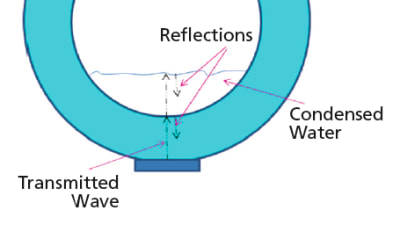
An algorithm for analyzing wave reflections and time-of-flight ultrasonic pulse-echo data has been developed for monitoring the health of steam...
Briefs: Sensors/Data Acquisition
GRAVITE Monitor
Government Resource for Algorithm Verification, Independent Test, and Evaluation (GRAVITE) system is a National Oceanic and Atmospheric Ad - ministration (NOAA) system, developed and deployed by Joint Polar Satellite System (JPSS) Ground Project to support Calibration and Validation (Cal/Val), Data Quality Monitoring, and Algorithm...
Briefs: Sensors/Data Acquisition
GRAVITE Database
Government Resource for Algorithm Verification, Independent Test, and Evaluation (GRAVITE) system is a National Oceanic and Atmospheric Administration (NOAA) system, developed and deployed by Joint Polar Satellite System (JPSS) Ground Project to support Calibration and Validation (Cal/Val), Data Quality Monitoring, and Algorithm...
Briefs: Sensors/Data Acquisition
Hyperlinked Overview of Piloted Evaluations (HOPE) Web- Based Data Archive
The Hyperlinked Overview of Piloted Evaluations (HOPE) application provides an interface for users to enter data on pilots, metrics, configurations, tasks, and data collection sessions, as well as descriptive information for each item and the experiment as a whole. As this...
Briefs: Sensors/Data Acquisition
SMAP SDS Science Processing and Data Management System
The Science Processing and Data Management (SPDM) system’s primary functions are to control and monitor science processes and data products for Soil Moisture Active Passive (SMAP) Science Data System (SDS). SPDM adapts the Apache/OODT Framework 0.3 as the basic infrastructure. Although the...
Briefs: Sensors/Data Acquisition
GRAVITE Upload Tool
Government Resource for Algorithm Verification, Independent Test, and Evaluation (GRAVITE) system is a National Oceanic and Atmospheric Administration (NOAA) system, developed and deployed by Joint Polar Satellite System (JPSS) Ground Project to support Calibration and Validation (Cal/Val), Data Quality Monitoring, and Algorithm...
Briefs: Sensors/Data Acquisition
GRAVITE Planner
Government Resource for Algorithm Verification, Independent Test, and Evaluation (GRAVITE) system is a National Oceanic and Atmospheric Administration (NOAA) system, developed and deployed by Joint Polar Satellite System (JPSS) Ground Project to support Calibration and Validation (Cal/Val), Data Quality Monitoring, and Algorithm...
Briefs: Sensors/Data Acquisition
GRAVITE Distribution
Government Resource for Algorithm Verification, Independent Test, and Evaluation (GRAVITE) system is a National Oceanic and Atmospheric Administration (NOAA) system, developed and deployed by Joint Polar Satellite System (JPSS) Ground Project to support Calibration and Validation (Cal/Val), Data Quality Monitoring, and...
Briefs: Sensors/Data Acquisition
GRAVITE Incinerator
Government Resource for Algorithm Verification, Independent Test, and Evaluation (GRAVITE) system is a National Oceanic and Atmospheric Administration (NOAA) system, developed and deployed by Joint Polar Satellite System (JPSS) Ground Project to support Calibration and Validation (Cal/Val), Data Quality Monitoring, and Algorithm...
Briefs: Sensors/Data Acquisition
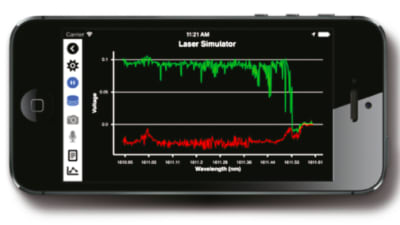
Most instruments under development rely on a traditional computer or laptop, LabVIEW software, and data acquisition (DAQ) components (which interface between the instrument and the...
Briefs: Sensors/Data Acquisition
ATMS Antenna Beam Analysis Software
The Advanced Technology Microwave Sounder (ATMS) Antenna Beam Analysis Software uses a suite of test data to calculate the ATMS instrument beam pointing, and secondarily, the polarization state, in the coordinates of the onboard optical cube. The software uses measurement inputs of RF radiation pattern...
Briefs: Sensors/Data Acquisition
Convective weather systems, i.e., thunderstorms, are the leading cause of flight delay in U.S. airspace. Airline dispatchers must file their flight plans 1 to 2 hours before takeoff, and are often required to...

INSIDER: Mechanical & Fluid Systems
Engineers Put 'Spring' in Robots' Step
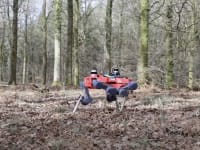
The ATRIAS robot model developed at Oregon State University uses a "spring-mass" walking approach. The natural-gait method gives human-sized bipedal robots the ability to blindly react to rough terrain, maintain balance, retain an efficiency of motion, and walk like humans.
INSIDER: Data Acquisition
New Sensor Peers Inside Fingertip
Scientists from The Langevin Institute, Paris, France, have constructed a new fingerprint imaging system that peers inside the finger to take a picture — a more reliable and secure way of identifying individuals. The fingerprint sensor, based on full field optical coherence tomography (FF-OCT), uses an...
INSIDER: Test & Measurement
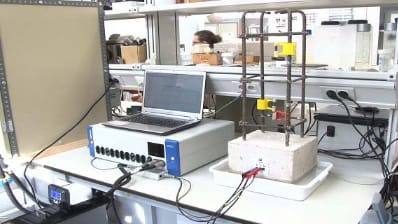
Researchers from the Polytechnic University of Valencia (UPV) have developed a new sensor system that detects quickly and nondestructively the risk of corrosion in the concrete...
INSIDER: Sensors/Data Acquisition
A team of researchers in the Cockrell School of Engineering at The University of Texas at Austin has invented a method for producing inexpensive and high-performing wearable...

Top Stories
 Blog: Power

My Opinion: We Need More Power Soon — Is Nuclear the Answer?
 Blog: AR/AI
Aerial Microrobots That Can Match a Bumblebee's Speed
 News: Energy

 Blog: Electronics & Computers

Turning Edible Fungi into Organic Memristors
 Blog: Robotics, Automation & Control

Microscopic Swimming Machines that Can Sense, Respond to Surroundings
 INSIDER: Sensors/Data Acquisition
Webcasts
 Upcoming Webinars: Energy

Hydrogen Engines Are Heating Up for Heavy Duty
 Upcoming Webinars: Automotive

Advantages of Smart Power Distribution Unit Design for Automotive...
 Upcoming Webinars: Transportation

Quiet, Please: NVH Improvement Opportunities in the Early Design...
 Upcoming Webinars: Sensors/Data Acquisition

From Spreadsheets to Insights: Fast Data Analysis Without Complex...
 Upcoming Webinars: Power

Battery Abuse Testing: Pushing to Failure
 Upcoming Webinars: Connectivity