Stories
6,36,37,43,46,48,50,56,58,59,60
7,8,36,110,131,134,135,138,139,141,142,144,145,151,152,201,202
-1
1740
30
Technology Leaders: Energy
Ultra-thin piezoresistive sensors can be used in both R&D and as embedded components to develop safer, longer-lasting lithium-ion battery technologies.
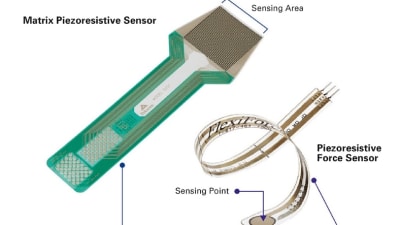
Briefs: Mechanical & Fluid Systems
Researchers have developed a millimeter-thick accelerometer.
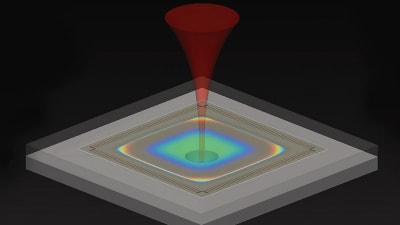
Briefs: Test & Measurement
Applications include remote sensing, laser spectroscopy, and gas analysis.

Briefs: Electronics & Computers
The transistors enable power converters to perform at substantially improved efficiencies, especially in high-power applications.

Q&A: Imaging
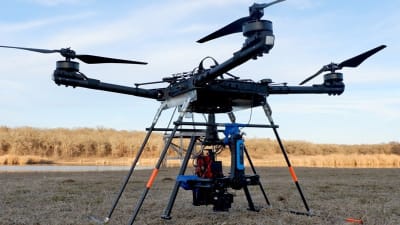
New autonomous robotic devices can survey hazardous or difficult-to-reach sites faster than humans.
Application Briefs: Transportation
The SuperElastic Tire — a NASA Glenn innovation — can be used on both Earth and Mars.

Briefs: Semiconductors & ICs
The technology could boost quantum computers and other superconducting electronics.

Briefs: Test & Measurement
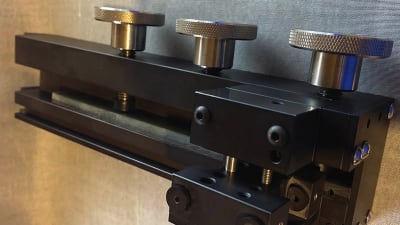
The device uses load frames to test bonded structures in aerospace, automotive, defense, and energy storage applications.
Briefs: Robotics, Automation & Control
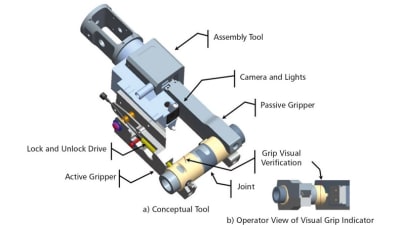
Applications include portable aerospace structures and terrestrial structures such as cleanrooms and field hospitals.

Briefs: Medical
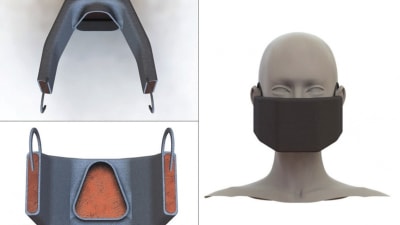
The reusable mask would include a heated copper mesh powered by a battery and surrounded by insulating neoprene.
Briefs: Test & Measurement
Mobile radar devices could replace standard stethoscopes.

Briefs: Materials
A smartphone, combined with nanoscale porous silicon, enables inexpensive, simple, home diagnostics.
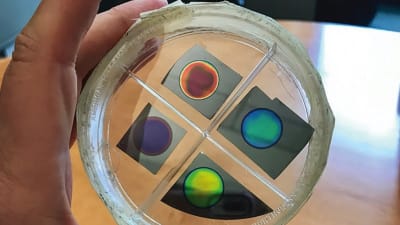
Briefs: Mechanical & Fluid Systems
Due to the chemical stability and durability of industrial polymers, plastic waste does not easily degrade in landfills and is often burned, which produces carbon dioxide and other hazardous gases. In order...

Articles: AR/AI
Head-up displays, health-monitoring sensors from NASA, and a pollen sponge.
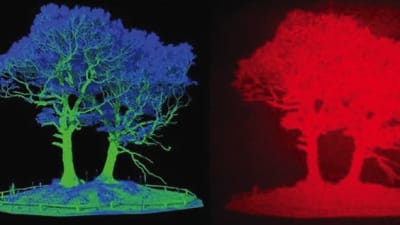
Briefs: Wearables
Nearly 100% of all-carbon-based transistors are reclaimed while retaining future functionality of the materials.

Briefs: Connectivity
The device, powered by ultrasound waves, could help doctors monitor the health of transplanted organs and provide early warning of potential transplant failure.

Briefs: Nanotechnology
The new photonic architecture could transform digital communications, artificial intelligence, and quantum computing.

Briefs: Robotics, Automation & Control
This software could also be used for indoor navigation assistance for the visually impaired.

NASA Spinoff: Aerospace
The interface enables one person to accomplish tasks that previously required two sets of hands.

Application Briefs: Robotics, Automation & Control
The Cold Operable Lunar Deployable Arm (COLDArm) is a first-of-its-kind robotic technology.
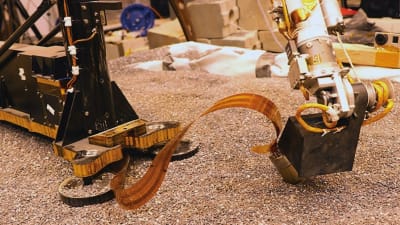
Question of the Week: Propulsion
Will 'Zero-Impact' Planes Take Off?
Our May issue of Tech Briefs highlighted a hybrid-electric aircraft design from MIT that, according to its creators, could reduce global nitrogen oxide (NOx) emissions by 95 percent.
Question of the Week: Aerospace
Will We See Human Exploration on Mars by 2040?
An INSIDER story last week highlighted another recent achievement on Mars: A rover instrument known as “MOXIE” created oxygen from the Martian atmosphere. The NASA-led demonstration is a first step toward human presence on the Red Planet, according to MOXIE principal lead Michael Hecht.
Special Reports: Materials
Advanced Materials & Coatings - May 2021
New diamond super-material enhances military aircraft survivability…a gold film gives robots “chameleon skin”…shape-shifting nanomaterial offers exciting biotech applications…aerogel-reinforced...Application Briefs: Nanotechnology
Learn about tooling challenges and other considerations when designing micro-optics, including metrology equipment capabilities, and post-molding assembly.

Briefs: Photonics/Optics
A team has introduced a new method for taking high-res images of fast-moving and rotating objects in space, such as satellites or debris in low-Earth orbit.

Briefs: Test & Measurement
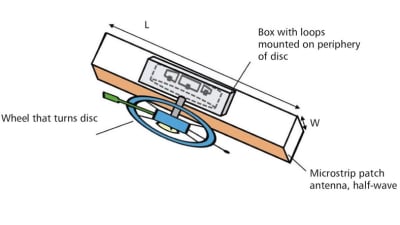
Innovators have developed an RFID-based system for sensing the angular position of rotating systems. The RFID-Based Rotary Position Sensor can be used as a position/orientation sensor or implemented in a...
Briefs: Motion Control
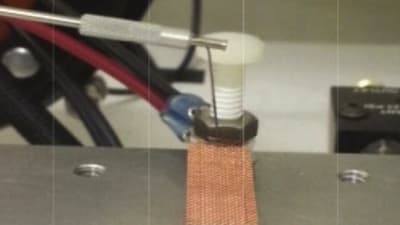
NASA Marshall Space Flight Center developed designs for two micro-electromechanical systems (MEMS) motion and position sensors: a single-axis accelerometer and a gyroscope....
Facility Focus: Manufacturing & Prototyping
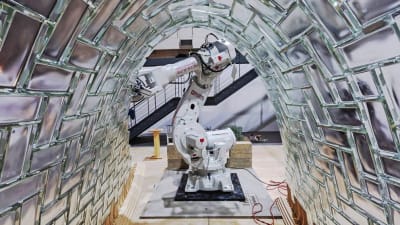
Notable graduates of the school include Amazon CEO and founder Jeff Bezos, Google executive Eric Schmidt, Internet pioneer Bob Kahn, former Chrysler head Lee Iacocca, and six NASA astronauts.
Top Stories
 Blog: Power

My Opinion: We Need More Power Soon — Is Nuclear the Answer?
 Blog: AR/AI
Aerial Microrobots That Can Match a Bumblebee's Speed
 News: Energy

 Blog: Electronics & Computers

Turning Edible Fungi into Organic Memristors
 Blog: Robotics, Automation & Control

Microscopic Swimming Machines that Can Sense, Respond to Surroundings
 INSIDER: Sensors/Data Acquisition
Webcasts
 Upcoming Webinars: Energy

Hydrogen Engines Are Heating Up for Heavy Duty
 Upcoming Webinars: Electronics & Computers

Advantages of Smart Power Distribution Unit Design for Automotive...
 Upcoming Webinars: Unmanned Systems

Quiet, Please: NVH Improvement Opportunities in the Early Design...
 Upcoming Webinars: AR/AI

From Spreadsheets to Insights: Fast Data Analysis Without Complex...
 Upcoming Webinars: Automotive

Battery Abuse Testing: Pushing to Failure
 Upcoming Webinars: AR/AI