

-1
330
30
Briefs: Lighting
Researchers have designed and synthesized a unique material with controllable capabilities that make it promising for future electronics including cellphones and computers. Read on to learn more.

Briefs: Electronics & Computers
The mass production of conventional silicon chips relies on a successful business model with large “semiconductor fabrication plants” or “foundries.” New research by KU Leuven and imec shows that this “foundry” model can also be applied to the field of flexible, thin-film electronics. Read on to learn more.

Briefs: Sensors/Data Acquisition
A team of researchers has developed self-powered, wearable, triboelectric nanogenerators (TENGs) with polyvinyl alcohol (PVA)-based contact layers for monitoring cardiovascular health. TENGs help conserve mechanical energy and turn it into power. Read on to learn more.

Briefs: Design
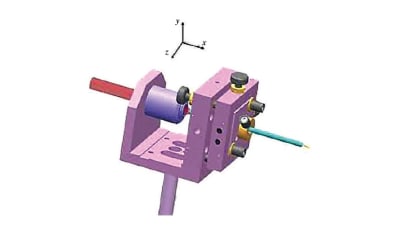
Changing the shape of the blade will expand the possibilities of using the laser in medicine.
Briefs: Medical
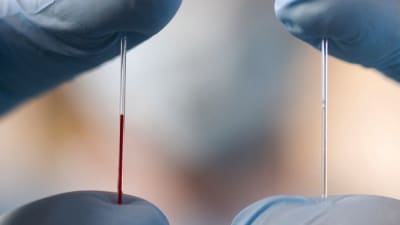
Using an array of tiny needles that are almost too small to see, researchers have developed a minimally invasive technique for sampling a largely unexplored human bodily fluid that could potentially provide a new source of information for routine clinical monitoring and diagnostic testing. Read on to learn more.
Briefs: Energy
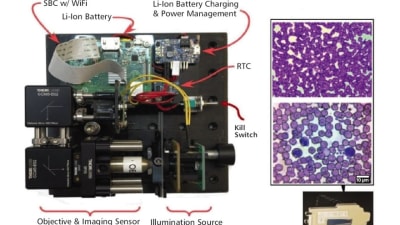
Innovators at NASA Johnson Space Center have developed a handheld digital microscope to fill the critical microscopy needs of human space exploration by providing flight crews in situ hematological diagnostic and tracking ability to assess and monitor crew health in the absence of gravity. Read on to learn more.
Briefs: Energy
In an important step toward bringing transparent solar cells to home windows, researchers at the University of Michigan have developed a way to manufacture highly efficient and semitransparent solar cells. Read on to learn more about it.

Briefs: Green Design & Manufacturing
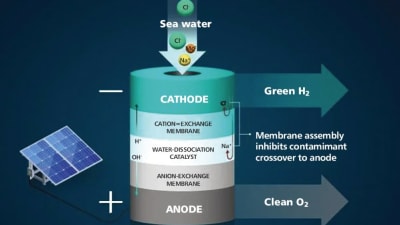
Researchers have found a way to tease hydrogen out of the ocean by funneling seawater through a double-membrane system and electricity. The design successfully generated hydrogen gas without producing large amounts of harmful byproducts. Read on to learn more.
Briefs: Energy
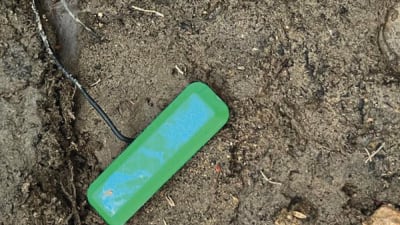
A Northwestern University-led team of researchers has developed a new fuel cell that harvests energy from microbes living in dirt. About the size of a standard paperback book, the completely soil-powered technology could fuel underground sensors used in precision agriculture and green infrastructure. Read on to learn more.
Products: Electronics & Computers
See what's new on the market, including SBG Systems' expansion of its high-performance inertial navigation systems, Ekinox, Apogee, and Navsight, with new GNSS receiver options; Littelfuse's 823A Series fuse, an AEC-Q200-qualified, high-voltage-rated surface-mount fuse; Würth Elektronik's Thyone-e radio module; the new handheld scanner from FARO Technologies; and more.

Articles: Medical
See the products of tomorrow, including seals that actively self-clean in a continuous or periodic manner; a method to grow artificial muscle tissue that twitches and flexes in multiple coordinated directions; and a compact and versatile robot that can maneuver through tight spaces and transport payloads much heavier than itself.

Products: Power
See the product of the month: Power Integrations' HiperLCS™-2 chipset. The new device can deliver up to 1650 W of continuous output power with over 98 percent efficiency and permits brief peak loads of 2.5 kW.

Q&A: Design
Professor Sameh Tawfick and his team at the University of Illinois, Champaign-Urbana have developed a 3D process that grows polymer objects in a controlled manner to achieve a desired shape.

NASA Spinoff: Medical
Creators of the original antigravity treadmill for astronauts in space have now developed a new treadmill that uses air pressure to counter gravity, making running possible for people with injuries and other conditions.

5 Ws: Motion Control
GOAT (Good Over All Terrains), a bioinspired robot developed at EPFL, can change shape to alter its own physical properties in response to its environment, resulting in a robust and efficient autonomous vehicle.

Articles: Energy
Along with rapid innovation in cooling methods, a major trend in EV thermal management is the use of technology to better design more thermally efficient vehicle architectures. AI and digital technologies have been major boons to the engineering toolkit for better design, helping to radically speed up system testing and development. Read on to learn more.

Articles: Energy
It’s important to note that skepticism toward AI is reminiscent of past attitudes toward now-standard technologies. Thirty years ago, tools such as CFD were met with trepidation — an attitude defined by limited understanding. Today, engineers see them as indispensable. Similarly, adopting AI requires a shift in perspective and embracing its potential.

Briefs: Power
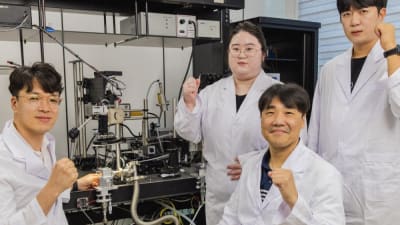
A research team led by Dr. Daeho Kim and Dr. Jong Hwan Park at the Nano Hybrid Technology Research Center of the Korea Electrotechnology Research Institute has developed a groundbreaking process technology that enables ultrafast, 30-second preparation of hard carbon anodes for sodium-ion batteries, using microwave induction heating. Read on to learn more.
Briefs: Energy
The triple-layer solid electrolyte features a robust middle layer that boosts the battery’s mechanical strength, while its soft outer surface ensures an excellent electrode contact, facilitating an easy movement of lithium ions. Read on to learn more.

Briefs: Energy
A team of researchers from Japan has developed a non-flammable quasi-solid-state LIB that can overcome the limitations of conventional batteries. Read on to learn more.

Briefs: Green Design & Manufacturing
A research team has developed a novel technology for directly recycling spent cathode materials from lithium-ion batteries through a simple process that addresses the limitations of conventional recycling methods. This innovative approach restores the spent cathode to its original state. Read on to learn more.

Products: Energy
See the new products, including KULR Technology Group's NASA-certified M35A battery cells; Nexperia's 650 V, 10 A silicon carbide (SiC) Schottky diode; Rotor Clip's patented InterShim™ Wave Spring design; and more.

Articles: Test & Measurement
Whatever technology is employed in the future, it is clear that battery test systems will continue to adapt to keep pace with changes in EV battery technology and production. Ensuring that you choose a future proof, scalable, and capable bi-directional DC source is critical in planning for testing success today and tomorrow. Read on to learn more.
Articles: Energy
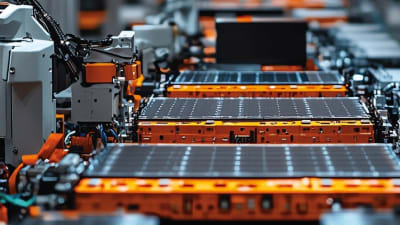
Research and development aimed at optimizing both the technology and the cost of that most expensive of EV components — the battery — continues. Not only are the makers of current batteries under pressure to produce the highest-quality product, but they may also be considering how to participate and compete in the next-generations of these key components. Read on to learn more.

Articles: Automotive
Today, electrically actuated (servo-electric) test systems have emerged as a preferred alternative to servo-hydraulics that have traditionally been used. Michigan-based eMpulse Test Systems is a supplier of these advanced testing systems. Read on to learn more.

Application Briefs: Robotics, Automation & Control
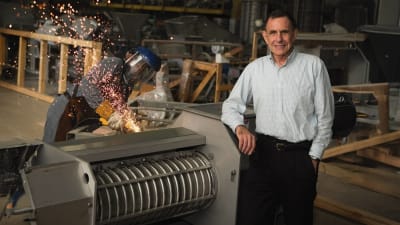
Mesekon Oy, a Finnish welding manufacturer that produces complex welded steel structures for the marine, energy, and paper industries, needed a flexible and collaborative solution to improve efficiency, reduce defects, and enhance workplace ergonomics by automating repetitive and physically demanding welding operations. Read on to learn what Mesekon Oy did.

Application Briefs: Robotics, Automation & Control
Los Angeles-based plastics contract manufacturer Kal Plastics deployed UR10e trimming cobot for a fraction of the cost and lead time of a CNC machine, cut trimming time nearly in half, and reduced late shipments to under one percent — all while improving employee safety and growth opportunities. Read on to learn more.

Application Briefs: Mechanical & Fluid Systems
The applications that require dewatering are too numerous to list in their entirety. Dewatering is a process that — as its name suggests — separates fluids from solids, often converting what would otherwise go down the drain or end up in a landfill into saleable products. Read on to learn more about it and how gear motors come into play.
Briefs: Motion Control
A team of MIT engineers has developed a training method for multiagent systems that can guarantee their safe operation in crowded environments. Read on to learn more about it.

Top Stories
 Blog: Lighting

A Stretchable OLED that Can Maintain Most of Its Luminescence
 Blog: Energy

Batteries that Can Withstand the Cold
 INSIDER: Energy

Advancing All-Solid-State Batteries
 Quiz: Energy

 Blog: Physical Sciences

 Blog: Materials

Webcasts
 Upcoming Webinars: Test & Measurement

From Spreadsheets to Insights: Fast Data Analysis Without Complex...
 Upcoming Webinars: Electronics & Computers

Cooling a New Generation of Aerospace and Defense Embedded...
 Upcoming Webinars: Test & Measurement

Beyond AI-Copy-Paste Engineering: Advanced AI-Integration Success...
 Upcoming Webinars: Automotive

Battery Abuse Testing: Pushing to Failure
 Upcoming Webinars: Internet of Things

A FREE Two-Day Event Dedicated to Connected Mobility
 Upcoming Webinars: Test & Measurement

Choosing the Right N-Port Strategy: Multiport VNAs vs. Switch...