

-1
390
30
Briefs: Sensors/Data Acquisition
Jamie Paik and colleagues in the Reconfigurable Robotics Lab in EPFL’s School of Engineering have developed a sensor that can perceive combinations of bending, stretching, compression, and temperature changes, all using a robust system that boils down to a simple concept: color. Read on to learn more about it.

Briefs: Software
Innovators at NASA Johnson Space Center have developed an adaptable RFID system that optimizes transmission for priority data as targets move in and out of passive coverage areas. The method extends the range, and reduces data latency, of ultra-low power battery-assisted passive RFID sensor tags. Read on to learn more.
Briefs: Robotics, Automation & Control
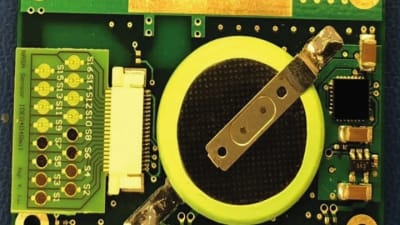
In a recent study published in the journal eLife, an international research group has studied the relationship between electrical stimulation in stick insects’ leg muscles and the resultant torque (the twisting force that makes the leg move). Read on to learn what they found.

Briefs: Physical Sciences
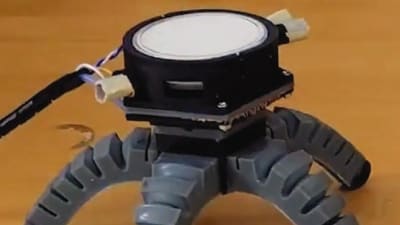
In creating a pair of new robots, Cornell researchers cultivated an unlikely component: fungal mycelia. By harnessing mycelia’s innate electrical signals, the researchers discovered a new way of controlling “biohybrid” robots that can potentially react to their environment better than their purely synthetic counterparts. Read on to learn more.
Briefs: Electronics & Computers
A new study led by Flinders University and French researchers has used a novel bio-inspired computing artificial intelligence solution to improve the potential of UUVs and other adaptive control systems to operate more reliability in rough seas and other unpredictable conditions. Read on to learn more.

Briefs: Energy
A PNNL research team used a simple mixed-salt water-based solution and their knowledge of metal properties to separate valuable minerals in continuously flowing reaction chambers. Read on to learn more.

Briefs: Green Design & Manufacturing
Researchers have developed a strategy to design luminescent polymers with high light-emitting efficiencies from the start that are both biodegradable and recyclable. Read on to learn more.

Briefs: Energy
NASA Ames Research Center presents a novel, patent-pending adjustable-autonomous intelligent systems approach for developing sustainable, small-scale reproductions of subsets of the Earths biosphere that can be distributed both on and beyond Earth, for improving the quality of life for all life, expanding the diversity of life, studying and protecting life, as well as enabling life to permanently extend beyond Earth. Read on to learn more.

Products: Internet of Things
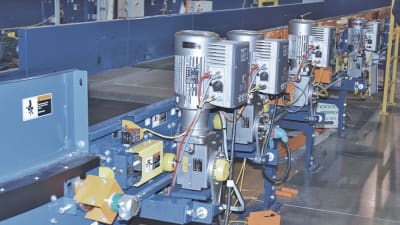
See what's new on the market, including electronic control products from NORD DRIVESYSTEMS; the new F-141 photonics alignment system from PI; InnoPhase IoT's expansion of its Talaria platform; Aerotech, Inc.'s HexGen® HEX150-125HL Miniature Hexapod; and more.
Articles: Sensors/Data Acquisition
See the products of tomorrow, including paper-thin optical lenses simple enough to mass produce like microchips; a compact cooling technology that can pump away heat continuously using layers of flexing thin films; and a multilayered chip design that doesn’t require any silicon wafer substrates and works at temperatures low enough to preserve the underlying layer’s circuitry.

Application Briefs: Test & Measurement
Collier Aerospace’s design and analysis software enabled Swift Engineering to optimize nose cone structure of X-59 aircraft, designed for quieting sonic booms.

Q&A: Manufacturing & Prototyping
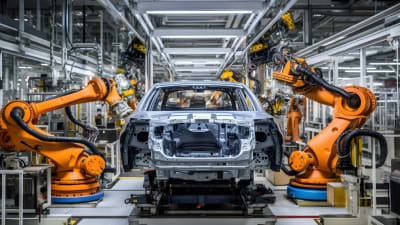
Qing “Cindy” Chang and her team at the University of Virginia have made a significant advancement in manufacturing technology by developing an AI-driven system that could transform how factories operate. Using Multi-Agent Reinforcement Learning (MARL), the team has created a more efficient way to optimize manufacturing systems, improving both speed and quality while reducing waste.
NASA Spinoff: Aerospace
The first practical fuel cells were developed in preparation for NASA’s Apollo missions because batteries would have weighed too much. The group that produced these fuel cells, now called HyAxiom Inc., sells commercial fuel cells to power buildings and utilities.

5 Ws: Robotics, Automation & Control
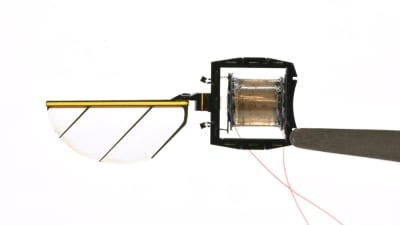
MIT researchers are developing robotic insects that could someday swarm out of mechanical hives to rapidly perform precise pollination.
Briefs: Software
The technology has the potential for many applications including enhancing pilot training for peak performance and alertness, developing software, training programs, and services for well-being and healthcare, as well as revolutionize the gaming industry by creating interactive video games. Read on to learn more.

Briefs: Robotics, Automation & Control
A team has programmed a robotic spacecraft simulator with what it calls s-FEAST: Safe Fault Estimation via Active Sensing Tree Search. Read on to learn more.

Products: Software
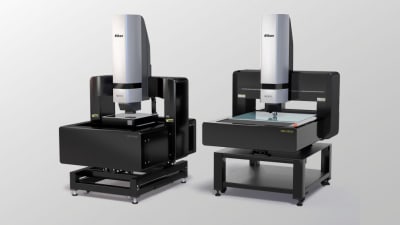
See what's new on the market, including Nikon Corporation's NEXIV VMF-K Series, a next-generation video measuring system; the surfaceCONTROL 3D snapshot sensors from Micro-Epsilon; InfraTec's INDU-SCAN base, a flexible and cost-effective thermography solution for use in industrial applications 24/7; Curtiss-Wright Actuation Division's Exlar® electric actuator product offerings; and more.
Articles: Medical
See the products of tomorrow, including a nanorobotic hand made of DNA that can grab viruses for detection or inhibition developed at the University of Illinois Urbana-Champaign; a new and improved wearable ultrasound patch for continuous and noninvasive blood pressure monitoring developed at the University of California San Diego; and soft and intelligent sensor materials based on ceramic particles developed at Empa’s Laboratory for High-Performance Ceramics.

Products: Electronics & Computers
See the product of the month: Darveen Co.'s SPC-9000 Series IP66 stainless steel touch panel PCs, which are specifically designed to meet high hygiene standards, making them ideal for food processing, pharmaceutical, and chemical industries, and humid or hot kitchen environments.

Articles: RF & Microwave Electronics
A renewed focus on space sustainability has led to the emergence of several new space startups that are thinking out of the box to find novel technology solutions to tackle space junk. Read on to take a look at seven such startups.

Articles: Manufacturing & Prototyping
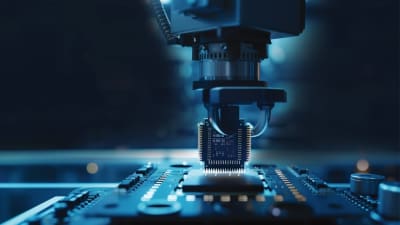
Read on to learn about the factors that go into driving zero defects in today’s intelligent vehicles.
Briefs: Nanotechnology
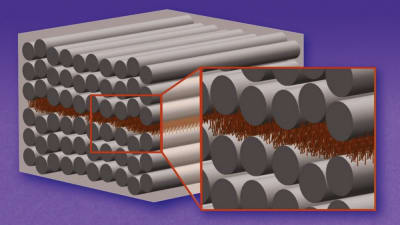
MIT engineers have shown they can prevent cracks from spreading between composite’s layers, using an approach they developed called “nanostitching,” in which they deposit chemically grown microscopic forests of carbon nanotubes between composite layers. Read on to learn more about it.
Briefs: Materials
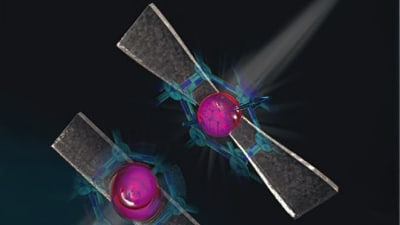
A future quantum network may become less of a stretch thanks to researchers at the Argonne National Laboratory, the University of Chicago, and Cambridge University. By “stretching” thin films of diamond, they created quantum bits that can operate with significantly reduced equipment and expense. Read on to learn more.
Briefs: Electronics & Computers
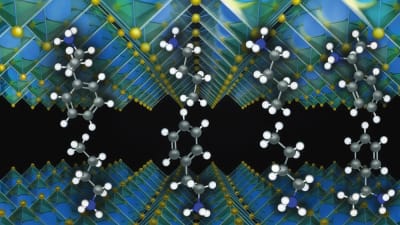
Researchers have demonstrated the ability to engineer materials that are both stiff and capable of insulating against heat. This combination of properties is extremely unusual and holds promise for a range of applications, such as the development of new thermal insulation coatings for electronic devices. Read on to learn more.
Briefs: Materials
Worldwide, glass manufacturing produces at least 86 million tons of carbon dioxide every year. A new type of glass aims to cut this carbon footprint in half. Read on to learn more about the invention: LionGlass, engineered at Penn State.

Briefs: Software
This advance could enable quantum computers that use programmable optical qubits or “spin-photon qubits” to connect quantum nodes across a remote network. It could also advance a quantum internet that is not only more secure but could also transmit more data than current optical-fiber information technologies. Read on to learn more.
Briefs: AR/AI
Researchers in the emerging field of spatial computing have developed a prototype augmented reality headset that uses holographic imaging to overlay full-color, 3D moving images on the lenses of what would appear to be an ordinary pair of glasses. Read on to learn more about it.
Briefs: Manufacturing & Prototyping
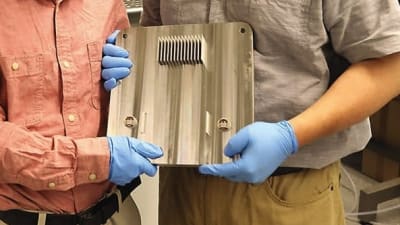
A research team led by Associate Professor Tao Sun has made new discoveries that can expand additive manufacturing in aerospace and other industries that rely on strong metal parts. Read on to learn more.
Briefs: Electronics & Computers
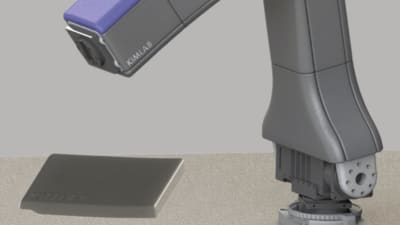
A recent study demonstrates that soft skin pads doubling as sensors made from thermoplastic urethane can be efficiently manufactured using 3D printers. Read on to learn more.
Top Stories
 Blog: Lighting

A Stretchable OLED that Can Maintain Most of Its Luminescence
 Blog: Energy

Batteries that Can Withstand the Cold
 INSIDER: Energy

Advancing All-Solid-State Batteries
 Quiz: Energy

 Blog: Physical Sciences

 Blog: Materials

Webcasts
 Upcoming Webinars: Test & Measurement

From Spreadsheets to Insights: Fast Data Analysis Without Complex...
 Upcoming Webinars: Electronics & Computers

Cooling a New Generation of Aerospace and Defense Embedded...
 Upcoming Webinars: Test & Measurement

Beyond AI-Copy-Paste Engineering: Advanced AI-Integration Success...
 Upcoming Webinars: Automotive

Battery Abuse Testing: Pushing to Failure
 Upcoming Webinars: Internet of Things

A FREE Two-Day Event Dedicated to Connected Mobility
 Upcoming Webinars: Test & Measurement

Choosing the Right N-Port Strategy: Multiport VNAs vs. Switch...