

-1
360
30
Briefs: Software
A new study, published in the journal Results in Engineering, introduced a meticulously designed dataset aimed at enhancing the performance of 6D pose estimation algorithms. Read on to learn more.

Products: Motion Control
See the new products, including igus' aluminum version of its drylin ® NT-60 telescopic rail; Tolomatic Inc.'s online Drive Integration Tool; Flexiv's KURAVIZON adaptive robot; Thomson Industries' upgrade to its stepper motor linear actuator online selector tool, which adds the ability to include encoders in the design process; and more.

Articles: Power
Motor commutation involves the process of switching between motor phases to ensure smooth, continuous operation. In this article, we’ll dive into the importance of commutation, explain how it works, and discuss the challenges faced when trying to pair different motors and drives, especially across brands.

Articles: Robotics, Automation & Control
Despite their immense potential, humanoid robots face several challenges before they can achieve mainstream adoption. In this article, two industry executives — Melonee Wise, Chief Product Officer of Agility Robotics and Barry Phillips, Chief Commercial Officer of Apptronik — share their insights about the current state and future outlook for humanoid robots.

Articles: Software
How can we implement new technology and meet market demand without compromising performance and quality? The answer is AI-powered engineering. Read on to learn more about it.

Briefs: Energy
Researchers at Rice University have found a new way to improve a key element of thermophotovoltaic systems, which convert heat into electricity via light. Read on to learn more about it.

Briefs: Test & Measurement
Batteries in electric vehicles can fail quickly, sometimes catching fire without much warning. Sandia National Laboratories is working to detect these failures early and provide sufficient warning time to vehicle occupants. Read on to learn more about it.

Briefs: Energy
Innovators at NASA Johnson Space Center have designed a pneumatic nail penetration trigger system that drives a Li-ion battery cell into thermal runaway using a tungsten nail. Read on to learn more.

Briefs: Robotics, Automation & Control
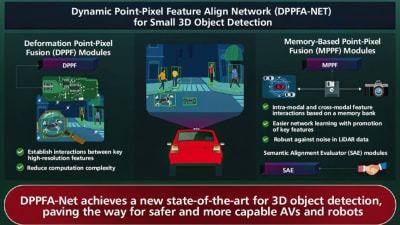
Scientists have developed multi-modal 3D object detection methods that combine 3D LiDAR data with 2D RGB images taken by standard cameras. While the fusion of 2D images and 3D LiDAR data leads to more accurate 3D detection results, it still faces its own set of challenges, with accurate detection of small objects remaining difficult. Read on to learn more about it.
Briefs: Photonics/Optics
Researchers at the Harvard John A. Paulson School of Engineering and Applied Sciences have developed a compact, single-shot polarization imaging system that can provide a complete picture of polarization. Read on to learn more about it.

Briefs: AR/AI
Daniel Gehrig and Davide Scaramuzza from the Department of Informatics at the University of Zurich have combined a novel bio-inspired camera with AI to develop a system that can detect obstacles around a car much quicker than current systems and using less computational power. Read on to learn more about the study, which is published in Nature.

Briefs: Sensors/Data Acquisition
New research unlocks the power of exceptional points (EPs) for advanced optical sensing. In a study published in Science Advances , a team showed that these unique EPs — specific conditions in systems where extraordinary optical phenomena can occur — can be deployed on conventional sensors to achieve a striking sensitivity to environmental perturbations. Read on to learn more.

Briefs: Design
Researchers from Skoltech and the University of Texas at Austin have presented a proof-of-concept for a wearable sensor that can track healing in sores, ulcers, and other kinds of chronic skin wounds, even without the need to remove the bandages. Read on to learn more.

Briefs: Materials
Purdue University material engineers have created a patent-pending process to develop ultrahigh-strength aluminum alloys that are suitable for additive manufacturing because of their plastic deformability. Read on to learn more.

Briefs: Materials
An innovator at NASA Langley Research Center has developed a novel method for making thin, lightweight radiation shielding that can be sprayed or melted onto common textiles used in clothing such as cotton, nylon, polyester, Nomex, and Kevlar. Read on to learn more about it.

Briefs: Manufacturing & Prototyping
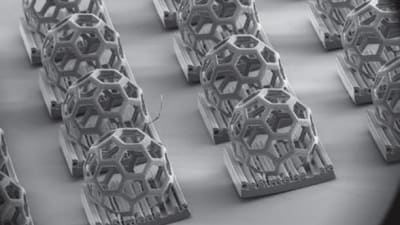
Researchers at Stanford University have introduced a more efficient processing technique that can print up to 1 million highly detailed and customizable microscale particles a day. Read on to learn more about it.
Products: Software
See what's new on the market, including Endress+Hauser's FMR63B 80 GHz radar level sensor; the TP-108 Series, the smallest of all test points from Components Corporation; Sumida America's family of Resin-Shielded Surface-Mount Power Inductors; Coilcraft's XGL3020 series of ultra-low loss power inductors; Yokogawa Electric Corporation's OpreX™ Intelligent Manufacturing Hub; and much more.

Articles: Materials
See the products of tomorrow, including a practical way to make hydrocarbons powered solely by the sun; an air traffic control system for drones that can effectively and accurately track anything in an identified low-altitude airspace; and a robotic system whose primary structural platform, or “orb,” can be injected into a pipe network and perform reconnaissance of piping infrastructure and other interior volumes.

Products: Green Design & Manufacturing
See the product of the month: ControlAir LLC's Type CG330 and CG340 gas regulators. They are designed to deliver accurate pressure control while ensuring near-zero atmospheric leakage under dynamic or steady-state flow conditions.

Q&A: AR/AI
Duke University Professor Boyuan Chen and his team have developed a platform called CREW that is used to create algorithms to optimize human-AI cooperation.

NASA Spinoff: Medical
Recent successes in cultivating human heart tissue, knee cartilage, and pharmaceutical crystals in space have relied on technology that was initially developed decades ago with support from NASA.

5 Ws: Robotics, Automation & Control
With the goal to democratize space research, MIT engineers have demonstrated the first fully 3D-printed, droplet-emitting electrospray engine which can be produced rapidly and for a fraction of the cost of traditional thruster.

Products: Software
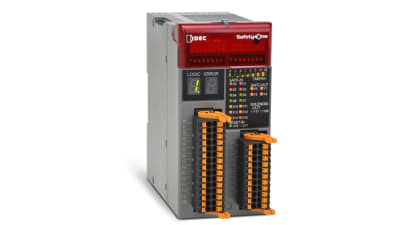
See the product of the month: IDEC Corporation's FS1B Safety Controller, an upgrade of the popular FS1A.
Products: Data Acquisition
Last December, Tech Briefs readers were asked to select one product from our 2024 Products of the Month to be named Readers’ Choice Product of the Year. Thanks to all of our readers who cast their votes. Read on to learn the 2024 winners.

Articles: Electronics & Computers
The U.S. government’s microelectronics needs have evolved significantly over the decades. Now, we have entered the era of Advanced Packaging. This is the next microelectronics evolution to enhance and extend the performance of modern military and commercial systems. Read on to learn more about this.
Articles: Materials
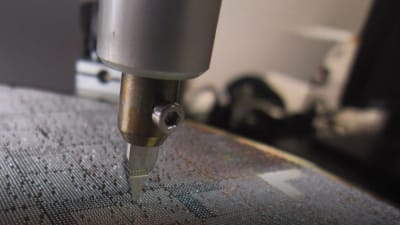
By leveraging plasma pen technology into inline processes, manufacturers can achieve stronger, more reliable bonds, improved wettability, and enhanced performance across various materials. Read on to learn more about what this means.

Briefs: Design
A team has created a prototype for what it calls “living bioelectronics” — a combination of living cells, gel, and electronics that can integrate with living tissue. The patches are made of sensors, bacterial cells, and a gel made from starch and gelatin. Tests in mice found that the devices could continuously monitor and improve psoriasis-like symptoms, without irritating skin. Read on to learn more.

Briefs: Materials
A Duke University team's approach takes a metallic nanotube, which always lets current through, and transforms it into a semiconducting form that can be switched on and off. Read on to learn more.

Briefs: Electronics & Computers
Manufacturing More Efficient Spintronics Devices
Researchers have developed a breakthrough process for making spintronic devices that has the potential to become the new industry standard for semiconductors chips that make up computers, smartphones, and many other electronics. The new process will allow for faster, more efficient spintronics devices that can be scaled down smaller than ever before. Read on to learn more about it.
Top Stories
 Blog: Lighting

A Stretchable OLED that Can Maintain Most of Its Luminescence
 Blog: Energy

Batteries that Can Withstand the Cold
 INSIDER: Energy

Advancing All-Solid-State Batteries
 Quiz: Energy

 Blog: Physical Sciences

 Blog: Materials

Webcasts
 Upcoming Webinars: Test & Measurement

From Spreadsheets to Insights: Fast Data Analysis Without Complex...
 Upcoming Webinars: Electronics & Computers

Cooling a New Generation of Aerospace and Defense Embedded...
 Upcoming Webinars: Test & Measurement

Beyond AI-Copy-Paste Engineering: Advanced AI-Integration Success...
 Upcoming Webinars: Automotive

Battery Abuse Testing: Pushing to Failure
 Upcoming Webinars: Internet of Things

A FREE Two-Day Event Dedicated to Connected Mobility
 Upcoming Webinars: Test & Measurement

Choosing the Right N-Port Strategy: Multiport VNAs vs. Switch...