

-1
930
30
Articles: AR/AI
Extended reality (XR) technology has emerged as a key catalyst for innovation, offering a spectrum of benefits that redefine the way industries operate.

Articles: Green Design & Manufacturing
Given that manufacturing is responsible for 37 percent of global energy consumption, industry is feeling the pressure to address the challenge. Here are a few key trends that are accelerating the push to become more sustainable.

Articles: Semiconductors & ICs
To make fusion power not only physically possible but also economically possible, we need to develop high-performance fusion reactors. However, these reactors call for high-performance materials.

Briefs: Robotics, Automation & Control
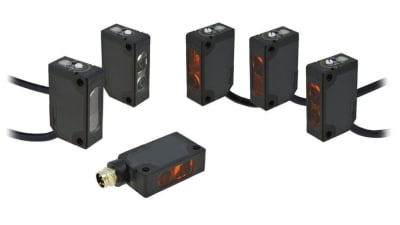
Photoelectric (PE) sensors represent a discrete sensor technology widely used throughout industry. They use the presence or absence of light to provide an on/off output to supervisory automation and monitoring systems, and are often the better choice for sensing manufacturing products.
Briefs: Lighting
The optical concentration sensor has been demonstrated to effectively measure pretreat concentrations in both still and flowing liquid conditions and is resistant to contamination issues as necessitated by the UWMS.

Briefs: Nanotechnology
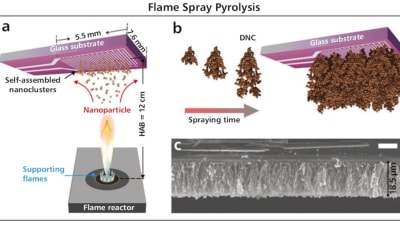
Macquarie University engineers have developed a new technique to make the manufacturing of nanosensors far less carbon-intensive, much cheaper, more efficient, and more versatile — substantially improving a key process in this trillion-dollar global industry.
Briefs: Sensors/Data Acquisition
A Molecular-Sized, More Efficient Electronic Sensor
Australian researchers have developed a molecular-sized, more efficient version of a widely used electronic sensor, in a breakthrough that could bring widespread benefits.
Briefs: Robotics, Automation & Control
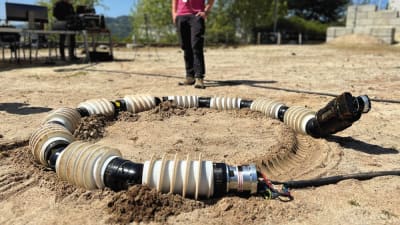
Called EELS (Exobiology Extant Life Surveyor), the self-propelled, autonomous robot was inspired by a desire to look for signs of life in the ocean hiding below the icy crust of Saturn's moon Enceladus by descending narrow vents in the surface that spew geysers into space.
Briefs: Robotics, Automation & Control
Using a new type of dual-polymer material capable of responding dynamically to its environment, researchers have developed a set of modular hydrogel components that could be useful in a variety of soft robotic and biomedical applications.

Briefs: Robotics, Automation & Control
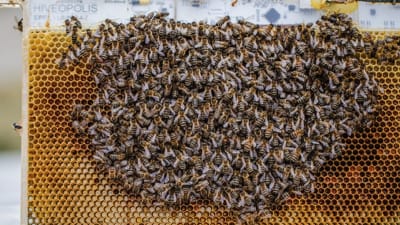
A research team has developed a robotic system that can be unobtrusively built into the frame of a standard honeybee hive. Composed of an array of thermal sensors and actuators, the system measures and modulates honeybee behavior through localized temperature variations.
Briefs: Mechanical & Fluid Systems
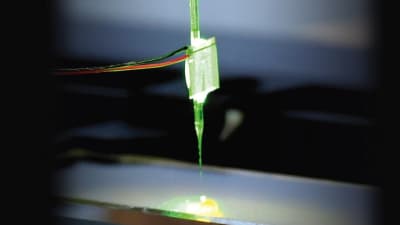
A team at ETH Zurich has developed an ultrasonically actuated glass needle that can be attached to a robotic arm. This lets them pump and mix minuscule amounts of liquid and trap particles.
Briefs: Green Design & Manufacturing
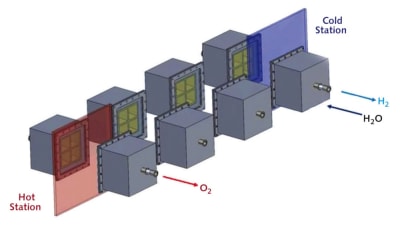
The system harnesses the sun's heat to directly split water and generate hydrogen — a clean fuel that can power long-distance trucks, ships, and planes, while in the process emitting no greenhouse gas emissions.
Briefs: Green Design & Manufacturing
Scientists at the Department of Energy's Oak Ridge National Laboratory have developed an affordable add-on technology that removes more than 99.9 percent of acidic gases and other emissions to produce an ultraclean natural gas furnace.

Briefs: Green Design & Manufacturing
Recent discoveries by MIT engineers have revealed that introducing new materials into existing concrete manufacturing processes could significantly reduce their carbon footprint without altering concrete's bulk mechanical properties.

Products: Electronics & Computers
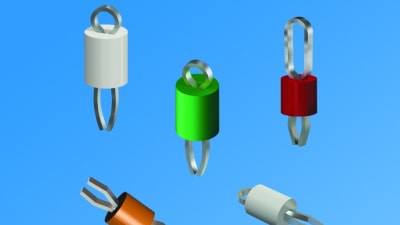
See what's new on the market, including Keystone Technologies' THM Test Points, Nikon IMBU's CT systems for non-destructive inspection, Renesas' SoCs and MCUs, Rad Source NDT's X-ray Inspection System, the Precision Specimen Loader from Instron, and more.
Articles: Photonics/Optics
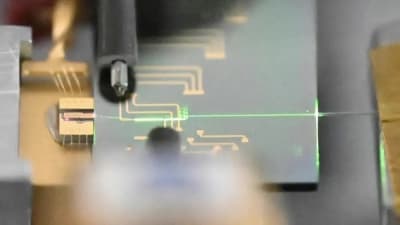
See the products of tomorrow, including ultra-fast mode-lock lasers, an accurate speech decoder, and an ultra-thin e-tattoo.
5 Ws: Materials
Researchers at Tufts University have created microprocessor-scale transistors that can detect and respond to biological states and the environment.

Q&A: Design
Javier Ramos, CTO, and his team from Inkbit Corporation, Medford, MA, along with researchers from MIT and ETH Zurich, have developed a 3D inkjet printer that uses contact-free computer vision feedback to print hybrid objects with a broad range of new functional chemistries.

Application Briefs: Energy
Passive thermal control systems have been developed over years of research and product development and will serve as enabling technology for NASA’s VIPER and future missions.

NASA Spinoff: Sensors/Data Acquisition
Traffic-Aware Strategic Aircrew Requests (TASAR), developed by NASA, is a piece of software pilots and ground operations teams can use to find better routes in transit.

Articles: AR/AI
See the products of tomorrow, including battery-free force stickers, 3D holographic displays, an AI co-pilot.

Articles: Regulations/Standards
Grayson Brulte, host of SAE’s Tomorrow Today podcast, interviewed Christian Thiele, Director, Global Ground Vehicle Standards, SAE International, and Dr. Rodney McGee, P.E. Chairman, SAE J3400 NACS Task Force, regarding the work of the J3400 Task Force. This Q&A is an abbreviated portion of that interview.

Articles: Power
It’s not easy to configure a battery cycle test system for EV batteries and similar high-power batteries. This article covers the mistakes that engineers sometimes make when integrating a battery test system.

Briefs: Energy
To improve battery performance and production, Penn State researchers and collaborators have developed a new fabrication approach that could make for more efficient batteries that maintain energy and power levels.

Briefs: Materials
Researchers at Chalmers University of Technology, Sweden, have created a new and efficient way to recycle metals from spent electric vehicle (EV) batteries. The method allows recovery of 100 percent of the aluminum and 98 percent of the lithium in EV batteries.

Briefs: Energy
A team developed a framework for designing solid-state batteries (SSBs) with mechanics in mind. Their paper, published in Science, reviewed how these factors change SSBs during their cycling.

Briefs: Materials
A collaborative research team has achieved a groundbreaking milestone in battery technology. Their remarkable achievement in developing a non-flammable gel polymer electrolyte is set to revolutionize the safety of Li-ion batteries by mitigating the risks of thermal runaway and fire incidents.
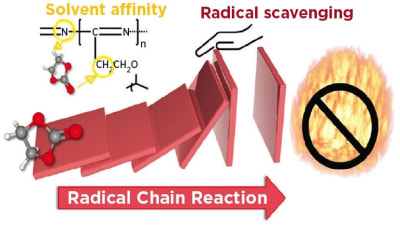
Products: Materials
See the new products this month, including Motor Stator Busbars for EVs; high-power, liquid-cooled configurable power solution; a compact, automated battery cycler and test system; and more.

Articles: Robotics, Automation & Control
Ultimately, zonal architectures require a fundamentally reorganized software structure that allows the OEM to independently, quickly, easily, and modularly adapt the control of the entire vehicle while minimizing the complexity in the wiring harness and the number of control devices.

Top Stories
 Blog: Lighting

A Stretchable OLED that Can Maintain Most of Its Luminescence
 Blog: Energy

Batteries that Can Withstand the Cold
 INSIDER: Energy

Advancing All-Solid-State Batteries
 Quiz: Energy

 Blog: Physical Sciences

 Blog: Materials

Webcasts
 Upcoming Webinars: Test & Measurement

From Spreadsheets to Insights: Fast Data Analysis Without Complex...
 Upcoming Webinars: Electronics & Computers

Cooling a New Generation of Aerospace and Defense Embedded...
 Upcoming Webinars: Test & Measurement

Beyond AI-Copy-Paste Engineering: Advanced AI-Integration Success...
 Upcoming Webinars: Automotive

Battery Abuse Testing: Pushing to Failure
 Upcoming Webinars: Internet of Things

A FREE Two-Day Event Dedicated to Connected Mobility
 Upcoming Webinars: Test & Measurement

Choosing the Right N-Port Strategy: Multiport VNAs vs. Switch...