
-1
660
30
Blog: Sensors/Data Acquisition
Researchers at MIT have created cell-sized robots that may someday be used to inspect and analyze hard-to-reach locations, from oil pipelines to the human body.
Blog: Mechanical & Fluid Systems
Researchers at Purdue University and the University of Virginia have designed peelable electronic films that can be cut and pasted onto any object, offering new sensing capabilities to...

Blog: Sensors/Data Acquisition
Talking about your feelings can be difficult. Now imagine if you’re a robot.

Blog: Mechanical & Fluid Systems
See five of the new products released this week at Sensors Expo 2018.
Blog: Energy
Jim Batdorf tells Tech Briefs about his unique career path, from chemical engineer to distiller of solar-powered spirits.

Blog: Materials
Researchers from Rice University are finding ways to use greater amounts of fly ash in an effort to build a “greener” kind of concrete.
Blog: Software
Answering Your Questions: What is Virtual Prototyping (for Optics)?
Just because it's computer simulation doesn't mean it's virtual prototyping. Our expert explains.
Blog: Data Acquisition
Could touch be the new avenue for communications? Researchers from MIT and Purdue University think so and are working on a “general-purpose” tactile system that delivers information using...
Blog: Energy
Following Up: What is the Future of Flexible Solar Cells?
Researcher Jaana Vapaavuori answered an additional question regarding the future of flexible solar cells.
Blog: Energy
PhD student Jes Linnet hopes that a silver-based, transparent conductive electrode film offers a longer-lasting alternative for flexible screens and electronics.

Blog: Software
Answering Your Questions: Can CFD Software Simulate 'Wear and Tear' on an Engine?
Simulation tools offer insight into the physical processes of heavy-duty engines. But what about natural wear and tear?
Blog: Semiconductors & ICs
Professor Jaana Vapaavuori spoke with Tech Briefs about the manufacturing methods that could someday decrease the cost and increase the lifetime of flexible solar cells.
Blog: Materials
How does a spider's glue maintain its stickiness, even in high humidity? Researchers in Akron investigated the question.

Blog: Materials
Researchers from Singapore University of Technology and Design have demonstrated 3D printing with one of the Earth’s most abundant organic compounds: cellulose.

Blog: Automotive
Answering Your Questions: Who Will Integrate 3D Metal Printing — Tiers or OEMs?
A reader asks: Will it be the OEMs or the Tier-1 and Tier-2 suppliers who will be purchasing 3D metal printing machines?
Blog: Materials
How to Harness Humidity: Hydrogel Keeps Rooms Cool, Powers Small Devices
There is plenty of moisture in the air — Professor Swee Ching Tan wants to harvest the humidity and put it to good use.
Blog: Manufacturing & Prototyping
If digital transformation is a boardroom priority, why are companies so slow to transform product development? A reader asks our experts.

Blog: Sensors/Data Acquisition
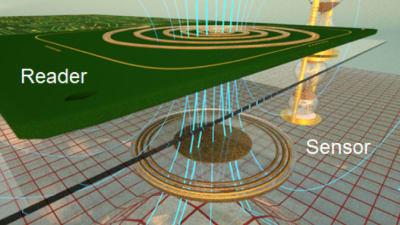
A researcher tells Tech Briefs how his team's "symmetrical" sensor approach will support the growing "Internet of Things."
Blog: Materials
Answering Your Questions: Beyond Prototyping, How is 3D Metal Printing Being Used in the Automotive Industry?
Can metal 3D printing help automakers with more than just prototyping? It can, and it has, says our engineering expert.
Blog: Materials
Professor Paul Steen helped to create a beetle-inspired adhesive. Now it's about finding applications for it.

Blog: Aerospace
Researchers from Purdue University demonstrated that thermoacoustics properties could theoretically occur in solids as well as liquids.

Blog: Sensors/Data Acquisition
‘FingerPing’ Recognizes Micro Motions, Soundly
A new system from the Georgia Institute of Technology has a sound approach to recognizing tiny gestures of the hand.
Blog: Electronics & Computers
A stretchy material, modeled after squid skin, achieves thermal invisibility by reflecting heat.

Blog: Energy
A new microchip allows sensor nodes to run uninterruptedly, even when the battery runs out.
Blog: Transportation
A “MapLite” framework from MIT allows self-driving cars to navigate roads – with just GPS and sensors as a guide.

Blog: Green Design & Manufacturing
Researchers at the University of Buffalo have found a counter-intuitive way of improving the water-purification process: keeping things cool.
Blog: Propulsion
Answering Your Questions: Will Reducing Nitrogen Oxide (NOx) Lead to Increased Particulate?
Does less nitrogen oxide mean more particulate emissions? A reader asks our expert.
Blog: Manufacturing & Prototyping
Will 3D Printing Get Past the Plastic?
If you think there’s too much hype surrounding 3D printing, perhaps that’s because you’re only thinking about plastic parts.
Blog: Electronics & Computers
Answering Your Questions: Is This the End of VME?
A reader asked our expert: What technology will spell the beginning of the end for the VME embedded computing platform?
Top Stories
 Blog: Design

Aerial Microrobots That Can Match a Bumblebee's Speed
 Blog: Energy

My Opinion: We Need More Power Soon — Is Nuclear the Answer?
 Blog: Electronics & Computers

Turning Edible Fungi into Organic Memristors
 Blog: Semiconductors & ICs

Revolutionizing the Production of Semiconductor Chips
 Blog: Robotics, Automation & Control

Microscopic Swimming Machines that Can Sense, Respond to Surroundings
 Quiz: Energy

Webcasts
 Upcoming Webinars: Power

Hydrogen Engines Are Heating Up for Heavy Duty
 Upcoming Webinars: Transportation

Advantages of Smart Power Distribution Unit Design for Automotive...
 Upcoming Webinars: Unmanned Systems

Quiet, Please: NVH Improvement Opportunities in the Early Design...
 Upcoming Webinars: Power

A FREE Two-Day Event Dedicated to Connected Mobility
 On-Demand Webinars: Automotive

E/E Architecture Redefined: Building Smarter, Safer, and Scalable Vehicles
 Podcasts: Unmanned Systems

How Sift's Unified Observability Platform Accelerates Drone Innovation